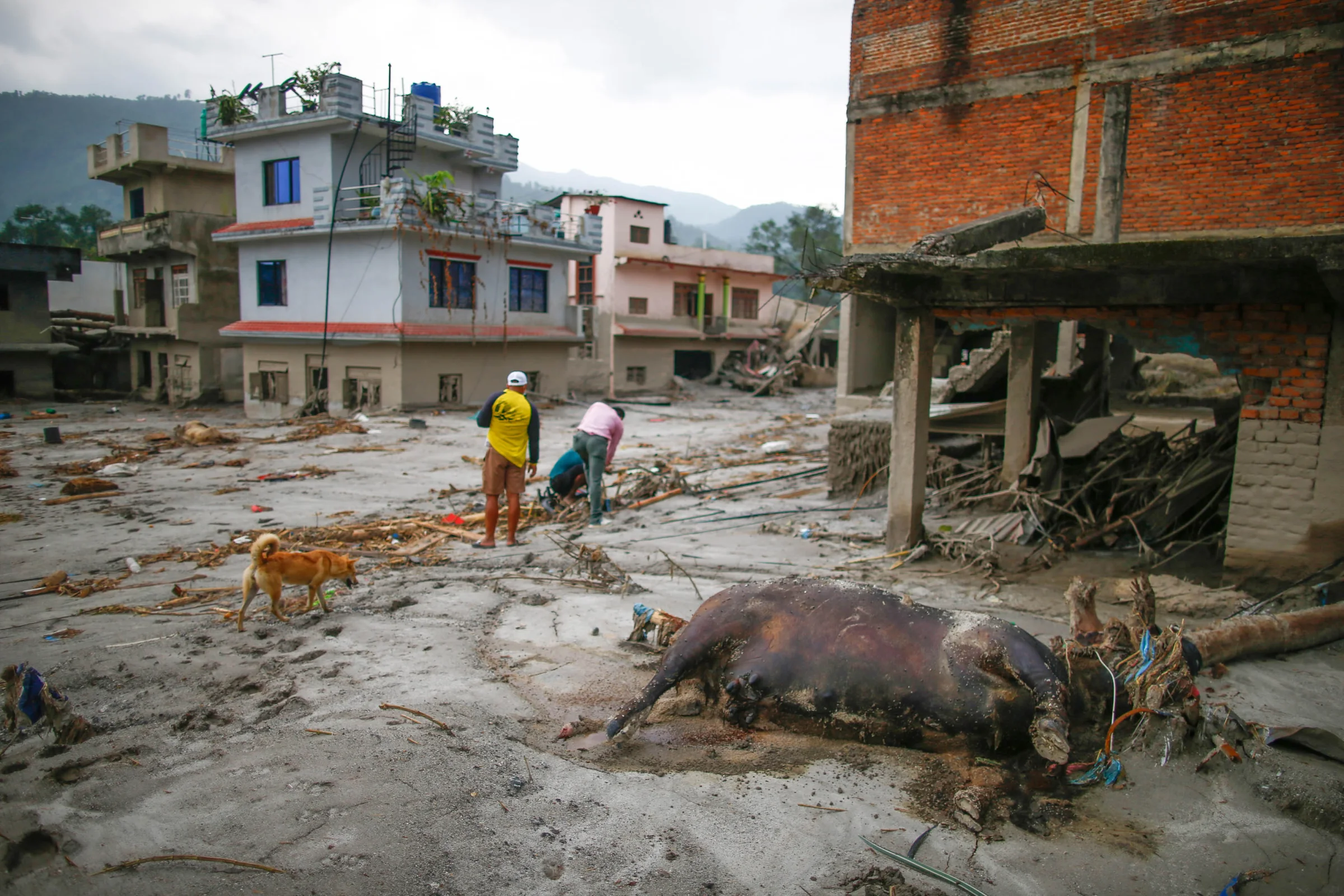
People collect their belongings in a flood-affected area as rescue and relief efforts continue after devastating flash floods and mudslides in Devighat of Bidur Municipality in Nuwakot district. The disaster was triggered by a glacial collapse and massive debris flow along the Trishuli River, leaving hundreds dead and many missing.
Skanda Gautam/SOPA Images/LightRocket/via Getty Images
hide caption
Skanda Gautam/SOPA Images/LightRocket/via Getty Images
“I thought I wouldn’t survive,” says Januka Dhital.
Just a few minutes before this terrible thought, Dhital was busy preparing snacks. She was running a catering service at her home in Uttargaya, Nepal, and was preparing for an event later that day. His work was interrupted by a man on a scooter, warning of flooding. She went out to look.
“When I turned around, I saw darkness, dust and what looked like the whole hillside was collapsing,” she said.
She grabbed her young son and jumped on the man’s scooter. They ran to higher ground, eventually reaching safety. But she didn’t know if her husband and daughter were safe, since they were at work and school when the waters arrived.
“It was incredible”
After hours of waiting and searching, they were all reunited. Her husband was naked, covered in blood and badly injured, she said, but alive.
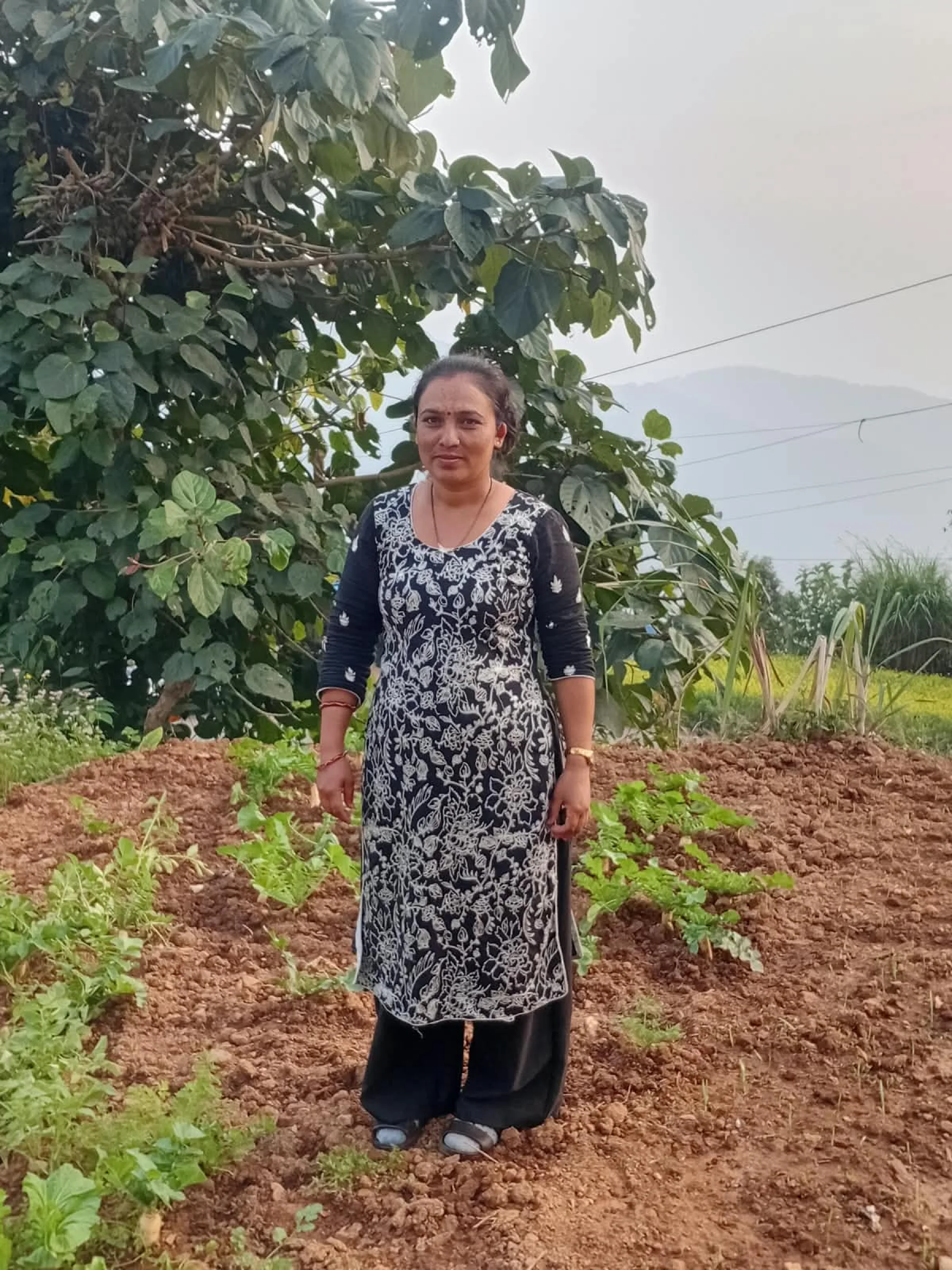
When the flood hit, Januka Dhital rescued her son – and was later reunited with her husband and daughter. The family lost everything. A caterer, Dhital has given himself a new mission: that of a humanitarian worker to help survivors.
Family photo
hide caption
Family photo
“It was amazing that our family survived,” Dhital says. But the wall of water and mud that came down from the mountains had destroyed their homes, along with thousands of others. “We lost everything. We have nothing now.”
Dhital and his family are among the nearly 100,000 people whose lives have been turned upside down by the devastating floods triggered by melting ice, a phenomenon worsened by climate change. At least 1,500 people have died and more than 5,000 are still missing. Thousands of people are still living in temporary shelters or tents.
The flood damaged or destroyed seven health facilities, 23 schools, 10,000 toilets and 64 water systems, according to the United Nations. And there are signs that malnutrition is increasing as winter approaches.
“The scale of the devastation is unimaginable,” says Shyam Pathak, head of health at UNICEF. The din of helicopters flying over the wreckage searching for survivors has faded, he said. International attention and aid have also waned, according to sources on the ground, as the response turns to the arduous but intimate work of helping these communities rebuild their lives.
This disaster is somewhat unique, Pathak says, in that many of those doing the work are trying to rebuild their own lives at the same time. Dhital is one of them.
“I felt like I was losing my mind.”
Immediately after the floods, Dhital and his family moved into a detention center, one of several dozen that housed displaced people. They stayed there for about a month before moving into a relative’s house. Those days were not easy.
“For almost a month, I felt like I was losing my mind,” she says. “More than money, I really need work.”
She found this job thanks Helen Keller International Airporta non-profit organization contributing to the response. After a short training program that included mental health support, she began helping her community rebuild. There is a lot to do.
“I go out into the community, we work with postpartum mothers, pregnant women and children under five,” says Dhital. “It’s the only thing keeping me going right now.”
One of its tasks is to screen survivors for malnutrition.
Preliminary data suggests a notable increase. In Naukunda Gaunpalika, for example, moderate acute malnutrition – a disease that can slow growth, weaken the immune system and be life-threatening without treatment – appears to have increased from 0.8% in June this year to 8.7% in October, says Pooja Pandey Rana, who leads Hellen Keller’s work in Nepal. These are probably also conservative estimates, she says.
“It’s a big step forward,” says Pandey Rana, probably due to the fallout from the floods.
In addition to losing their homes, many families lost the local gardens or farms they depended on for nutritious food. “As a result, they have to depend on dried and packaged foods, such as instant noodles and biscuits,” says Dhital. Poor sanitation and lack of clean water are also a problem, she says. And many have lost their livelihoods and therefore have no money to buy food.
Workers like Dhital distribute supplies and money to families in need. In some areas this is a challenge.
Many communities along the flood’s path were connected by bridges. According to the UN, more than 100 of them are now destroyed. And for many people living higher up the slopes, mountain roads were a lifeline, now cut off.
“There are still places, especially in the upper north of the affected areas, that have been isolated by the flooding,” says Ayush Joshi, who works for the nonprofit Save the Children in Nepal. “There remains a challenge in providing food and life-saving aid to these areas.”
“Our hearts cannot bear to see destruction”
Pushmaya Tamang is a community aid worker trying to reach these areas. Often, she has to cross hastily constructed makeshift bridges to repair the damage.
“The bridge is shaking, making it difficult for elderly people to cross,” she said. “It becomes dangerous when people try to cross the bridge in both directions at the same time. It almost overturns, which makes it extremely scary.”
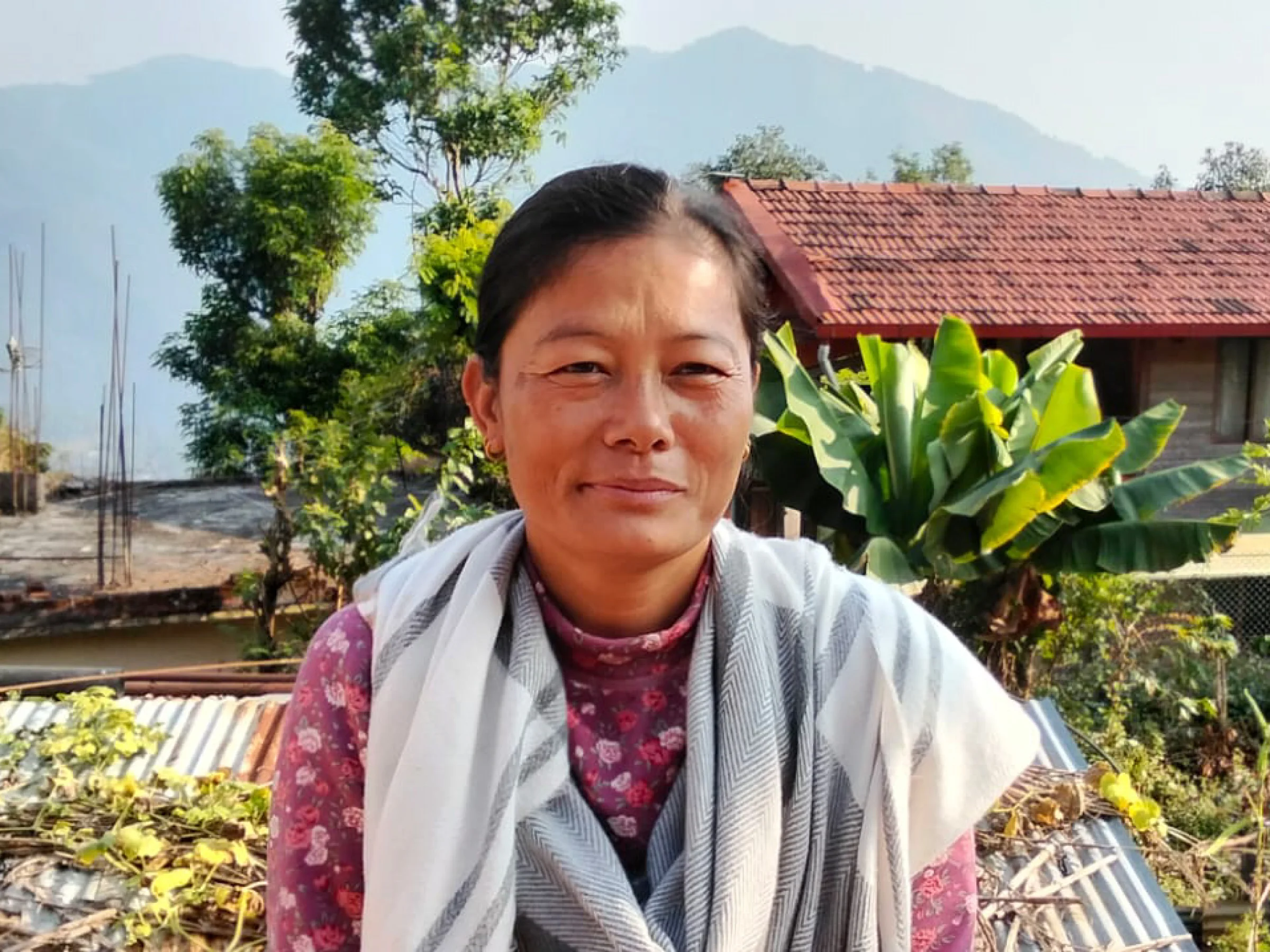
Pushmaya Tamang was an aid worker in a USAID-funded program before the agency closed. After the floods – and the loss of her sister – she returned to similar work.
Family photo
hide caption
Family photo
Such damaged infrastructure is a first reminder of what was lost, she said. Tamang comes from a village in Nuwakot that virtually disappeared after the floods.
“Our hearts cannot bear to see the destruction,” she said. “The village that was once full of colorful lights and life has now become dark and gloomy.”
Tamang’s heart is also heavy with grief over the loss of his younger sister. Many of the families she helps through her work with Helen Keller are also grieving an unimaginable loss, she says.
“When we visit other affected families, we don’t even know what to say or how to talk to them,” she says. “We don’t have the words to comfort or console them.”
Many survivors need significant mental health support, says Pathak of UNICEF, which is partnering with other humanitarian organizations to mobilize health workers who can provide counseling. Like Dhital and Tamang, many are trying to help rebuild their communities while dealing with their own trauma.
“One of the features of this response is that health workers, despite being victims themselves, have returned to work,” says Pathak. “That helped a lot.”
“Everything has been erased”
Winter poses special challenges for survivors.
Colder temperatures threaten those still living in temporary shelters or flimsy tents. “Winter in these areas is very harsh,” says Joshi. “Exposure to cold, crowded living, poor ventilation in the tent, damp bedding and inadequate clothing can also increase health risks.”
Responders winterize tents and move families into safer shelters, Joshi says, in addition to providing food and medical care.
In the longer term, the question of rebuilding what has been razed arises.
“We still haven’t really seen (plans) on where to rebuild, how many homes are needed, how to fix the water systems, how to rebuild the schools?” says Pandey Rana of Helen Keller. “As if everything had been erased.”
According to preliminary estimates, the cost of reconstruction would amount to about 5 billion dollarsa high figure for the small nation. The UN Climate Fund, intended to help countries affected by climate changeapproved $20 million for recovery. Domestic and international donors have provided more than $100 million in additional funds, but it is still far from what is needed.
For now, humanitarian organizations are focusing on the immediate needs of survivors. Tamang says the daily work helps her keep going despite so much loss.
“What else can I do,” she said. “Life goes on and we must accept what nature imposes on us.”
For stories about life in our changing world, Subscribe to NPR’s Global Health newsletter.
Gn world