

Contemporary Folk (#576) and Americana (#570) on the Country DDS.
What do you do when you just turned 30 and you’ve already sold your song catalog for $350 million? And this is all coming from a guy who, when this all started just seven years ago, said he never wanted to leave the Navy and didn’t even know what a career in music would be like. Now he fills stadiums on back-to-back nights, has spawned an entire legion of wildly successful and conventionally mediocre singer-songwriters with sloppy lyricism and gender-neutral accompaniment, and is perhaps the most influential artist of this generation.
Apparently what you’re doing is releasing an 8-song EP to accompany a book about the first 30 years of your life, and trying to figure out how to tell this unlikely story from your own perspective. You may have forgotten, but Zach already released a 25-song album in January called With heaven at the top. This probably isn’t the album that most Zach Bryan fans will cite as their favorite. Young manhood and other organs that can be donated maybe not either. But it seems like a step in the right direction.
Conventional measures of how to view music have never applied to Zach Bryan, and they certainly don’t apply to him now. This is not to say that conventional criticism is not legitimate. His songs feel undercooked, even when they deliver sharp lines. The production is sloppy and directionless, though it still comes with that lively, lived-in, invigorating feeling that comes from an artist singing their guts out. Zach Bryan is still more of a writer and poet than a musician, fighting through making music because that’s the medium that chose him.
Young manhood and other organs that can be donated officially has producers unlike Zach’s last album which was self-produced. Bryan is once again joined by Eddie Spear, who has worked on arguably Zach Bryan’s best tracks, Summer Blues And American grief. Eddie also worked with Sierra Ferrell on her four-time Grammy-winning film. Flower Trailand with Jesse Welles, Colby Acuff, Cody Jinks and others. The other producer is Jamie McLaughlin who has worked most recently with Morgan Wallen and on Wyatt Flores’ polarizing new record.
But any concerns about this album being some sort of sellout are quickly dispelled. This is very much a Zach Bryan record, much to the dismay of his critics, and to the delight of his fans. Of course, Lana Del Rey’s single is probably meant to generate outside interest and put Zach on the radar of some untapped pop audiences. But everything on this album is written by Zach alone, except for the collaboration with Lana Del Rey, and later the song with Evan Felker of the Turnpike Troubadours on “Plainsman.”
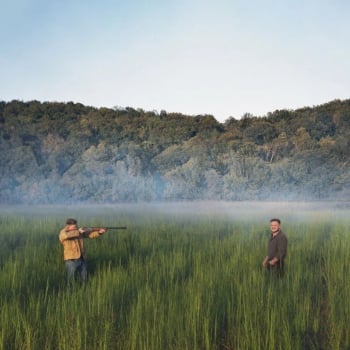
Zach Bryan explained that the album cover is inspired by the idea of killing yourself every day to renew and improve yourself. The inspiration for the title came from when Bryan was in the hospital with his mother DeAnn, holding her hand in her final moments and processing her grief, and someone showed up with a clipboard asking if he wanted to donate his organs. It was like a metaphor for the fact that no matter how much you give, they always want more from you at the end of your life.
Zach Bryan will never be good enough for his detractors. From a conventional point of view, he’s simply not a good enough musician to overcome preconceptions of what good music is. He’s also too popular, which still makes him uncool among various cohorts of indie and mainstream fans. But overall, Young manhood tries to do a better job of finding the beauty in each song and exposing it, unlike some of his more recent work, while still maintaining that raw, raw aspect of Zach’s music that creates the zeal and deep connection to what he does among a huge legion of fans for what is ultimately heartfelt singer-songwriter music.
8/10
Song reviews:
1. Lodi When
One of the problems with many Zach Bryan songs is that they often lack a defined melody or rising structure. This is the reason for the disconnect between his devoted fans and his demanding dissidents. “Lodi When” begins with a little ambient quirk that will immediately trip up some listeners, and the organ/synthesizer doesn’t exactly fit into this song. But the strong melody matches the reminiscent songwriting that defines the very literary perspective Zach brings to this album. The gang’s vocals also contribute to the sing-song nature of many of Zach Bryan’s songs. You can hear it become the “hit” of the album, along with the Lana Del Rey track.
2. A robot killed the worker
It’s sure to be one of the most talked about tracks on the album, and it feels entirely relevant, even prescient, with plenty of simmering rage coming from Zach after a sample of wrestler Dusty Rhodes introduces the song. What’s cool about “Robot Killed The Working Man” is that it doesn’t take place entirely in the present, but rather recalls the Industrial Revolution and other transformative periods where technology disrupted labor flows and caused upheaval in society. But without naming names, this song is clearly about the impending AI revolution and what that could bring. It’s a protest song, but one that benefits from using a story to get its message across.
3. Lies (feat. Lana Del Rey)
Unlike so many Zach Bryan songs where there are a lot of production decisions that muddle the listening experience (including on this album), “Lies” is refreshingly clean, with the piano rendered par excellence and the string arrangements truly superbly done. Unlike many Zach Bryan songs that take his voice to difficult places, this one finds the sweet spot for Zach and Lana Del Rey, which isn’t always easy to do.
“Lies” is a refreshing track in the Zach Bryan listening experience, although one is left to wonder if it has the weight or body of a track to achieve the true escape velocity he’s hoping for – as his collaboration with Kacey Musgraves did on “I Remember Everything”.
The songwriting is good, but maybe not as clever as it thinks it is. The line in the bridge that goes, “I’ll say anything just to see your little smile. How I’ll be there in the morning. Now I’ll be here for a while,” could be considered too close for comfort to Townes Van Zandt’s “I’ll Be Here in the Morning,” or perhaps it’s so obvious that it’s meant to be received as an homage or reminder.
“Lies” is an enjoyable song and accomplishes what it sets out to do.
4. Dog Days
“Dog Days” is Springsteen’s Heartland rocker of the record, and fulfills that condition quite well. While the track has that reckless abandon from Zach Bryan – and that includes his growl vocals – this song also feels very intentional and in control. The lyrics are some of the most direct on the record in admitting his youthful indiscretions and past mistakes, presumably to a lover with whom he finds no excuses, but with whom he is also willing to be honest, as well as his hope of having moved on.
5. Upside down
This may be the best-written song on the album. Zach Bryan uses the metaphor of walking backwards and reversing everything you’ve said to clean up the mistakes of the past and hopefully move forward again. This theme of stopping and starting again, of making the same mistake multiple times before learning and moving on, and how it’s all part of the process of growing up and becoming an adult, is a recurring theme throughout the album. As it turns out, Zach Bryan had to do it in full view of the rest of the world, the press watching from the shadows and always ready to pounce, and other opportunists always looking to exploit vulnerabilities for their own gain.
6. Plainsman (with Turnpike Troubadours)
It’s really cool to see and hear Zach Bryan collaborating with the Turnpike Troubadours, whose origin stories both begin in northeast Oklahoma and less than 50 miles away. You’d love for this track to become one of those discovery mechanisms for Turnpike like Zach Bryan’s collaborations were for Charles Wesley Godwin, Sierra Ferrell and others. And it very well could be. But this song also seems a bit awkward hence the song takes vocals from Zach Bryan and Evan Felker. “Plainsman” probably includes the highest register we’ve ever heard Felker sing in, although he handles it well. Zach’s voice gets so high near the end that it fails him.
This flawed, flawed aspect is what some people love about a Zach Bryan song. But one wonders if “Plainsman” could have been delivered better, and a pass or two in the lyricism to remove certain clichés and inconsistencies would have resulted in a stronger song. It’s not bad, but it doesn’t feel like the home run you were hoping for from this duo.
The opening quote is from Ben Mendelsohn’s character in the 2012 film. The place Beyond the Pines.
7. Is blue tangled in you?
At first, this song and the music comes across as one of those sloppier Zach Bryan moments where he strives to make a point that we can all connect with, even though the song is personal and important to Zach himself. Subsequent listens begin to reveal the song’s strong sense of melody, while the autobiographical lyrics begin to resonate more, including the distressed-sounding recitation where the song’s best writing is showcased.
You’re not going to live forever? You’re not going to die young?
You can’t have it both ways, boy, you better pick one
Aren’t you going to be a big star? You like it when they call your name
You’re not going to be yourself and screw things up?
8. You will get through this
This song captures 30-year-old Zach Bryan speaking to…

