Mari (Tao Okamoto) and Marie-Lou (Virginie Efira) quickly become friends in Suddenly.
Neon
hide caption
Neon
For much of the new film Suddenlywe are in a for-profit retirement home in the suburbs of Paris, run by an intelligent and avant-garde director named Marie-Lou, played by Virginie Efira.
Marie-Lou trains her staff in Humanitude techniques, a real-world methodology that emphasizes compassionate, hands-on care, particularly for dementia patients. But training costs time and resources, and some of Marie-Lou’s overworked staff reject the Humanitude approach.
It may not seem like a captivating premise, but Japanese writer-director Ryûsuke Hamaguchi has turned it into something extraordinary. I shouldn’t be too surprised at this point. His earlier dramas, like happy hour, Wheel of Fortune and Fantasy And Drive my carremind us that a scene of two people talking in a mundane setting can be as deeply transporting as anything in cinema.
Hamaguchi writes beautifully enveloping dialogue that flows naturally even as it is brimming with ideas. When I recently profiled him for The New Yorkerhe told me that Suddenly was influenced by some of our greatest and most talkative filmmakers. It combines the institutional texture of a Frederick Wiseman documentary with the conversational flow of an Eric Rohmer romance.

At the beginning of the film, Marie-Lou meets a Japanese woman named Mari, played by Tao Okamoto. The similarity of their names suggests that this was a fateful meeting; so is each being able to speak the other’s primary language fluently. (To prepare for their roles, Efira learned Japanese and Okamoto studied French – just one impressive aspect of their beautifully synchronized performances.)
Mari is in Paris to direct an experimental play that addresses mental health issues – a subject that intersects with Marie-Lou’s work. The two women spend a long night walking around Paris and talking about their dreams, their journey and their desire to make the world a better place.
But as Marie-Lou knows from her work at Humanitude, it’s difficult to make meaningful change in an environment that faces administrative challenges, staff shortages and low morale. At one point, while spending one-on-one time with Marie-Lou at the retirement home, Mari uses a whiteboard to diagram her ideas about the impact of capitalism on workers – a sequence that may seem didactic on paper but is utterly captivating to watch and listen to. It reminds us that filmmakers too rarely trust their characters, or their audience, to tackle complex ideas.
The title Suddenly could describe how quickly Marie-Lou and Mari become soul mates, not in a romantic sense, but in an intellectual and philosophical sense. Yet the title also shows how quickly life can slip away. Hamaguchi and his co-writer, Léa Le Dimna, adapted the screenplay from a non-fiction book, composed of letters exchanged by two women, one of whom died of cancer shortly before the book’s publication.
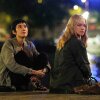
In the film, Mari reveals early on that she is terminally ill, meaning we witness both the beginning and end of a beautiful friendship. Is it cruel or a miracle that they met under these circumstances? Maybe a little of both.
I’ve seen a lot of end-of-life films in my life as a critic, but never one like this. Suddenly. Hamaguchi is both realistic and empathetic; he is neither sentimental nor cynical. Its two protagonists must learn to accept their limits.
It’s only when Marie-Lou has grace towards herself and her team that she realizes all the good they can do, even within their very real constraints. And only when Mari accepts that she is dying will she truly be able to fully experience each moment. As the story draws to a close, Hamaguchi seems to push his characters in bold, exploratory new directions. The less time we spend with them, the more alive they become.
Here is where I should note that Suddenly is about three and a quarter hours long – and that feels shorter than some two-hour films. The length is intentional, but it is not indulgent. It takes time to really know someone, Hamaguchi seems to say, fictional characters included.
Giving of your time can be exhausting, but it can also be restorative. I saw Suddenly twice, and I look forward to a third viewing. The hours I spent getting to know Marie-Lou and Mari are the most enriching I’ve had in a movie theater this…
Gn entert