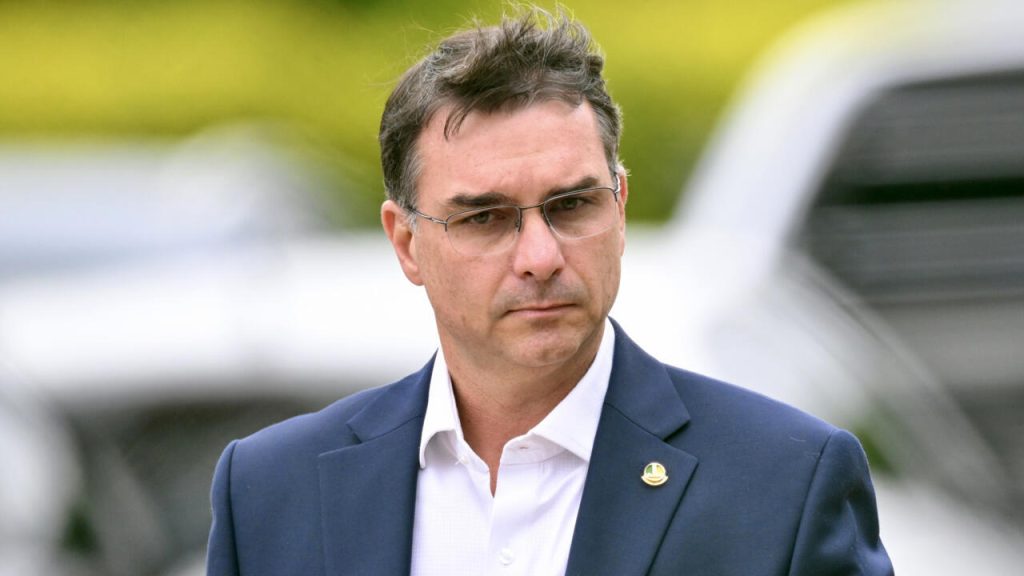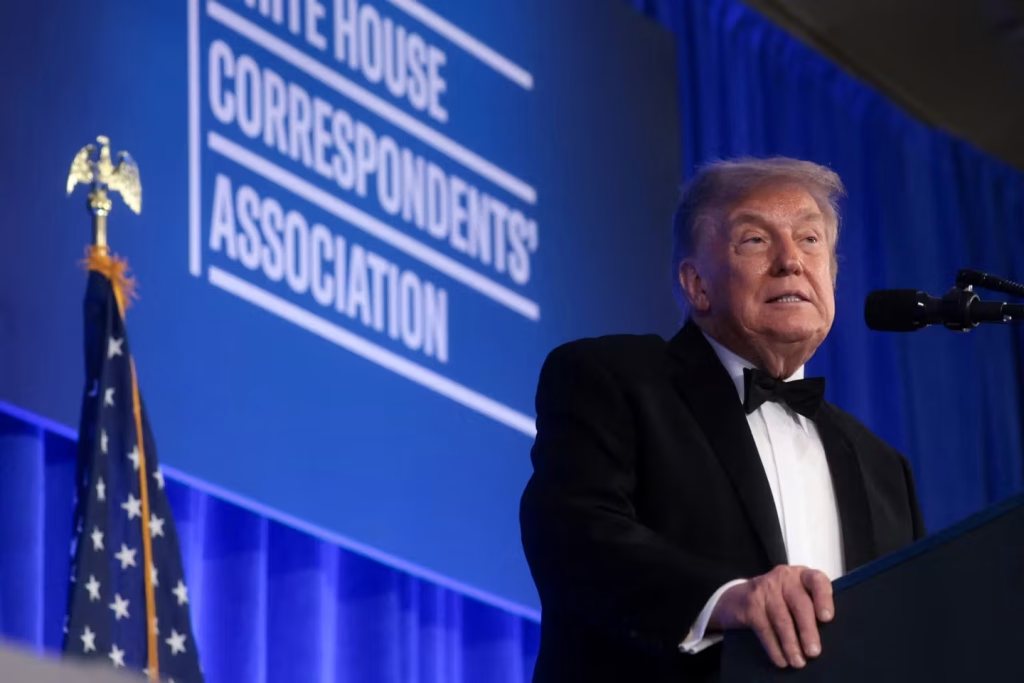
The Justice Department is facilitating the participation of Attorney General Todd Blanche and other Senate DOJ appointees in political activities, according to a new internal memo obtained by PBS News.
The memo, written by the agency’s top ethics official, includes new language stating that presidential appointees and Senate approved individuals are exempt from the strict restrictions that govern the political conduct of most senior officials. It specifically allows these employees, including the attorney general, to speak at political rallies and support or oppose candidates — a departure from long-standing precedent within the DOJ that experts say could further erode trust in the U.S. justice system.
WATCH: How Blanche Breaks DOJ’s Political Independence Standards
The document is the latest version of a memo that the department’s ethics office circulates from time to time, reminding employees of restrictions on their political activities under a law known as the Hatch Act.
The existence of exceptions for Senate appointees themselves is not new and is codified in the language of the Hatch Act, which governs the political activity of all federal employees. But presidential appointees at the Justice Department are accustomed to adhering to a more restrictive code of conduct, noted Joseph Tirrell, who headed the Justice Department’s ethics office before his dismissal last year.
“This policy, and its recent update, lowered the bar so that DOJ employees are now held only to the standards set by (the Hatch Act), as opposed to the higher and more restrictive standards set by attorneys general over the past 20 years that help ensure, to the extent possible, that DOJ was above politics,” Tirrell wrote in an email to PBS News. “The DOJ’s lowering of its standards for political activism by senior officials means that Americans can no longer trust that the Department’s decisions and actions are made fairly and without regard to political affiliation.”
The updated guidelines come as Blanche has made a number of appearances at political rallies and formal events at which political candidates have spoken. Recent events include a campaign rally for a Senate candidate in North Carolina, where Blanche introduced President Donald Trump, the Republican Party’s midterm election convention, as well as a roundtable on violent crime in South Carolina, where Blanche sat next to Sen. Darline Graham, who is on the ballot in November.
LEARN MORE: Attorney General Blanche blurs Justice Department boundaries by attending political events
Tirrell said he believes these appearances still violate a separate Hatch Act ban on using official authority to influence the outcome of elections.
Previous versions of the same DOJ document indicated that some individuals in “more restricted” positions, such as those in the Senior Executive Service (SES), were barred from an even wider range of electioneering activities – including speaking at a political rally or supporting a political candidate – than most other career executive branch employees.
The latest revision lists most of the same “more restricted” roles, but adds a new line specifically exempting “employees appointed by the President, by and with the advice and consent of the Senate (PAS).” ” And in a section listing activities prohibited for “additionally restricted employees,” the memo explicitly states that it does not apply to “PAS.”
This acronym for presidential appointees is common in other contexts, but recent previous versions of the same DOJ ethics guidelines make no such distinctions between these appointees and other “more restricted” employees.
In a statement to PBS, a Justice Department spokesperson said the updated version of the memo clarifies, rather than modifies, the rules of the Hatch Act.
“The updated guidance clarifies an existing exception under the Hatch Act for presidentially appointed and Senate-confirmed officials, and clarifies that appearances with partisan nominees should be reviewed by ethics officials to ensure appropriate designations,” the spokesperson said.
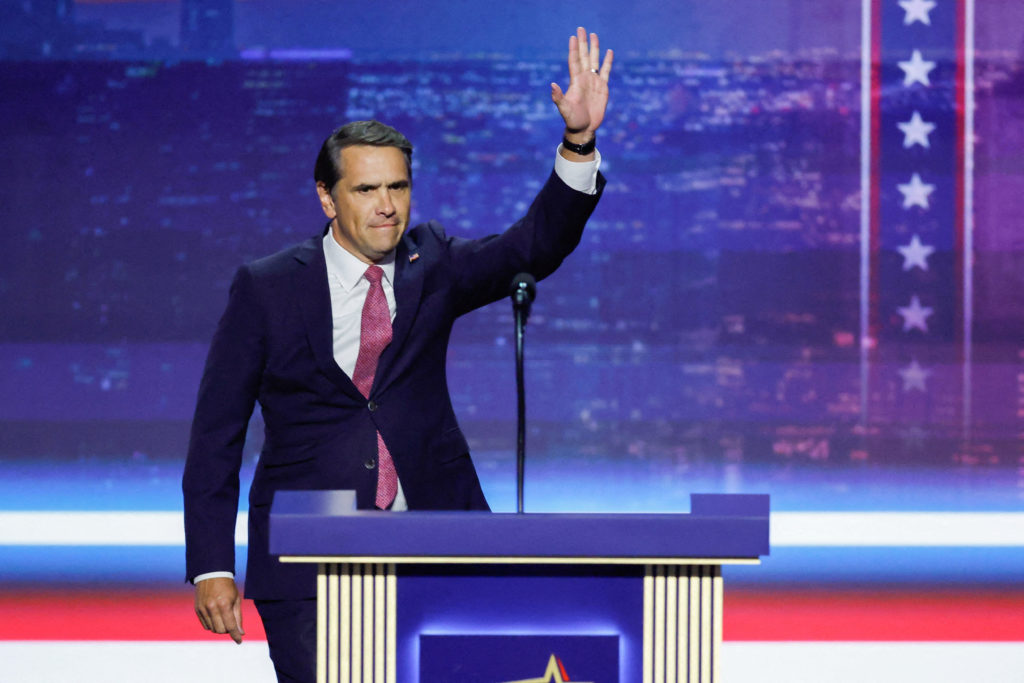
U.S. Attorney General Todd Blanche waves as he arrives on stage at the midterm Republican National Convention in Dallas September 9, 2026. Photo by Brian Snyder/Reuters
New language clarifying rules for employees’ official appearances with partisan candidates no longer recommends that employees avoid appearing alongside political candidates at official events taking place shortly before a political election.
The previous guidelines, issued while Blanche’s predecessor, Pam Bondi, held the top job, said:
“Previous attorneys general have made efforts and also encouraged presidentially appointed officials, or those who hold such positions, to avoid making public appearances in a state shortly before a primary or general election in that state, to the greatest extent possible. The attorney general has determined that this precedent should be followed.”
The new October memo says such appearances “warrant careful scrutiny – particularly in the run-up to an election” and that the Office of Special Counsel has identified several factors to consider in determining whether an event is “official or political for purposes of the Hatch Act.” The compliance guidance is a subtle change from the March memo, which advised employees to contact ethics officials if there is any doubt or question about “whether a particular event could be construed as partisan.”
The restrictions contained in the Hatch Act memo have been relaxed several times since the start of the second Trump administration.
When Bondi took office at the Justice Department, she repealed even stricter guidelines established by her Biden-era predecessor, Merrick Garland, who said all political appointees were subject to the “more restricted” rules, whether or not they had previously been exempt.
Guidance for “less restricted” employees always focuses on off-duty activities. In an interview last month, Tirrell told PBS News that attorneys general should be held to higher standards.
“Even clarifying that you are speaking in a so-called personal capacity, the Attorney General’s Office is simply too well known and too important to create even the appearance of impartiality or impropriety, and attorneys general should not speak for a candidate in a partisan election.”
A free press is the cornerstone of a healthy democracy.
Support trusted journalism and civil dialogue.
Gn headline