Osteoporosis is a debilitating and incurable bone disease that affects millions of people worldwide.
This occurs when the body loses bones faster than it can replace them, leaving the skeleton prone to fractures.
Stem cell treatments could provide a cutting-edge solution, helping to prevent fractures and even potentially reverse some bone loss.
Mesenchymal stem/stromal cells (MSCs) are the precursors to osteoblasts – the cells that create and repair bone.
MSCs can be harvested from marrow, the spongy tissue that exists in the centers of bones, and then grown in large numbers in the laboratory.
Scientists have long been fascinated by this possibility. But there’s a catch: When MSCs are reinfused into the blood of mice, very few of them end up where they need to be.
A first clinical trial in humans, published in Cellhas now delivered a fix with immense potential.
Spanish researchers have shown that MSCs can be engineered with a “return address” for bone marrow, possibly leading to bone growth.
Their trial followed 10 patients aged over 50 with advanced osteoporosis.
After receiving a single infusion of their own MSCs, wrapped in a special sugar, patients showed a sustained 94 percent decrease in fragility fractures over the following two years.
In the group as a whole, fractures decreased from an average of eight per year in the two years before the infusion to 0.5 per year in the two years afterward.
Watch the video below for a summary of the results:
Reducing fragility fractures is the primary goal of all current osteoporosis treatments, and yet this particular stem cell treatment has shown other benefits as well.
Four months after the infusion, bone biopsies revealed positive signs.
Across the group as a whole, the average area occupied by bone tissue increased by about 70 percent.
The results raise the possibility that this new MSC technique could reverse some of the bone loss caused by osteoporosis, rather than simply slowing it.
The current study did not track MSCs once they were infused into osteoporosis patients, but markers indicating bone formation remained elevated for six months after the drug was administered.
Two years after the infusion, participants reported a reduction in bone pain of 34 percent and a reduction in disability scores of 30 percent.
Co-author Robert Sackstein owns the intellectual property rights to the cellular engineering technology used in the trial.
He and his colleagues have already shown that in diabetic mice, engineered MSCs can travel to the pancreas, where they can reverse the disease.
It is possible that similar techniques could be developed for osteoporosis.
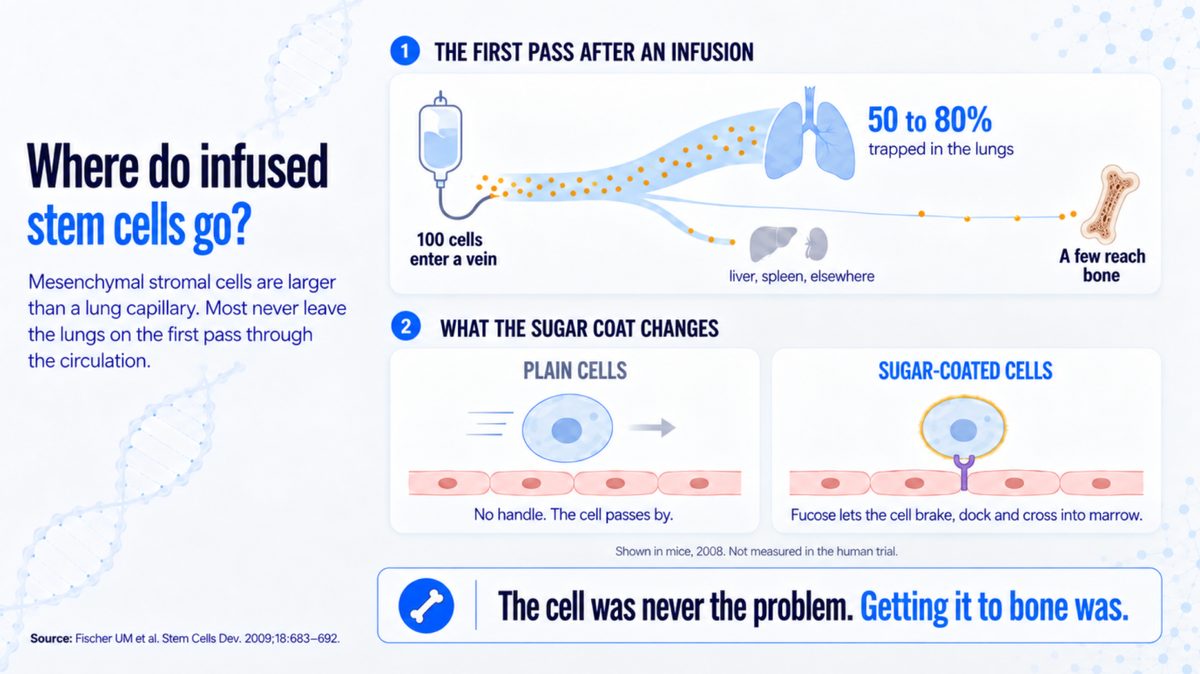
In mice, scientists have shown that when MSCs are decorated with a special sugar coating, they can reintegrate into bone, ultimately leading to the generation of tissue.
In the recent human trial, the decreased incidence of fractures after MSC infusions could not be attributed to lifestyle changes, the authors explain.
“Furthermore, this cannot be attributed to medication changes…since no fractures occurred during the entire post-infusion period in these patients…”
Ajit Varki, a physician-scientist at UC San Diego who was not involved in the study, said NatureElie Dolgin believes that the results are “quite remarkable”.
The trial, Varki said, “showed nearly 100 percent effectiveness sustained over several years – and no side effects.”
But just because the fractures have fallen doesn’t mean this therapy can reverse the symptoms of osteoporosis.
This new treatment showed statistically significant changes in markers of bone turnover, bone tissue area and bone mineral density.
But is this due to the fact that MSCs return to the bone, as they seem to do in mice?
The human trial did not track MSC cells after infusion, so there is no way of knowing how many reached the bone or how long they stayed there.
On LinkedIn, doctor Jan Schaefer calls it a “fascinating experience,” but says the verdict will be in a few years.
“MSCs are 20 to 30 micrometers in diameter, larger than a pulmonary capillary. So when they first pass through the circulation, 50 to 80 percent of them lodge in the lungs,” says Schaefer.
“Of the others, very few enter the bone marrow on their own. You can circulate a potentially useful cell and get almost no results, because it never reaches the tissue you want to treat.”
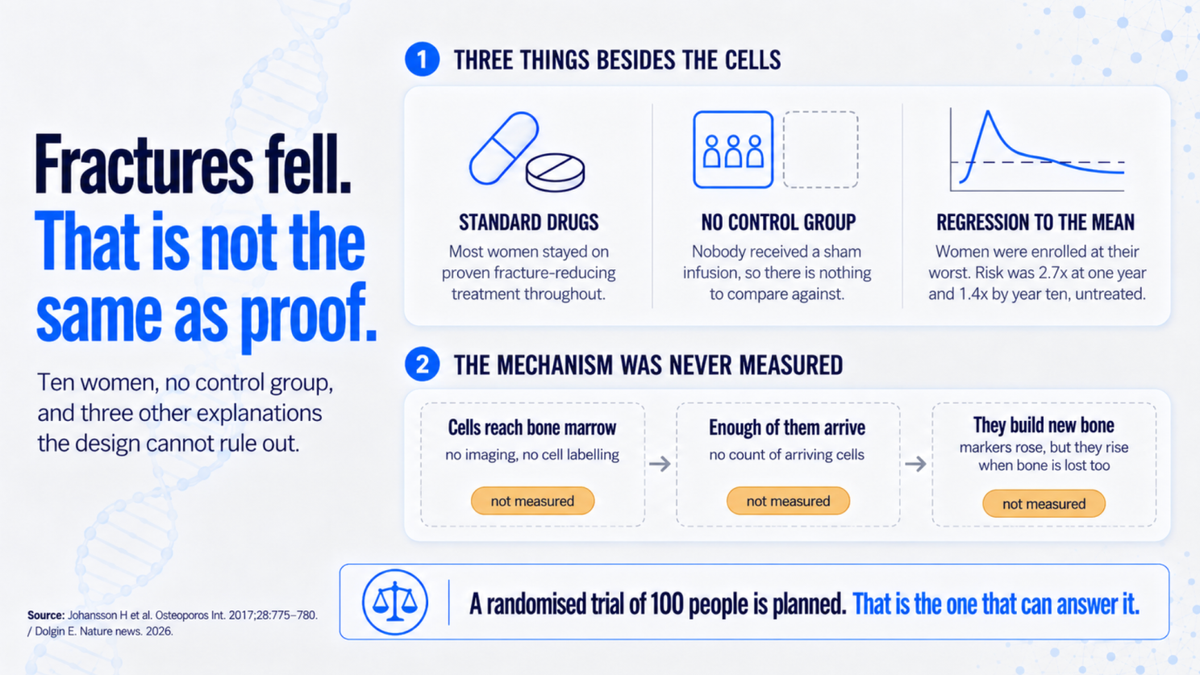
It is possible that the results observed in this current trial have nothing to do with MSCs.
There was no control group and most women were taking other osteoporosis medications. They all suffered from fractures at the time.
The risk of fracture is not constant. According to Schaefer, a group selected at the worst time is more likely to improve on its own later.
Scientists at the University of Murcia in Spain are currently preparing a follow-up trial in a larger cohort of patients with advanced osteoporosis.
Related: Choice of tea or coffee could affect osteoporosis risk in older women
This study will randomize participants to receive one of three treatments: modified MSCs derived from their own bone marrow, modified MSCs from a healthy donor, or no MSC treatment at all.
We will soon know more about the effectiveness of this revolutionary technique for marking MSCs in humans.
The research was published in Cell.
This article was fact-checked by Fiona MacDonald and edited by Fiona MacDonald. Although we are proud of our process, we are only human. If you spot an error, please let us know.
Gn Health