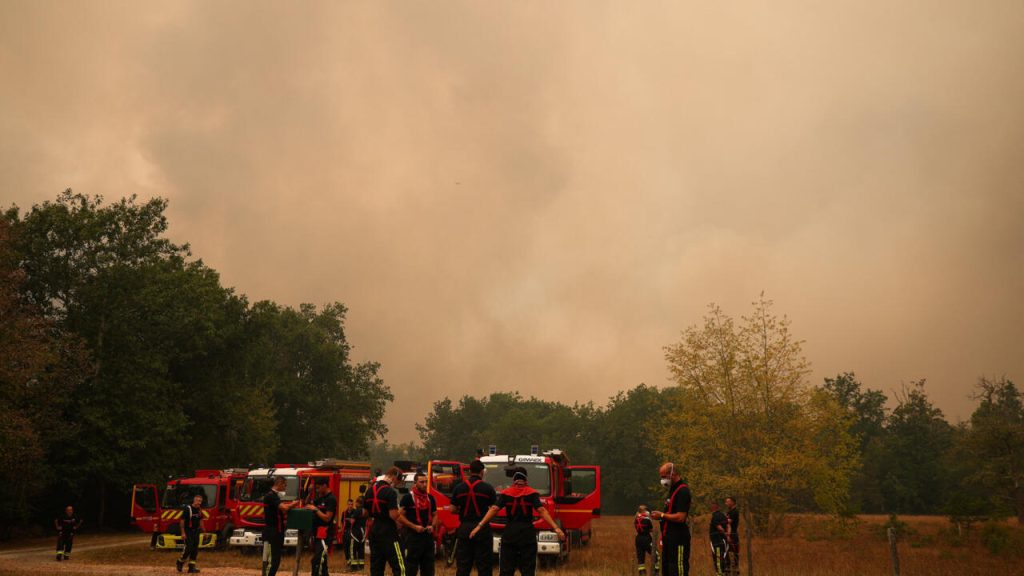
Ukrainian attack drones attacked an oil transshipment terminal in the southern Russian port city of Rostov-on-Don early Saturday morning, October 10, sparking a large fire at the facility, Russian regional officials and independent media reported.
Residents of Rostov-on-Don reported multiple explosions and visible air defense fire that began late Friday evening and continued into the early morning hours.
JOIN US ON TELEGRAM
Follow our war coverage at @Kyivpost_official.
Rostov regional governor Yuriy Slyusar confirmed an air attack followed by a fire in the regional center, saying emergency services had been deployed to contain the fire and saying no casualties had been recorded.
Slyusar said Russian air defense forces intercepted at least 50 unmanned aerial vehicles in the Rostov region between Friday evening and Saturday morning.
Open source intelligence analysts from independent Russian media outlet Astra geotagged images posted by local residents, verifying that the fire broke out at the “Yug Rusi” oil products transshipment terminal in the Zheleznodorozhny district of Rostov-on-Don.
The facility functions as a key logistics node for petroleum products, handling transshipment from the Novoshakhtinsk Petroleum Products Plant (NZNP) and other regional suppliers.
Operating with a planned annual handling capacity of approximately 2.5 million metric tons, the terminal processes fuel supplies used by the Russian armed forces and facilitates export maritime shipments generating foreign exchange revenue.

Other topics of interest
Putin touts 90% dollar-free CIS trade as Russia skirts Western sanctions
Moscow is promoting alternative payment networks to resist Western sanctions, even as former Soviet republics distance themselves from Russia.
Although commercially known as Yug Rusi since it was commissioned alongside the first phase of the Novoshakhtinsk refinery in 2009, documents filed by the Novoshakhtinsk plant refer to the facility as the “NZNP Oil Loading Terminal, Rostov Branch”. The terminal had already been targeted by Ukrainian drone strikes in July.
Strategic targeting of Russian fuel and refining logistics
The strike in Rostov-on-Don is part of a systematic asymmetric Ukrainian campaign targeting fuel depots, refineries and chemical production centers that support Moscow’s military operations.
The nighttime attack followed long-range coordinated strikes on October 9 that damaged Russian energy and industrial assets in the western and central regions.
Drones struck the Redkino experimental plant in the Tver region, sparking a fire at the chemical plant that produces Decylin-M – a specialized liquid fuel component used in Russia’s Kh-55 and Kh-101 strategic cruise missiles – as well as fuel additives for kerosene and aviation diesel.
Meanwhile, on October 9, Ukrainian strikes hit an oil depot north of Belgorod that supplies fuel to industrial companies and transportation fleets across the border region, while another drone strike damaged a major Yandex data center in Kaluga, disabling several server modules for the second day in a row after an earlier strike on a company’s facilities in Sasovo, Ryazan region.
Wide-ranging ban
Ukrainian precision units have gradually expanded their operational attack radius against Russian petrochemical infrastructure located deep within Russian territory.
On Thursday (October 8), Ukrainian special operations forces (SSO) announced they had carried out a second deep interdiction strike against the Omsk oil refinery in southwestern Siberia, located approximately 2,500 kilometers (1,550 miles) from Ukrainian-controlled territory.
Operating alongside Russia’s “Chernaya Iskra” (Black Spark) insurgent movement, the SSO long-range attack drones flew flight routes approaching 3,000 kilometers to strike the Siberian plant’s distillation units.
Ukrainian defense and security officials have stressed that the deterioration of refining capacity, export terminals and front-line fuel stocks directly limits the mobility of Russian mechanized units while decreasing state export revenues that finance the Kremlin’s war budget.
Gn world