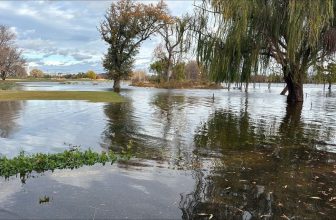
This image provided by the U.S. Environmental Protection Agency (EPA) shows workers in Middletown, Iowa, preparing soil samples that will be shipped to laboratories for analysis on Thursday, November 26, 2026.
Ag for environmental protection in the United States/Ag for environmental protection in the United States
hide caption
Ag for environmental protection in the United States/Ag for environmental protection in the United States
Initial laboratory results from the controlled detonation of about five tons of unstable lead azide at a U.S. Army munitions plant in southeast Iowa showed no elevation of lead in environmental water sources, the U.S. Environmental Protection Agency said Saturday.
“We will continue to provide updates in the coming days as new laboratory results for more than 3,200 air, soil, dust and water samples (collected before and after the detonation) quickly come back and are validated,” the agency said. wrote in an article on.
The EPA says a team of 300 people and contractors spent the days after Wednesday’s explosion collecting samples, in addition to monitoring the presence of lead in the air for 30 straight hours.
Lead is a toxic heavy metal that does not degrade over time. It’s especially dangerous for children and pregnant people, and experts say there is no safe level of exposure.
Military explosives experts detonated 68 drums of aging lead azide at the Iowa Army Ammunition Plant in Middletown after it was found to be in danger of spontaneously exploding. Residents within five miles of the plant were ordered to evacuate, and many others were told to stay indoors for fear of a toxic plume of chemicals.
In the hours immediately following the blast, U.S. military officials called the detonation a success, saying the mitigation measures put in place — including layers of contaminants and downward-facing explosives intended to blast the blast into the ground — had “exceeded expectations.”
Still, many residents and some elected officials have criticized the military for the operation’s lack of transparency, including Iowa’s Democratic governor-elect, Rob Sand, who called for an investigation into why the lead azide was allowed to get to this precarious point.
“The preparations for the explosion should never have been so chaotic and unclear,” he said. after the detonation. “Iowans across the state are understandably alarmed and frightened.”
Sue Dyer, a corn and bean farmer about 18 miles southwest of the blast site, agreed the biggest problem was communication, calling it “horrible.”
“We didn’t know anything about it until last week,” she said. said NPR’s Scott Simon in an interview Saturday morning.
Dyer said people in the community were all very concerned after the detonation, even with assurances from the federal government.
“Some people are sure we’re absolutely fine, and others think we’re absolutely dead. So put me somewhere in the middle until I have the data to form an opinion,” she said, noting that she is awaiting results from independent sampling as well as those from the EPA.
Dyer says she had samples taken from her farmland before the explosion and plans to take her own samples again in the coming days, hoping to have her farm verified as lead-free.
“But what do you do if there’s lead there?” » asked Dyer. “I’m hopeful that everything will be okay, but I’m also realistic.”
Gn headline