One of the biggest challenges in treating Alzheimer’s disease is getting medications into the brain, because the blood-brain barrier prevents even beneficial substances from entering.
But what if the human nose could be turned into a drug factory, manufacturing chemicals to reverse the effects of cognitive decline and transporting them directly to your brain?
We’re not there yet, but a new study in Advanced science shows that the concept actually works in mice and could pave the way for a radical new technique to combat dementia.
“If we can move quickly to clinical trials in humans, this approach could be the world’s first non-invasive delivery system to treat Alzheimer’s disease that bypasses the blood-brain barrier,” says geneticist Greg Neely of the University of Sydney.
The study follows other recent breakthroughs that have used systems such as nasal sprays to deliver specific compounds and pass them across the blood-brain barrier.
But this one is different again, and it’s tied, at least in part, to progress during the COVID-19 pandemic, when mRNA vaccines helped immunize the world against the SARS-CoV-2 virus.
Here, a team from the University of Sydney packaged the mRNA into lipid nanoparticles, which were delivered to mice via nasal drops.
During the pandemic, mRNA vaccines instructed our cells to produce a harmless part of the coronavirus, thereby training our immune system to recognize and fight the virus – which could save our lives if we later caught the real virus.
Here, the mRNA contained instructions for cells to make brain-derived neurotrophic factor (BDNF), an essential protein that supports the survival and proper function of neurons.
“BDNF is a particularly potent modulator of learning and memory, improving synaptic density and neurogenesis,” the researchers explain in their article.
An abundance of BDNF is linked to healthy aging, while low levels are associated with Alzheimer’s disease.
But the results here suggest that low levels of BDNF can be increased via intranasal administration of mRNA, based on what happened when the researchers gave the nasal drops to aged mice (18 months old).
“In aged mice, we saw a significant increase in learning and memory, returning animal cognition to its peak,” says Neely.
Compared to control animals, older mice given the nasal drops performed significantly better on memory tests, reaching levels comparable to young mice.
Their brains also had 2.4 times more cells expressing doublecortin, a protein associated with the formation of new neurons, compared to control mice.
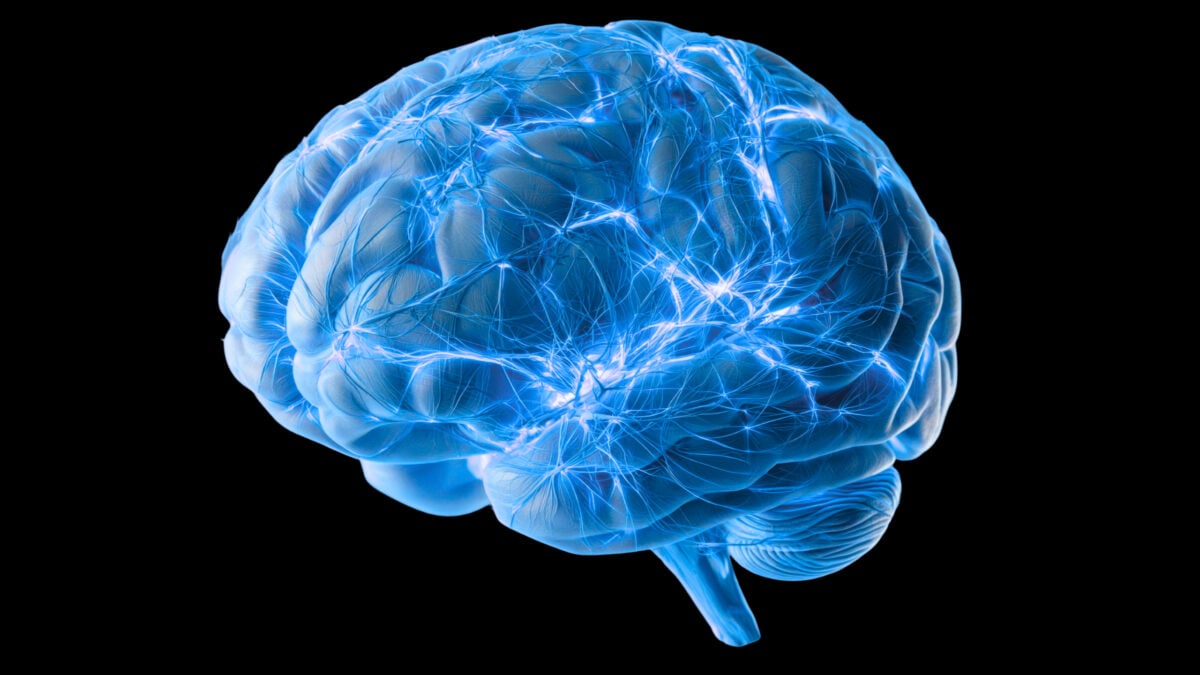
In a separate experiment involving a mouse model of Alzheimer’s disease, BDNF treatment produced similar results, showing an increase in cognitive performance and memory, as well as increased levels of DCX-positive cells in the hippocampus, although the treatment did not appear to reduce levels of amyloid plaque in the brain.
Although numerous studies have shown the therapeutic potential of intranasal administration of BDNF, the protein is known to rapidly degrade and break down in the nasal mucosa, a problem compounded by the fact that nasal sprays can only deliver limited amounts of BDNF at a time.
In contrast, with their mRNA method, the body synthesizes its own BDNF in the nose, allowing direct access to the brain from the nasal cavity. Laboratory tests showed that mRNA-induced BDNF protein expression was detectable in cells for up to four days, demonstrating prolonged therapeutic exposure from a single dose.
So far, the technique has only been demonstrated in mice, but researchers are focused on progressing the system toward clinical treatments, with the hope that clinical trials could begin within the next two years.
“Before we can test this therapy in patients, we need to perform a series of safety studies in animals,” says Neely.
“This is a very promising avenue, but human noses are different from mouse noses, so we will need to test our drugs on humans before we know if they will work.”
If so, the researchers say the mRNA instructions could also be used to enhance other neurotrophic proteins in the human brain, such as nerve growth factor (NGF) and glial cell line-derived neurotrophic factor (GDNF).
In the case of BDNF, the fact that nasal administration boosted cognition without reducing amyloid pathology suggests that the treatment may still improve brain health, even if it cannot replace neurons already lost to the disease.
For patients already suffering from Alzheimer’s disease, this could mean the world.
Until now, several prospective treatments for Alzheimer’s disease appeared to have the opposite result: successfully reducing amyloid clumps, but not restoring cognition.
By combining interventions, we could be close to finding a life-saving complementary solution.
“Our approach appears to work not by eliminating plaques but by promoting the health, survival and connectivity of the neurons themselves,” says Neely.
“This raises the possibility that these therapies could potentially work side by side.”
The results are reported in Advanced science.
This article was fact-checked by Fiona MacDonald and edited by Fiona MacDonald. Although we are proud of our process, we are only human. If you spot an error, please let us know.
Gn Health