A major Seattle injury research center is advocating for changes to how e-scooter rentals are regulated, outlining recommendations last week that include a full nighttime curfew on the devices, as well as better age verification. The recommendations follow rising injury rates among scooter users in recent years, particularly in cities where use has increased as Lime-powered bikes, scooters and gliders have become ubiquitous.
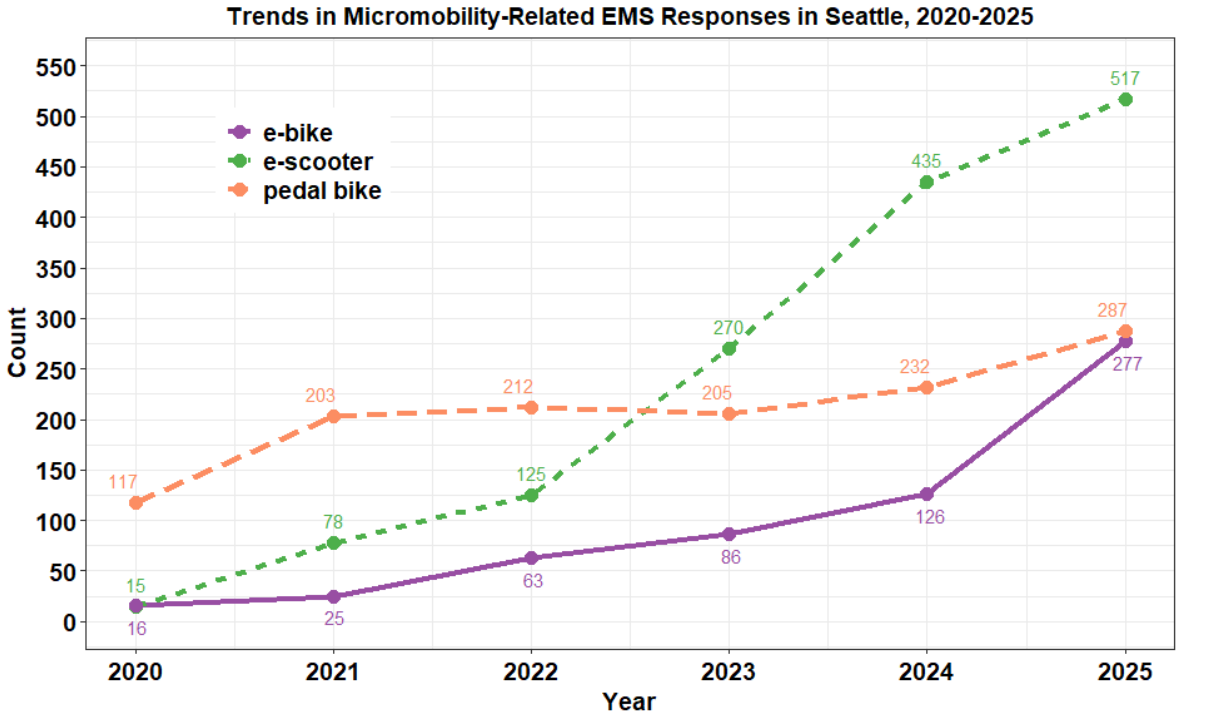
Data presented by Dr. Frederick P. Rivara of Harborview’s Injury Research & Prevention Center shows a dramatic increase in e-scooter-related emergency responses since the launch of Seattle’s first floating scooter sharing program in 2020. In 2025, 517 e-scooter-related emergency responses were recorded citywide, the highest one-year total on record. This increase came amid a dramatic increase in overall usage, with Lime recording more than 10 million trips citywide in the same 12 months.
The King County Board of Health, which reviewed Rivara’s data on Nov. 19, has yet to act on the recommendations and has not included the issue of e-scooter safety in its future work plan.
When they do occur, electric scooter injuries can be devastating. A separate, recently published study conducted by UW Medicine of 64 e-scooter riders treated at Harborview between 2020 and 2024 found that the median length of work time lost due to recovery time was two months, with 20% forced to change jobs as a result of their accident.
“This is a problem that every major city that has these devices is really dealing with,” Rivara said, citing a nearly decade-old study in Austin, Texas, that found injury rates from e-scooters were about 175 to 200 times higher per mile than travel in motor vehicles.
The dramatic recommendation for a 9 p.m. to 5 a.m. curfew, made in coordination with Rivara research partners Xinyao de Grauw and Stephen J. Mooney, comes from analysis of statewide monitoring data on bicycle and scooter use. Compared to e-bike injuries, which tend to occur during commute hours or midday, e-scooter injuries are very common on weekend nights, data shows.
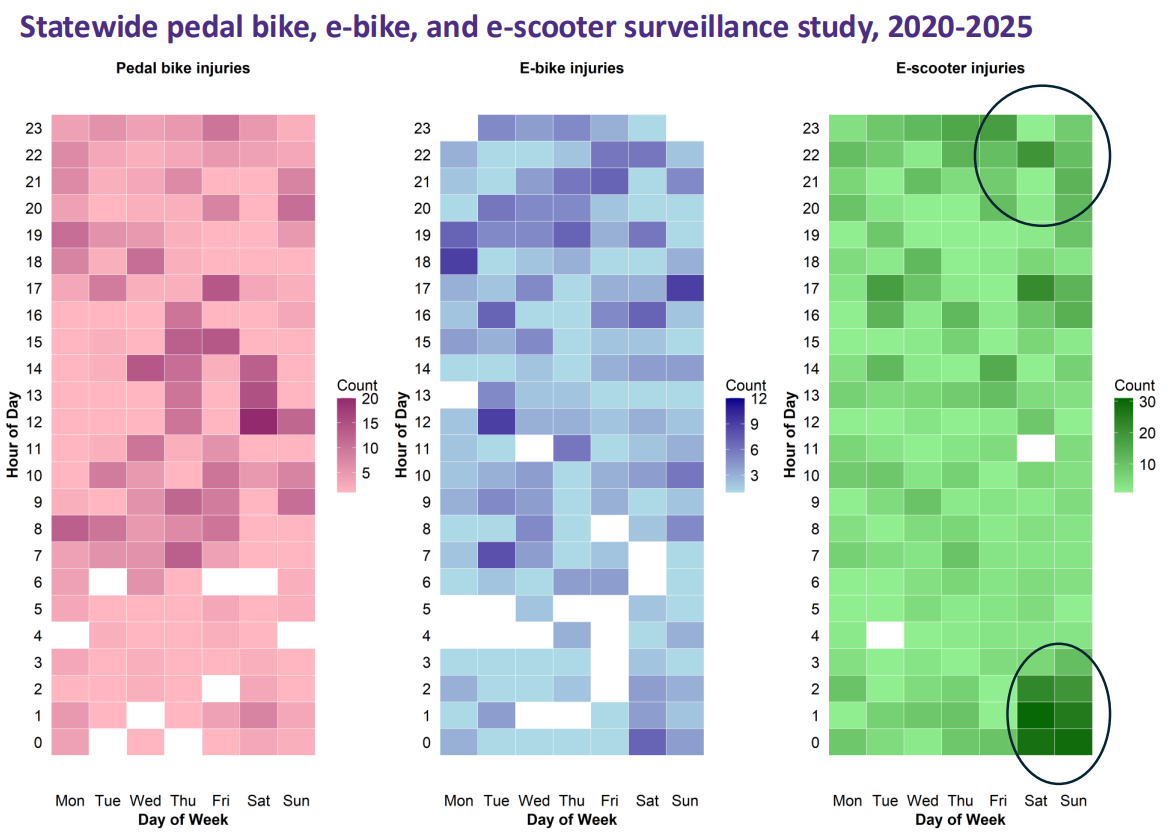
“The hours of the day are important, and that’s why we’re proposing a curfew at those times of the day,” Rivara said. “Overall, I think 38% of e-scooter injuries occur after 9 p.m.”
Rivera pointed to two studies showing positive impacts of nighttime scooter curfews, one from Atlanta and another from Helsinki. In Helsinki, the curfew was only in effect on Friday and Saturday evenings, from midnight to 5 a.m., with significant restrictions on peak speeds added overnight on other days. Result: a 39% reduction in injuries from one year to the next.
Atlanta’s 9 p.m. scooter curfew, implemented in 2019, had much less clear results and was gradually reduced to the current 2 a.m. to 4 a.m. curfew. A 2021 study on the changes did find a decrease in injuries, but its researchers called the decrease “not significant.” What was observed in Atlanta, however, was an increase in vehicle use, indicating that many e-scooter users were using these devices to replace car travel. Average travel times have increased by around 10%, with travel times to stadium events such as football matches increasing by almost 12 minutes per trip.
Discussion of the trade-offs that might accompany such a curfew was absent from Rivara’s presentation, with potential issues surrounding mobility impacts brushed aside, saying such a curfew would have “minimal impact on the use of these devices for commuting.”
Electric scooters are widely used in Seattle to fill gaps in transit service, particularly later in the evening when such a curfew is in effect. With only a limited number of buses operating 24 hours a day and the Sound Transit light rail service stopping before 1 a.m., Lime often offers the easiest option for traveling during these hours, including for workers in service sector jobs or with non-traditional work schedules.
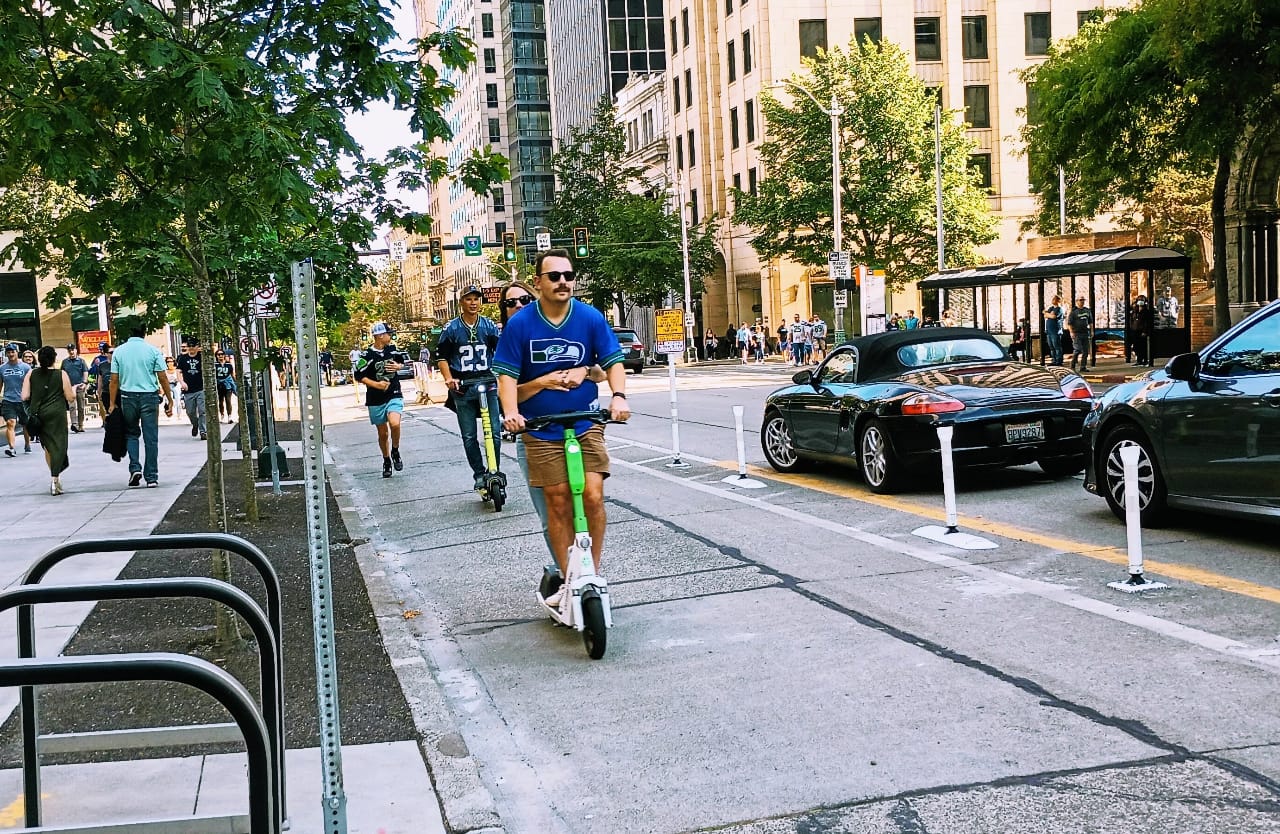
A curfew, especially if it started as early as 9 p.m., would be a drastic change, and several members of the King County Board of Health have pushed back.
“Nine o’clock seems very early to eliminate the accessibility of these devices for people who are commuting, so I would like your panel to consider moving this curfew to a later time,” said Katherine Gudgel, director of community programs at HealthPoint, in comments echoed by Seattle Council Member Dionne Foster.
“I think there are a lot of people who work late who could use this, (I’m) thinking especially people in the hospitality industry,” said Burien Council Member Hugo Garcia.
Unsurprisingly, Lime isn’t on board with the idea either.
“We don’t believe a blanket 9 p.m. to 5 a.m. curfew is the right approach for Seattle. This is an eight-hour restriction that would impact evening and early morning travel, including people working shifts that don’t fit a 9 a.m. to 5 p.m. schedule,” said Parker Dawson, Lime’s senior regional government relations manager for the Pacific Northwest. The Town Planner. “Before we remove a transportation option during these hours, we need to understand who relies on it and what alternatives they actually have.”
In a letter sent this week in response to the Board of Health’s presentation, Dawson noted that its incident rate per million Lime trips to Seattle decreased by 26.6% between 2024 and 2025.
“Seattle riders have told us that Lime helps many of them with their commute and daily commute,” Dawson continued. “Passengers told us about getting home safely after missing the last bus and feeling safer getting home than walking alone at night. One described taking Lime home from the light rail station rather than waiting 30 minutes for a bus. These experiences help explain how Lime complements public transit: it makes it easier to get to or from a station and fills in the gaps when bus service is limited or has stopped overnight. “
Rivara’s recommendations also included stricter age verification requirements for e-scooter rentals, given that Harborview data shows young people make up 15% of micromobility admissions seen at trauma centers. In this regard, Lime highlights the age verification requirements already in place regarding payment methods used on its app, which are complemented by education campaigns. But overhauls in this area are likely to be far less controversial, with a bill introduced this month in the New York City Council that would require more direct age verification of riders at CitiBike, the main bike-share provider in the Big Apple.
However, when it comes to a nighttime curfew, a more compelling case may need to be made for such a significant overhaul of Seattle’s existing e-scooter regulations, with Lime offering thousands of late-night and early-morning rides each day. Disabling it would be much more complicated than simply flipping a switch, and would likely result in countless unintended consequences.
Seattle Light Rail and Scootershare Break Ridership Records, Buoyed by Friday’s World Cup Match
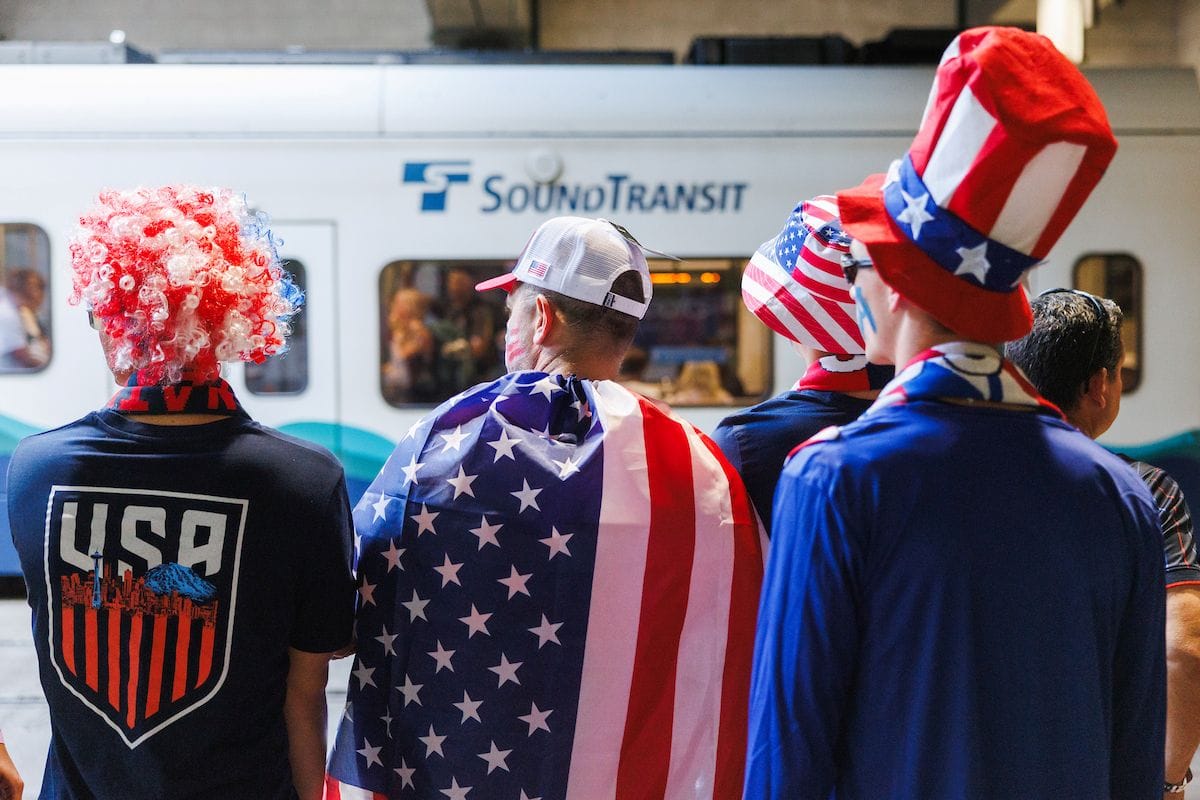
Sound Transit set a new light rail ridership record on Friday, June 19, collecting approximately 280,000 boardings as Seattle hosted a World Cup soccer match. Lime also set a new record for scooter and bike share usage.
Gn bussni