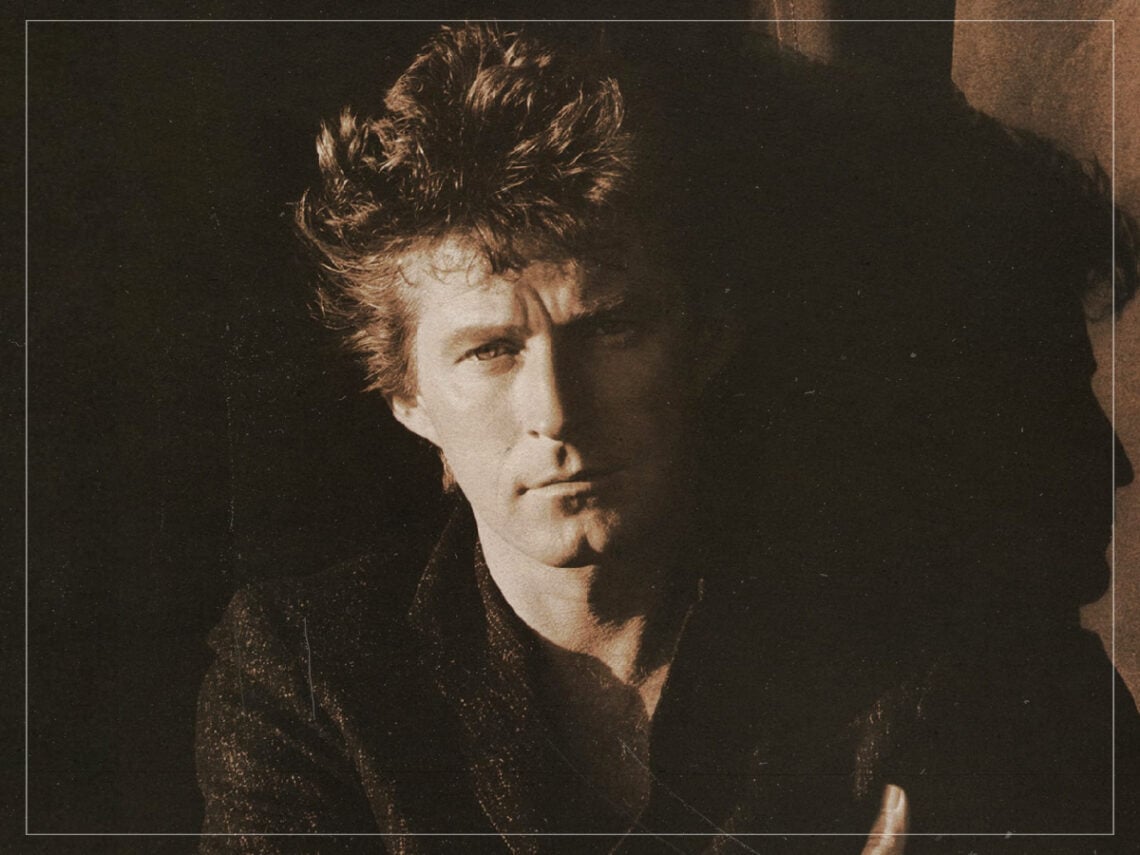
Credit: Far Out / Album cover
Do you know what Prince’s Aquarium is? I only discovered it after reading one of Questlove’s interviews. He was talking about the series Soul Trainhow much he loved it and how much he used it to inspire creativity. To justify his adoration for the show, he called it his “aquarium” and then clarified what he meant.
“Here’s the deal. Since 1997, Soul Train was my “aquarium”. It’s a term Prince used,” he said. “When he was alive, every time you went to Prince’s house, two things were always on TV: (the 2003 animated film) Finding Nemo and Black Orpheusthis beautiful Brazilian film from 1959. He played them over and over: ‘Yeah, it’s my aquarium.’
Why am I telling you this? This is about highlighting the subjective nature of creativity. No matter what big names you’re talking about, from Prince to Questlove to Paul McCartney to Don Henley, they all have different environments in which they can create. They vary from person to person and there is no right way to compose a good song.
The great thing about Prince’s aquarium is that you can enter the room halfway. Finding Nemo and I wonder why a man with his own recording studio would ever look at a fish again. But once you know a movie well, you can look up for ten seconds, notice something you missed last time, and get back to what you were doing. Henley would get much the same service from a stretch of the Los Angeles Freeway. All he had to do was wait for the right car to come along.
Don Henley can attest to this more than ever. There are a lot of songs he wrote for the Eagles that had very specific influences, and as a result, the lyrics were coming from a really specific place. Take a track like “Life in the Fast Lane,” which was a song dedicated to the band’s newfound hatred of Los Angeles and those who inhabit it; those who are motivated by material possessions rather than seeking something more meaningful.

On other songs, however, Henley had to let the lyrics come to him. It was as simple as having a theme to write about, and on the contrary, when he had songs in preparation, while living his everyday life, he would come across different observations, which would then influence what he wrote. This happened on the track “The Boys of Summer,” a solo effort written after the Eagles broke up. The melody and rhythm came to Henley relatively simply, but the lyrics took a little longer. It wasn’t until he was driving that he encountered something that helped him complete the track.
“It was a gift,” Henley said of the song, “It came from this mysterious place where lyrics sometimes come from. I was stuck on the bridge section – I couldn’t understand the words, the melody. One afternoon I was driving on Interstate 405, somewhere south of Sunset (Boulevard), the cassette of the song was blaring through the sound system. I looked to my left and there it was: a Cadillac Seville from 1979 with a “Deadhead” sticker on the back It struck me as ironic, paradoxical, with a little touch of nostalgia, and it went right into the song.
The sentence it inspired was: “On the road today I saw a Deadhead sticker on a Cadillac. » While it may have been on the nose, it did two things: the first was that it helped Henley finish the song, using only a simple observation he encountered in the real world. The second was that it summed up the contradictions that existed in a generation of people who called themselves “hippies.” Henley is a great example of how inspiration can come from a variety of places.
What makes the Cadillac such a great detail is that the driver could have had many reasons for putting this sticker on it. As far as Henley knew, they still went to every Grateful Dead show they could get to. He saw the car for a few seconds and recognized the aging inside. The driver probably went home without ever knowing that he had helped him finish a song.

Gn entert