
An “unprecedented confrontation” has unfolded in recent days between Prime Minister Benjamin Netanyahu and IDF Chief of Staff Eyal Zamir following an instruction from the prime minister calling for unspecified military action that defense officials fear could lead to a rapid confrontation with Iran shortly before the election, Channel 12 reported Sunday.
The TV station, which cited unnamed sources, said Zamir had resisted the military action, no details of which were provided, and requested further deliberations, as well as a document signed by Netanyahu regarding legal authorization for it.
The problem came to a head in the past 24 hours, the outlet said, noting that its report was broadcast within the confines of Israeli military censorship regulations.
It quotes a military source as saying: “This is an action that could lead to an outbreak of tensions with Iran, at a sensitive and dramatic time, creating this (potential) miscalculation.” »
The report further cited unnamed sources familiar with the matter, who said military leaders were concerned about efforts by political leaders “to use the Iranian issue for political purposes.”
Asked about the report in an interview with Channel 14, Netanyahu called it “absurd,” saying “there was no fight” with Zamir. Earlier in the interview, the prime minister said he had recently “ordered the IDF and Mossad to overthrow the (Iranian) regime,” although this did not appear to be related to the news of a specific instruction in recent days.
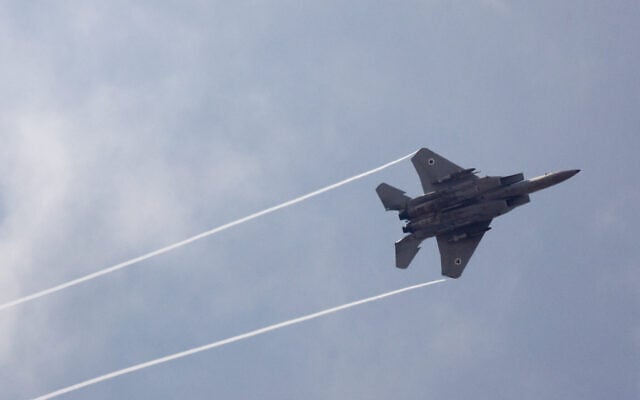
The Channel 12 report said the hostility and tension between Netanyahu and Zamir were evident during a discussion at Palmahim Air Base on Sunday, where the atmosphere in the room was “extremely sour.”
The report cited a senior security source as saying: “History will not forget the role Zamir played in recent days,” without elaborating.
Channel 13 reported Thursday that Zamir said in a recent private meeting that he did not see the operational need to strike Iran before the election. “We see no indication of the need to strike Iran before the elections. If we determine that a strike against Iran is necessary, we will carry it out,” Zamir was quoted as saying.
Reports have grown in the latter part of the election campaign that Netanyahu may seek to reignite conflict with Iran, allegedly to improve his electoral prospects or possibly delay the vote. The Prime Minister has denied such intentions.
Chorus of indignation from the opposition: it has gone off the rails
In response to Sunday’s report, opposition leaders said Netanyahu posed a threat to the country’s security.
Opposition leader Gadi Eisenkot posted on
Eisenkot expressed his support for Zamir and said he would not let “the IDF become a tool in Netanyahu’s survival campaign.”
Speaking at a campaign rally shortly before the Channel 12 report aired, Eisenkot told supporters that Netanyahu would do everything possible to retain power. “I see the polls, I know the data and I know Netanyahu,” said Eisenkot, who chairs the Yashar party. “He will stop at nothing – no lies, no extreme measures – to stay in power.”
Opposition leader Yair Lapid, number two in the opposition B’Yachad party, wrote that Netanyahu “wants to provoke escalation and conflict with Iran just to postpone the elections. This man has gone off the rails. We must send him home.”
Yair Golan, chairman of the left-wing Democrats and former deputy IDF chief, expressed support for Zamir and added: “We must not authorize any military measures without a clear security justification, a strategic objective and a responsible action plan.”
He added: “When Israeli citizens go to vote on Tuesday, they must remember: Netanyahu represents a threat to Israel’s security. He will not hesitate to sacrifice the lives of our children for his survival on the eve of the elections – this is what the IDF is trying to block.”
Avigdor Liberman, chairman of the hawkish Yisrael Beytenu party, wrote: “I have no doubt that Bibi is trying to force Israel into military action in order to prevent the elections. This behavior amounts to betrayal of the state and its security.”
He called on Zamir to protect the IDF and its soldiers, and not “put them in danger because of the prime minister’s fear of losing the elections.”
Prime Minister warns Iran again
At the same time, Netanyahu and Defense Minister Israel Katz have stepped up their threatening rhetoric toward Iran.
Netanyahu again warned on Sunday that Iran or one of its allies could attack in the coming days, urging Tehran not to “test” Israel.
Making the comments in front of an Arrow anti-ballistic missile battery at the Palmahim base, Netanyahu said the army was prepared for any scenario “both defensive and offensive.”
“We have signs that Iran and its proxies may launch attacks on us in order to disrupt the elections,” he said, without elaborating.
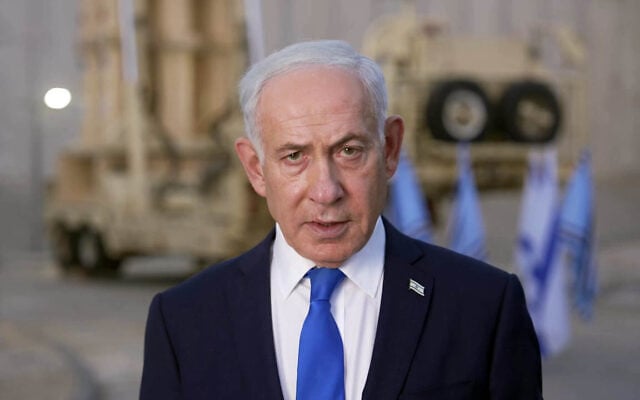
Netanyahu has issued several similar warnings in recent weeks, sparking complaints from his electoral rivals, who have accused him of sowing fear and pushing for a resumption of war against Iran to influence or delay the Oct. 27 vote.
“I’m warning them,” Netanyahu said of Iran on Sunday. “Don’t test us.”
“You will take disproportionate hits,” he said. “We are much stronger than you think. Don’t underestimate us. Don’t test us.”
Netanyahu’s warning came hours after he posted an AI image on social media showing a nuclear bomb exploding over Tel Aviv, along with text suggesting Israel could face a second Holocaust if he is not re-elected.
Axios reporter Barak Ravid said White House officials were alarmed by the release, fearing it could cause Iranian officials to miscalculate and attack, thereby reigniting the war.
He said US President Donald Trump’s statement that there would be no strike against Iran on Sunday could be a reaction to the prime minister’s office, intended to placate officials in Tehran.
Trump’s comments come just hours after he said he was facing a crucial decision regarding Iran.
“Do I make a deal with them or do I terminate them? he told Fox News. “That’s the only question.”
“We now control the Strait of Hormuz,” Trump continued, referring to the critical route to global oil and gas supplies, which Iran has sought to obstruct since the war began in late February. “We get everything, they get nothing.”
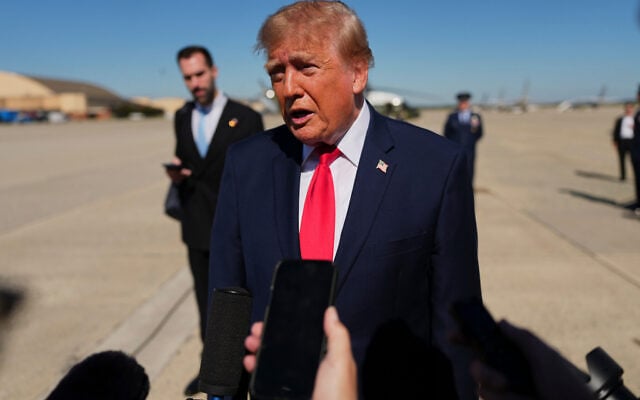
Trump said the United States knows “exactly what’s going on at Pickaxe Mountain,” referring to a key Iranian nuclear site that has not been attacked. “We can read the badge on someone’s shirt.”
Iran says another war won’t change anything
Responding to repeated threats from Netanyahu and Trump, Iranian Foreign Minister Abbas Araghchi said on Sunday that a possible resumption of war would not change his country’s positions.
“Recently there has been talk of a new war, but I am already thinking about the post-war period. Whether there is war or not, our policies remain the same,” Araghchi said during a televised event in Tehran.
“They’ve done it twice already and seen the results,” he said. “If they want to try again, they know they won’t get different results than in the past. »
The April 8 ceasefire between Iran and the United States ended the most intense fighting aside from sporadic exchanges of fire in and around the strategic Strait of Hormuz, a key route for global energy supplies.
These military pushes have seen a lull in recent weeks.
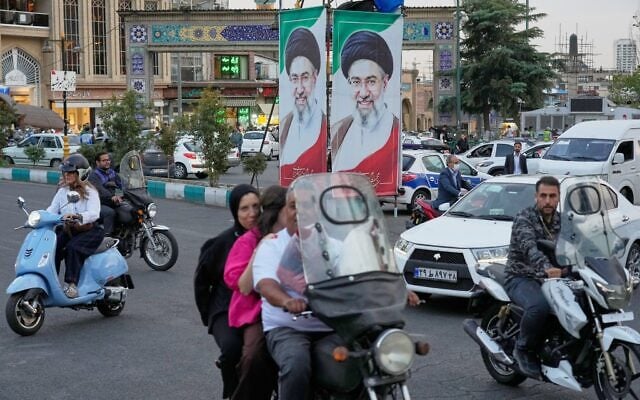
Iran has claimed control of the strait since the start of the war and regularly targets ships that attempt to cross it without its authorization – a decision strongly contested by Washington and countries in the region.
In response, the United States maintains a naval counter-blockade on Iranian ports.
In June, Iran concluded a memorandum of understanding with the United States paving the way for a permanent settlement of the conflict, but the agreement quickly collapsed when each side accused the other of violating it.
Tehran has since called for the resumption of talks to end the conflict. Sources said Qatari mediators were in Tehran on Sunday as part of an effort to defuse regional tensions in coordination with the United States, although the scale of the meeting was not revealed.
“The current war has changed everything. We must accept that new realities are setting in. The maritime routes crossing the Strait of Hormuz will no longer be the same, and the management of the strait will no longer be the same,” Araghchi said.
“To achieve peace and stability, our region must move towards the total absence of foreign forces. »
Gn world

