
Iran’s Revolutionary Guard Corps (IRGC) said Saturday that the self-proclaimed 2,000-kilometer (1,200-mile) limit on the range of its ballistic missiles “has been lifted,” suggesting the country may seek to develop missiles capable of hitting more distant targets, amid fears of a new all-out war.
The comments by General Hossein Mohebbi, IRGC spokesperson, come days after a statement attributed to Iran’s Supreme Leader, Mojtaba Khomeini, that “any kind and level of threat” from the United States or Israel would be responded to without geographic limits.
Asked at a news conference in Tehran about the missile range limit, Mohebbi said “this restriction has been lifted for us” and that Iran would “demonstrate these capabilities in practice” rather than making declarations.
He did not say whether Iran had missiles capable of exceeding the supposed limit.
The 2,000-kilometer range puts parts of Greece and the Balkans, the entire Arabian Peninsula, the Levant and most of Egypt within range of Iranian missiles.
Despite claiming to limit the range of its missiles, Iran reportedly tried in March to unsuccessfully strike the joint US-British base at Diego Garcia in the Indian Ocean, some 4,000 kilometers (2,500 miles) from the Islamic Republic.
U.S. officials also said technology from Iran’s space program could be reused to build intercontinental ballistic missiles.
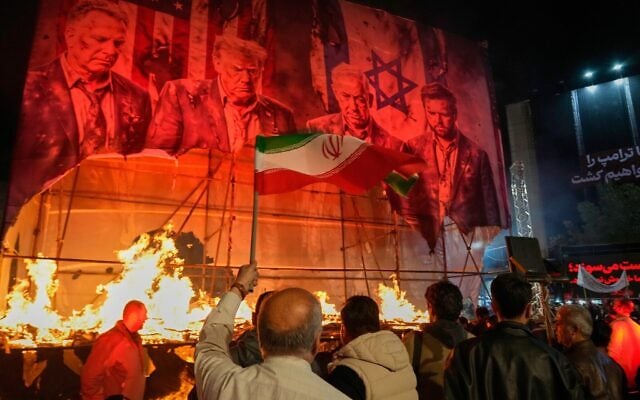
Limited window to resume war
Separately, NBC News reported Saturday that some of his advisers told U.S. President Donald Trump five days before Tuesday’s midterm elections that if he wanted to resume major combat operations against Iran, he should do so before the new Congress is sworn in in January.
The unconfirmed report cited two U.S. officials, who said Democrats’ subsequent takeover of both houses of Congress reinforced that assessment, as the new Congress could hamper operations through investigations, budget cuts and legislative action.
The officials cited in the report said Trump had not yet decided whether to resume the full-scale conflict, but they noted that he had previously approved, then withdrawn, several operations just hours before they were launched.
A Pentagon spokesperson declined to comment on the discussions, NBC said.
While the United States has yet to resume large-scale strikes against Iran, Trump said Friday evening that the U.S. military had carried out limited strikes on the country, targeting an air defense system in what he called a “minor” operation.
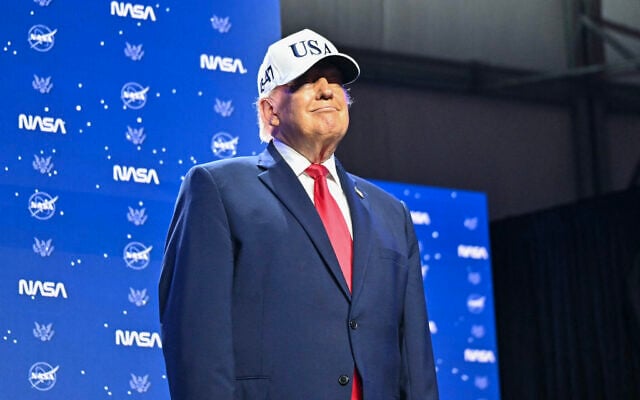
Trump gave no further details on the targets, saying the strikes destroyed “a little bit of an anti-aircraft device.”
As mediators have stepped up efforts in recent days to end the war, U.S. Treasury Secretary Scott Bessent has reached out to China to use its influence with Tehran to end the war, and China has in turn reached out to Iran, Washington Post columnist David Ignatius said Friday, citing a knowledgeable U.S. official.
According to Ignatius, Bessent contacted China with Trump’s blessing.
US to restrict Iranian land trade
Also Saturday, the U.S. military announced it was launching a task force to help suppress the movement of advanced weapons and other materials authorized by Tehran beyond its land borders and across the Caspian Sea.
Task Force Iron Gate, which was first reported by Reuters, will be based in Tampa, Florida, and will coordinate with other U.S. government agencies. Beyond the movement of weapons, it will also be about stopping the flow of dual-use technologies used by Iran and stemming what Washington calls illegal revenue flows.
The creation of the task force is the latest illustration of how the United States is still looking for ways to increase pressure on Tehran, more than eight months after launching war with Israel against the Islamic Republic.
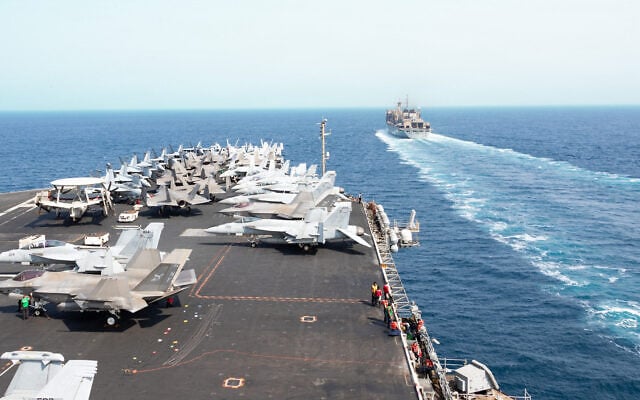
While U.S. strikes have dealt devastating blows to Iran’s conventional military and the U.S. naval blockade has severely restricted its crude exports through the Strait of Hormuz and the Arabian Sea, Iran still poses a formidable threat to the region, and its leaders have tightened their grip on the country.
A Reuters investigation found that Iran has created a secret network of military agencies to import at least $2 billion worth of equipment, explosives and heavy trucks since January 2025, avoiding both the U.S. naval blockade and Western sanctions.
The material entered Iran by cargo ship across the Caspian Sea from Russia, by truck from Central Asia and by cargo plane from China, the Reuters investigation showed.
U.S. Central Command said the task force would coordinate with other government agencies. A U.S. military official, speaking on condition of anonymity, said that should include the Treasury, State and Justice departments, but also the intelligence community.
“Enhancing CENTCOM’s collaboration with U.S. interagency partners will further limit Iran’s ability to finance terrorism, rebuild its weapons factories, and replenish its military,” Adm. Brad Cooper, commander of Central Command, said in a statement.
Central Command estimates that its naval blockade has prevented Iran from exporting more than $25 billion worth of crude oil.


Gn world

