After “Superman” hit theaters last summer, the former CEO of Warner Bros. Discovery’s David Zaslav was ready to pop some champagne. Even though the film had only been on the big screen for three days, he touted DC Studios co-heads James Gunn and Peter Safran’s “bold 10-year plan” and promised that “DC’s vision is clear” and “the momentum is real.”
A year and a half later, those plans imploded. Gunn and Saffron were removed from their positions at the top of the comic book empire, with Marvel Studios alumnus Jeremy Latcham taking over as DC Studios president and chief creative officer.
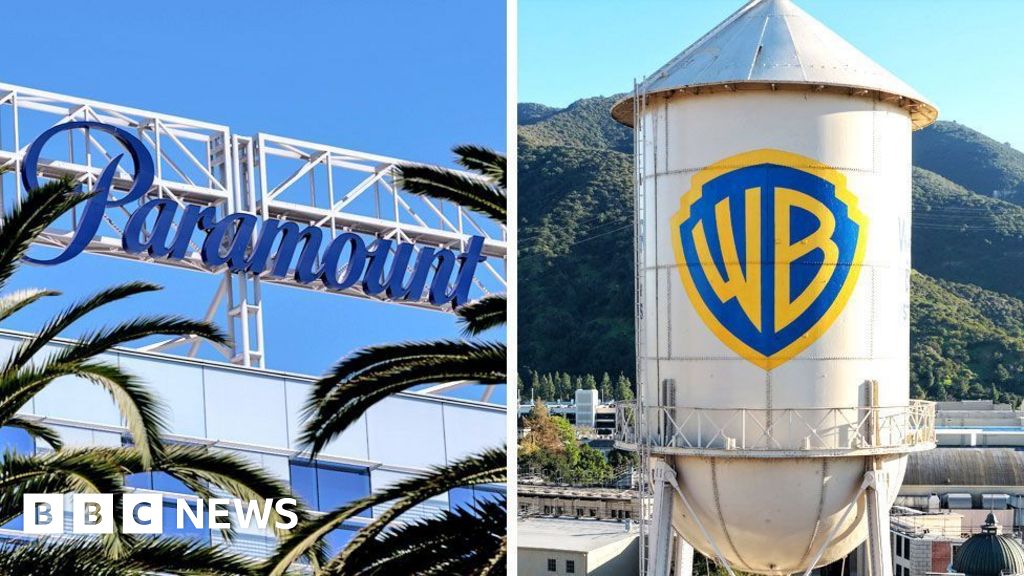
The duo’s ouster didn’t come as a total shock, even though they had been assured they were part of David Ellison’s business leadership team at Skydance after Paramount’s $111 billion acquisition of WBD closed in October. If both had remained, the organizational change would have represented a demotion. Under the previous regime, they answered directly to Zaslav and not to the film’s co-chairs Michael De Luca and Pamela Abdy. However, Ellison and co-CEO Ynon Kreiz planned to shift the reporting structure from Gunn and Safran to new Skydance Motion Picture Group chiefs Dana Goldberg and Josh Greenstein.
The executive shakeup is another setback for DC Studios, which has struggled for years to compete with Disney’s Marvel Cinematic Universe. Their short-lived tenure at the helm of DC followed several turnarounds over the past decade, starting with comics veterans Geoff Johns and Jon Berg and then Walter Hamada. After the latest iteration of DC superhero films broke out with duds like “The Flash” and “Aquaman and the Lost Kingdom,” Gunn and Safran were hired in 2022 to overhaul some of the company’s most lucrative intellectual properties. Efforts to right the ship have been mixed at best — with tentpoles and TV shows not always generating enough enthusiasm to justify their prices. Sources suggest they believed they had spent big – and lost too much – on projects that simply didn’t resonate with the public.
Gunn’s “Superman,” starring David Corenswet in the title role — the duo’s first big turn as bosses — was billed as a hit with $618 million against a budget of $225 million. These ticket sales were quite promising, considering the general decline in the popularity of comic book films. But they didn’t necessarily signal the kind of enduring enthusiasm that breeds an interconnected universe. The momentum all but evaporated with July’s money-loser “Supergirl,” which flopped with $126 million worldwide against a $170 million budget. And while October’s “Clayface” performed modestly with $109 million against a $44 million budget, sources suggest the body horror thriller won’t break even until the studio factors in downstream revenue.
Insiders have raised eyebrows at Gunn and Safran’s decision to focus on lesser-known characters, like Superman’s cousin Kara El-Zor, aka Supergirl, and Batman villain Clayface, rather than building the franchise with marquee names. Although superhero films have been hit or miss, those that spotlight notable characters can still pack a punch at the box office. July’s “Spider-Man: Brand New Day” became the third-biggest movie in history with $2.5 billion, and December’s “Avengers: Endgame,” which brings back just about all of Earth’s Mightiest Heroes, could challenge the Marvel sequel’s box office records.
“The industry has learned the wrong lessons from Marvel’s success,” said a person close to the studio. Variety. “Higher budgets do not equal quality storytelling.”
Television’s efforts have also been uneven. DC’s main success on the small screen was “The Penguin,” a Colin Farrell-led “Batman” spinoff, which was greenlit before Gunn and Safran took over. But the rest of the list caused less noise. Gunn’s series “Peacemaker,” hosted by John Cena, debuted in 2022 before he entered the studio. Although the first season was popular, the second season – launched three years later – failed to match the buzz of the first. “Lanterns,” their first live TV show, had a decent audience. Yet a company insider suggests the crime drama doesn’t quite reflect the zeitgeist, pointing out that the series has not been renewed for a second season.
“People can’t wait to do another season of a hit show,” the source said.
Safran, manager of New Line’s extremely profitable “Conjuring” universe and producer of “Shazam!” and “Aquaman” used to cut checks and pore over balance sheets before he was hired in DC. However, Gunn, best known for directing Marvel’s “Guardians of the Galaxy” trilogy, was always a curious choice for the job. Gunn had a delicate balancing act, having to lead his own directing efforts while co-managing a roster. Collaborators praised Gunn’s ability to work quickly and efficiently on concurrent projects. But even he admitted the challenge of having to multitask and manage the “corporate” nature of the job.
“The thing my ADHD hyperfocus has had the most difficulty with has been dividing my time between the projects I’m incredibly passionate about and the ones I’m not so passionate about and all the things I have to do as a studio head,” Gunn, who regularly speaks with comic book enthusiasts on social media, wrote on X following his ouster.
The couple will remain involved in DC, but with less authority. Gunn is directing “Superman: Man of Tomorrow” next summer and the two are producing the 2027 TV series “The People v. Gorilla Grodd,” starring Skyler Gisondo as “Superman” Jimmy Olsen and Jimmy Tatro as Gorilla Grodd, as well as another season of “Creature Commandos.”
It’s unclear what will become of Gunn and Safran’s decade-long creative strategy of sequels, spinoffs, and standalone stories. After “Superman: Man of Tomorrow”, which brings Corenswet’s Man of Steel and Nicholas Hoult’s supervillain Lex Luther to the forefront, the only other film in the works is “The Batman Part II”. After several delays, the sequel is expected to be released in 2028, six years after Robert Pattinson’s original Caped Crusader adventure. Their oft-teased reboot of “Wonder Woman” never took off. And although Gunn has hinted that he’s writing another DC-related project, it will be up to Latcham to decide whether he should continue the vision of the previous regime.
Internally, there’s hope that Latcham – an executive who helped shape the MCU – will get back to basics with DC.
“Jeremy is the type of guy who would go to Comic-Con to get someone’s autograph,” says another source, “not someone who wants to be there signing autographs.”
Gn entert