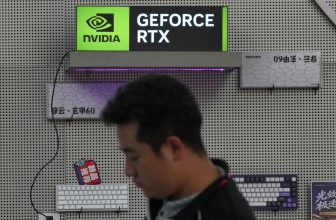
President Trump claims to have “made a deal” that puts Jensen Huang back at the helm of Nvidia. “I convinced them,” Trump told CNBC on Nov. 23, shortly after the company’s board voted unanimously to reinstate Huang, 11 days after his resignation.
Nvidia contributed $25 million to Trump’s White House ballroom project, says The Washington Post. The company asked to remain anonymous, although Huang publicly acknowledged the donation in October 2025 without disclosing the amount. Senate Minority Leader Chuck Schumer explicitly linked the gift to Trump’s handling of intelligence allegations about Huang.
Jensen Huang returns to Capitol Hill on December 1 for a closed-door, transcribed interview with the House Intelligence, Foreign Affairs and China Select Committees. This will be his first appearance before Congress since Nvidia’s board reversed course and put him back in charge. Two days later, he is scheduled to appear before the Senate Banking Committee, whose Chairman Tim Scott, R-S.C., has said will focus on oversight of U.S. export controls.
The hearings will determine whether Huang’s return has fixed anything. Nvidia reinstated him on November 23, 11 days after his resignation following reports of extramarital affairs, including one with Alice Huang, a former Singapore-based Megaspeed executive whom US authorities suspect of links to Chinese intelligence. The two are not related.
Investors applauded. Nvidia shares jumped more than 30% on Nov. 23, the best day for the stock since May 2003, adding nearly $1 trillion to the market value. Lawmakers were less impressed.
The stakes go well beyond a single leader. Nvidia, n°16 in 2026 Fortune 500, puts these chips at the center of the AI boom, and Huang has been the industry’s strongest advocate for selling them to China. How Washington responds to questions about it will determine the extent to which the United States will allow its most valuable chipmaker to sell to China and how seriously it will enforce the rules already in place.
How Huang got his job back
The reversal came quickly. Days earlier, board chairman Harvey Jones said the company had no plans to reinstate Huang. President Trump, who said he had been in contact with Nvidia’s board “directly and indirectly,” publicly pushed for his return, and the board said it voted unanimously after receiving advice from high levels of the U.S. government.
Fortune pieced together the 11 days that brought Huang back to Nvidia. It is this sequence that troubles critics. Sen. Elizabeth Warren, D-Mass., the top Democrat on the Banking Committee, called the reinstatement reckless, and Sen. John Cornyn, R-Texas, questioned Nvidia’s assertion that Huang’s return posed no national security risk.
Sen. Chris Coons, a Delaware Democrat who is expected to chair the Senate Foreign Relations Committee in January, had already pledged to investigate what he called the “insane relationship between the Trump administration, Chinese spies and AI billionaires.”
What’s Established About Alice Huang and What’s Not
Remove the speculation and three facts stand. Alice Huang is a former executive at Megaspeed, a major buyer of Nvidia chips. Jensen Huang admitted to an affair and apologized. He has long advocated continued sales of AI chips to China.
None of these facts prove that Alice Huang was recruited to influence Nvidia’s policies, or that the company’s information was compromised. U.S. officials themselves disagree. In recent briefings, the FBI has deemed that U.S. intelligence agencies did not demonstrate that she was a Chinese intelligence officer or asset, while some officials view her contacts with China’s Ministry of State Security as a sign of cooperation, Reuters reported on November 25.
China denies these allegations. Megaspeed says it conducts lawful activities and complies with U.S. export controls, and Nvidia’s board has said it has no reason to believe national security or corporate secrets have been compromised.
Megaspeed itself might be the trickiest business question. The company has been investigated over allegations it diverted advanced U.S. chips to China, which it denies. A short seller, Culper Research, reported Nvidia’s exposure to Megaspeed and Alice Huang six months before the scandal broke.
The H200 question that Congress will insist on
Huang’s lobbying is well-known. In January, he won approval from Trump to sell Nvidia’s H200 chips to China, provided they undergo a third-party review before export, the Associated Press reported. THE Financial Times reported that U.S. national security officials were frustrated with his efforts to convince Trump on the H200.
Earlier this month, FortuneJeremy Kahn of , argued that even if Huang retained his position, his influence on US AI policy would end. He kept the job. The hearings will show how much influence remains.
The Commerce Department issues export licenses, but Congress is considering bipartisan bills that would tighten restrictions on chip sales to foreign adversaries and require manufacturers to track sensitive chips after they are shipped. This push comes amid concerns, reported by the Financial Timesthat advanced AI chips could help speed up China’s military. Commerce Secretary Howard Lutnick agreed to testify before the banking committee.
Would cutting off China matter?
Chips are exceptionally difficult to replace. A January 2025 Federal Reserve memo found that chip manufacturing has “extremely low substitutability across the value chain,” due to enormous fixed costs, specialized talent and geographic concentration. Because semiconductors power a wide range of manufactured products, supply shocks can have large and persistent global effects.
China is working to reduce its dependence. The Fed’s note describes how its Made in China 2025 plan “sets the goal of achieving a high degree of self-sufficiency in a series of pioneering sectors, including information technology, robotics and new energy vehicles.” China now leads the world in chip manufacturing capacity in terms of wafer volume.
This capacity, however, is concentrated in older, older chips, and China has virtually no high-end chip production capacity. China’s technological ambitions clearly go beyond American exports. At the frontier, where demand for AI is strongest, chips like Nvidia’s are still important.
That’s the trade-off lawmakers will propose to Huang: whether the United States can maintain its lead in AI while enjoying the economic benefits of global chip trade, and whether Nvidia can explain where its chips end up. A spokesperson for the House Intelligence Committee told CBS News that the reinstatement “changes nothing.” Nvidia General Counsel Tim Teter is scheduled to appear before the same House panels on December 2.
Gn bussni