Want to bookmark your favorite articles and stories to read or view later? Start your independent membership today.
Join us today
Already a member? Log in
A federal judge blocked Donald Trump’s second attempt to limit birthright citizenship after the president took to the Supreme Court with his sweeping order to unilaterally rewrite the 14th Amendment.
The ink on the Supreme Court’s ruling this summer affirming the right to citizenship “was barely dry,” the judge wrote in his ruling, when Trump issued a second executive order aimed at further narrowing eligibility criteria.
“As the Supreme Court has made clear, however, the President cannot create new birthright exceptions for children born in the United States and subject to its laws,” U.S. District Judge Christopher R. Cooper wrote Wednesday.
The judge also certified a broad class of plaintiffs covered by Wednesday’s injunction, including “children who are or will be unlawfully denied citizenship” under the terms of Trump’s latest order.
“Children born in the United States and subject to the jurisdiction thereof are United States citizens from birth,” a rule enshrined in the 14th Amendment and “deeply rooted in our legal tradition,” Cooper wrote.
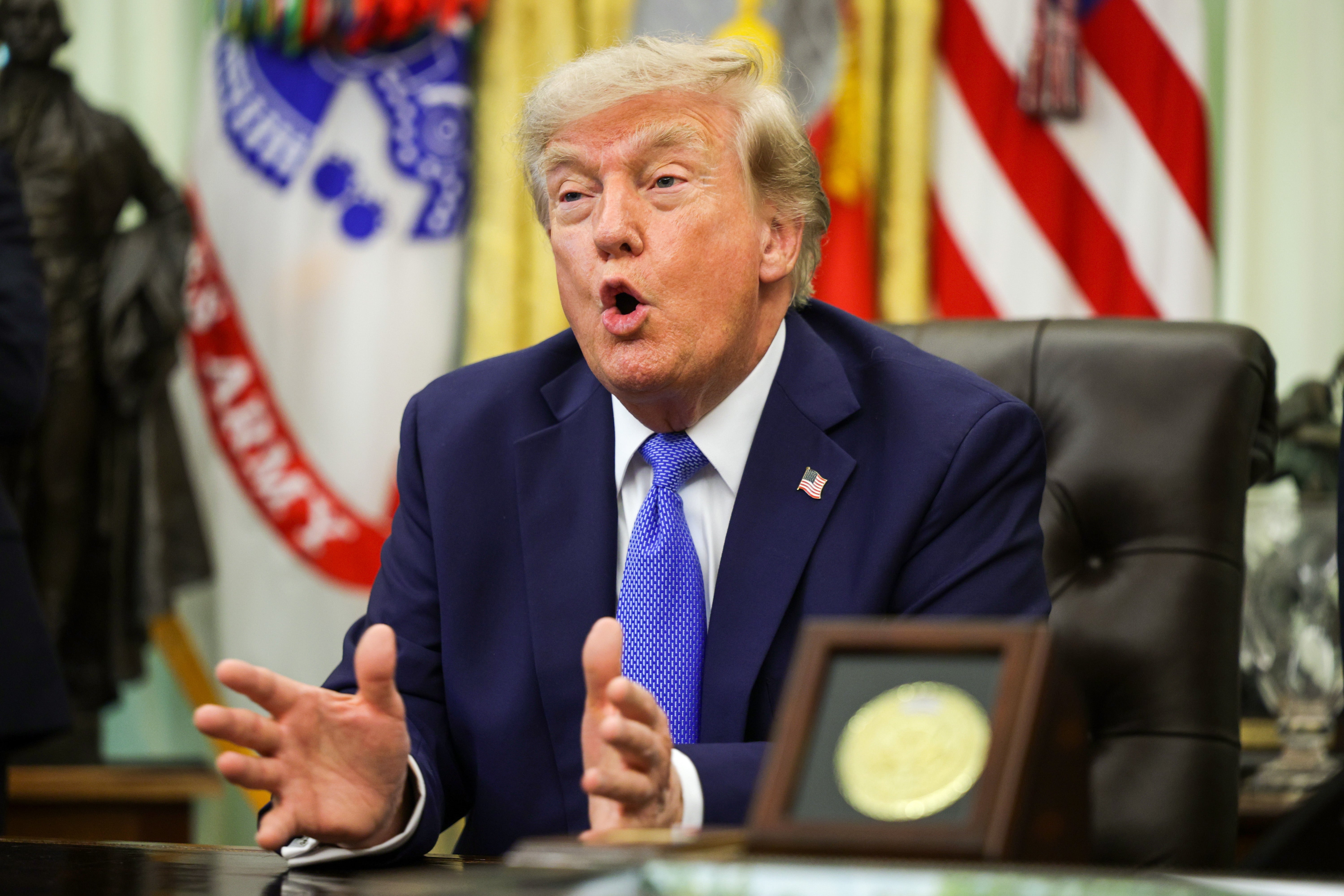
After a lengthy legal battle, a split ruling from the nation’s high court determined in June that children born in the United States to parents “illegally or temporarily present” are indeed “subject to the jurisdiction” of the United States and therefore citizens at birth.
A month later, Trump unveiled two executive orders aimed at circumventing the Supreme Court’s decision.
The president signed executive orders targeting children born to foreign government employees as well as children of mothers accused of lying about their intentions to visit the country while pregnant.
Trump has also attempted to block citizenship for children whose parents are accused of being terrorists, as well as for newborns in U.S. territories.
But the Supreme Court “reaffirmed that the right to citizenship extends to all but three narrow categories of children, each of which has long been considered to be outside the nation’s governmental authority at birth,” including children of foreign officials granted diplomatic immunity, children of enemy forces hostilely occupying U.S. territory, and children born aboard foreign government vessels.
Apart from these rare and long-established circumstances, all children born on American soil are citizens at birth, the Supreme Court affirmed.
“Citizenship is the fundamental human right because it is nothing less than the right to have rights,” Cooper wrote Wednesday, citing the 1958 Supreme Court decision in Pérez versus Brownell.
“The Citizenship Clause promises citizenship to virtually every child born in the United States,” Cooper said.
“Earlier this year, the Supreme Court kept that promise,” he added. “This Court does it again today by prohibiting the application (of the decree) as to the certified group.”
The Citizenship Clause of the 14th Amendment clearly states that “all persons born or naturalized in the United States, and subject to the jurisdiction thereof, are citizens of the United States and of the State wherein they reside.”
The Supreme Court’s 2026 birthright ruling marked the second time it has affirmed the principle, which has long been a target of anti-immigrant policymakers, including White House chief of staff Stephen Miller.
Cooper’s injunction follows a lawsuit filed by the American Civil Liberties Union and other groups on behalf of those affected by Trump’s latest executive order.
“Enough is enough,” Cody Wofsy, deputy director of the ACLU’s Immigrant Rights Project, said in a statement responding to Judge Cooper’s latest ruling.
“The Supreme Court has twice rejected attempts to destroy the birthright of citizenship, in 1898 and again earlier this year,” he added. “A third time is not the answer, and the president must accept that birthright citizenship is the law of the land.”
Gn headline