
Driving under the influence can make you think you are under the influence of alcohol.
However, DUI applies to other substances, both illegal and legal, that can affect a person’s ability to drive safely. And police are increasingly arresting people on suspicion of driving under the influence of something other than alcohol, in part because of declining alcohol consumption.
“If you even look at the national, or even local, data and trends here in Lancaster County, what DUI looks like today in terms of the degree of drug-impaired driving compared to what DUI was 20 years ago, it’s a completely different look,” said Leo Hegarty, executive director of the Pennsylvania DUI Association, a Harrisburg-based nonprofit that works to eliminate drunk driving. “The availability of drugs, the social acceptance, the ability to create drugs in a makeshift laboratory, that didn’t exist 20 years ago.”
In 2007, just over 10,000 of Pennsylvania’s 91,642 drunk driving violations, or 11 percent, involved drugs other than alcohol. In 2015, this figure increased to 25% (26,382 of 103,521 violations) and in 2025, to 36% (26,434 of 73,206 violations).
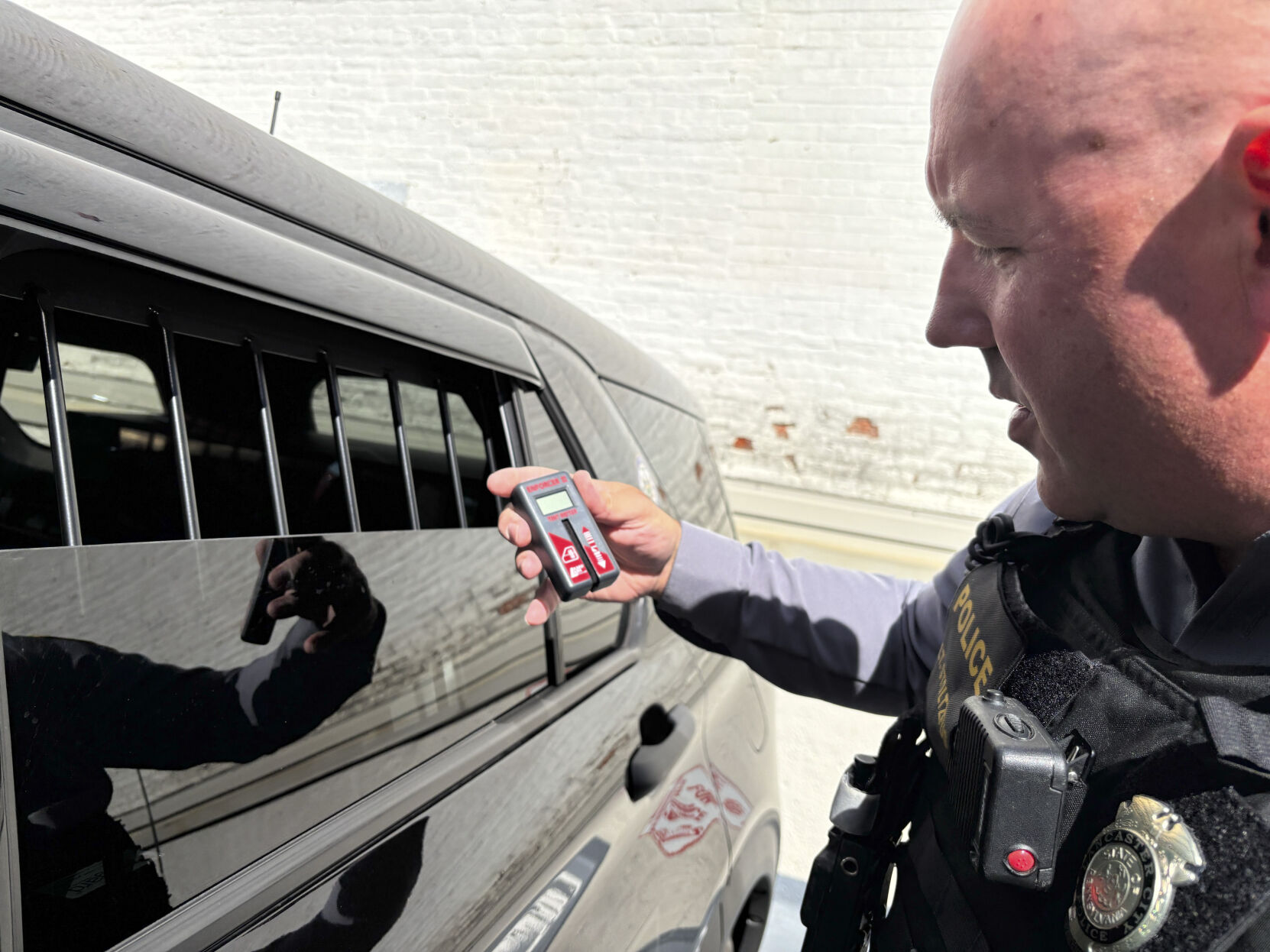
Lititz Police Sgt. Tyler Weinoldt is a drug recognition expert, someone specially trained to identify drivers impaired by alcohol and other drugs. A police officer for 11 years, Weinoldt, 32, was recognized last fall by the Pennsylvania DUI Association for completing 67 drug evaluations in 2024; he completed 82 evaluations last year.
Only one other drug recognition expert in the state had more in those two years, an officer in Northampton County.
Pennsylvania has 249 drug recognition experts based on 2025 certifications, including 13 in Lancaster County. The Lititz, Lancaster Township, North Lancaster County and Northwest Region police departments have a total of eight drug recognition experts, and five troopers from Pennsylvania State Police Troop J are certified.
Weinoldt is just one of 16 drug recognition experts in the United States, Canada and the United Kingdom – countries where the program is used – to have conducted more than 50 evaluations in 2024, according to the Pennsylvania DUI Association. He also performs assessments for other county police departments that do not have their own drug recognition experts.
“We’re always looking to train more. The problem is the training is not for everyone. It’s not easy training,” said Hegarty, who added that many departments don’t have enough staff to be able to send an officer through several weeks of training.

Lititz Borough Police Chief Jared Hahn, right, and Sgt. Tyler Weinoldt is seen at the Pennsylvania DUI Association’s 46th Annual Meeting and Training Conference in Bethlehem in November 2025. Weinoldt was recognized by the association for his work as a drug recognition expert in 2024. Hahn has been recognized for 15 years as an accredited drug recognition expert in Pennsylvania. He became Lancaster County’s first Certified Drug Recognition Expert Officer in 2010.
Weinoldt’s boss, Chief Jared Hahn, became the first certified drug recognition expert officer in Lancaster County in 2010. Hahn is still certified, but given his duties as chief, he does not conduct assessments.
Weinoldt “is truly committed to growing professionally and competently in the field of combating drug-impaired driving,” Hahn said.
Weinoldt said it was nice to have support.
“If a call comes in, he (Hahn) knows I’m probably going to do it. He lets me go to practice,” Weinoldt said.
Training in Kensington
Classroom training for drug recognition experts lasts nine days, followed by about a week of certification, during which officers observe people under the influence of drugs other than alcohol. This is happening in the Kensington neighborhood of Philadelphia, which has often been described as the largest open-air drug market in the country.
The DUI Association works with Rock Ministries of Philadelphia to identify volunteers who are drug users, according to Dave Andrascik, state coordinator of the association’s Drug Recognition Expert Program.
“We’re asking for volunteers to come in and while they’re going through the evaluation, we talk to them about the possibility of going to rehab or detox,” Andrascik said. “If they are seriously considering detox or rehab, Rock Ministries can get them to a rehab center within hours.”
Typically, Andrascik said, the training involves performing assessments on 50 to 100 people. About 10% of these people will go to rehab.
“We actually see a wide range of drugs during certification in Philadelphia (in the Kensington area). We see a lot of opioids. We see a lot of stimulants (cocaine and methamphetamine), PCP, marijuana and many others,” Andrascik said. “It’s not uncommon for them to have five or six different medications in their system when we take a saliva sample from them.”

Many substances found on Philadelphia’s streets end up throughout the state, including in Lancaster County, Andrascik said.
The DUI Association provides all training and assessment equipment, funded by the Pennsylvania Department of Transportation for Highway Safety. Each police department is responsible for transportation costs, which vary depending on the location of the class.
Looking for signs
There are seven categories of drugs used by drug recognition experts:
• Central nervous system depressants such as alcohol, Valium, Xanax, Prozac and Zoloft
• Central nervous system stimulants such as cocaine and methamphetamines
• Hallucinogens such as ecstasy, LSD and psychedelic mushrooms
• Dissociative anesthetics such as PCP and ketamine
• Narcotic pain relievers such as heroin, morphine, methadone, Vicodin and OxyContin
• Inhalants
• Cannabis
“All known substances that cause impairment are classified into these seven categories based on the signs of symptoms they cause in the human body. A sign is something an officer can see. A symptom is something the user feels,” Hegarty said.
Weinoldt said he knows what drug category a DUI suspect falls into after evaluating them — a process that can take about 30 minutes — or if the person has a health condition, “because that’s another important thing … there are certain medical conditions that can kind of mimic drug impairment.”

A police officer speaks to a driver at a drunk driving checkpoint along Route 322 in Ephrata, Saturday, August 9, 2014.
Hahn said officers look for things people can’t control.
“So maybe blood pressure, pulse rate, pupil dilation, pupil constriction – looking at observable signs and symptoms to form an opinion on what that person might be under the influence of,” Hahn said.
Drug Trends
Weinoldt said from what he’s seen recently, meth is making a comeback. When he started in the drug recognition field in 2019, he said he saw more heroin and fentanyl.
“Drug trends change. What people use changes. What’s available changes,” Hahn said. “What people used recreationally or medically a year ago before they got behind the wheel of a car might be completely different from what it is today or what it is tomorrow…
Gn Health

