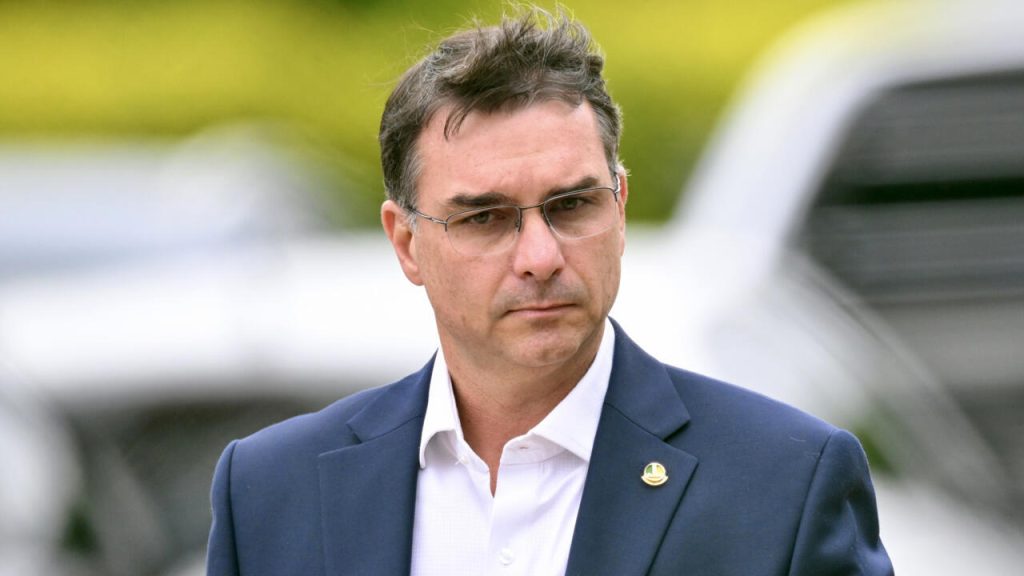
Who killed Tupac Shakur on the night of September 7, 1996? The trial of Duane “Keffe D” Davis, the former leader of the South Side Compton Crips, accused of shooting the rap legend while he came to watch a Mike Tyson fight, opens Monday, August 10, in Las Vegas.
The prosecution hopes to show that Duane “Keffe D” Davis, the former leader of the South Side Compton Crips, ordered the murder and provided the murder weapon. Aged 63, he risks life imprisonment without reduction.
Died at age 25, “2Pac” was a key figure in the famous rivalry between the West Coast and East Coast rap scenes of the United States. With his hits “California Love” and “All Eyez on Me”, declaimed to melodies mixing groove and big bass, this son of a member of the Black Panthers embodied the bad boy of the “West Coast”.
California Love
The trial promises to delve into the ego wars between his label Death Row Records, founded by Marion “Suge” Knight, and Bad Boy Records, the one created on the East Coast by Sean “P. Diddy” Combs, and where Christopher “The Notorious BIG” Wallace officiated – a star rapper killed six months after the death of Tupac Shakur.
According to the prosecution, Death Row Records was protected by Mob Piru, a Los Angeles gang of which Suge was a member; while Bad Boy Records hired rival South Side organization Compton Crips, led by Duane Davis, for protection.
After the Mike Tyson fight at the MGM Grand casino, Suge and Tupac beat up Duane Davis’ nephew, Orlando “Baby Lane” Anderson, because he ripped a medallion off the neck of one of Death Row’s employees.
The gang leader then organized revenge, according to the prosecution.
Compromising memoirs
Due to a lack of evidence, the investigation floundered for decades, before being relaunched by the publication in 2019 of Duane Davis’ memoirs.
He says he was in the front of the white Cadillac from which Tupac’s fatal bullets were fired. He also explains that he passed a gun to the back seat, without ever saying who fired it – all the passengers in the vehicle have since died.
Compromising statements consistent with interviews previously given to the press, which turned against him and led to his arrest in September 2023.
But the former gang leader now denies these confessions and pleads not guilty.

A fresco dedicated to the memory of Tupac Shakur, in Los Angeles, May 26, 2016. © Valérie Macon, AFP
“I am innocent. I have never killed anyone,” he assured ABC News in March 2025, in an interview from his prison. “They have no evidence against me. They can’t even place me in Las Vegas.”
He now assures that he was in Los Angeles on the evening of the crime and that he never read his own memoirs, according to him fictionalized by his co-author for commercial reasons.
“I just gave him details about my life,” he said. “And he went and did his little investigation and wrote the book all by himself.”
Before the trial, his lawyers fought so that the book, as well as a 2008 police interview as a witness, could not be used as evidence against him. In vain.
The hearing is expected to last four weeks, the first of which must be devoted entirely to jury selection.
Whatever the verdict, it is unlikely to satisfy those close to Tupac Shakur.
In May, his half-brother filed a civil complaint in which he believes that “there remain individuals involved in the murder of Tupac who, for 30 years, have not been held accountable for their crimes.”
The complaint notably mentions the recent documentary mini-series “Sean Combs: Taking Stock”, where Duane Davis assures in a police interrogation that P. Diddy offered him a million dollars to assassinate Tupac.
The murder remains one of the most famous “cold cases” in the United States, the subject of endless debate among music fans.
AFP