
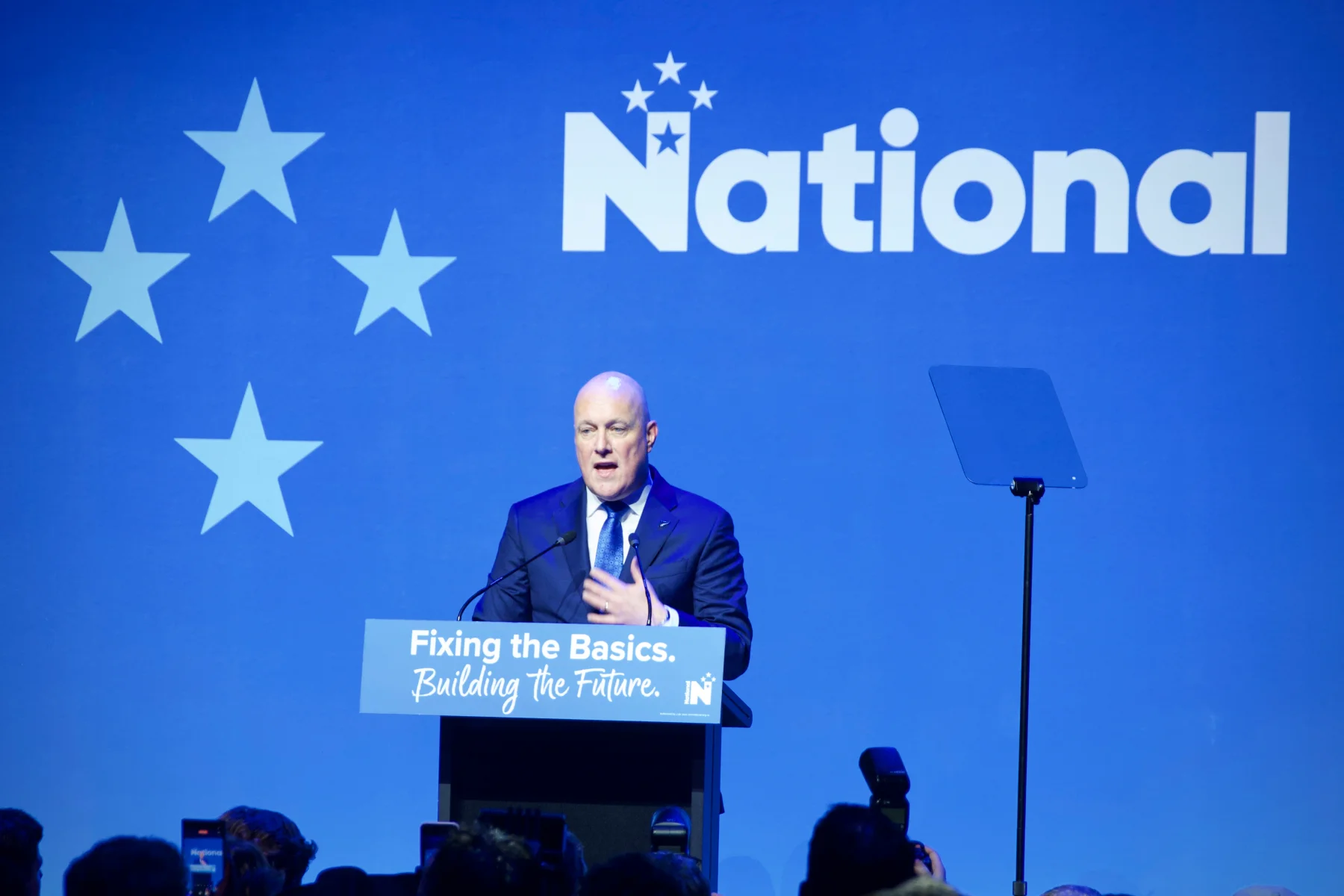
New Zealand Prime Minister and National Party leader Christopher Luxon speaks to party faithful in Auckland, New Zealand, Saturday, November 7, 2026.
Alex Robertson/AP
hide caption
Alex Robertson/AP
WELLINGTON, New Zealand — New Zealanders will wait weeks to find out who will lead the country after Saturday’s election failed to deliver a decisive victory for the right or left, leaving tough negotiations for a razor-thin government majority as the only apparent path to victory for either side.
The closest vote in years delivered a stinging rebuke to the major parties that have long dominated New Zealand politics, Christopher Luxon’s center-right National Party and the center-left Labor Party led by Chris Hipkins, as voters gave more support than before to minor parties on the ideological flanks. According to Saturday’s figures, minor parties would begin negotiations for a government deal with leverage to extract deeper policy concessions from a weakened National or Labor party.

The near-deadlock was partly because voters, seemingly fed up with New Zealand’s economic woes and apathetic toward Luxon and Hipkins, chose to propel a new group into Parliament for the first time in years. Opportunity, led by Qiulae Wong, a 38-year-old business consultant and political newcomer, is not aligned with either bloc and Wong has said she could work with either camp to form a government.
Wong’s promises of evidence-based centrism and an end to partisan bickering helped secure seven seats for Opportunity in Saturday’s results – enough to frustrate both the left and right in a straightforward path to power. It’s a stunning rise for a party that made three failed attempts at Parliament before Wong became leader less than a year ago.
The conservative bloc has a simpler path to victory, but the results could change
Other winners were harder to pin down and on Sunday, “who won the 2026 election” was the top trending Google search in New Zealand. The result was so unclear that the parties will not begin negotiations to form a government until the final results are published on November 27, confirming the exact number of seats they won.
With 2.8 million ballots counted on election night, the current conservative government led by Luxon’s National Party appeared close to returning to power as tenuously as possible – with just one seat. However, Luxon did not claim victory, but instead expressed cautious optimism about his ability to negotiate a second term in power.
Speaking to reporters on Sunday, Luxon blamed public discontent on global shocks that have rocked New Zealand’s trade-based economy, noting that other incumbent governments around the world have faced voter resentment over the cost of living.
Yet his opponent Hipkins, who was voted out of office in 2023 largely due to his dissatisfaction with the same economic issues, didn’t seem to benefit Saturday. The left bloc seemed far from securing a majority, but it still hoped it could triumph – even if that seemed a more distant prospect.
Electoral authorities were due to begin counting nearly 400,000 so-called special votes on Sunday, including those from New Zealanders living overseas, a process expected to take three weeks.
These polls have historically given left-wing parties one or two additional seats in parliament, which could wrest the current slim majority from the right, although such a result would likely leave the left also struggling to form a majority. If a government cannot be formed, New Zealand could face another vote.
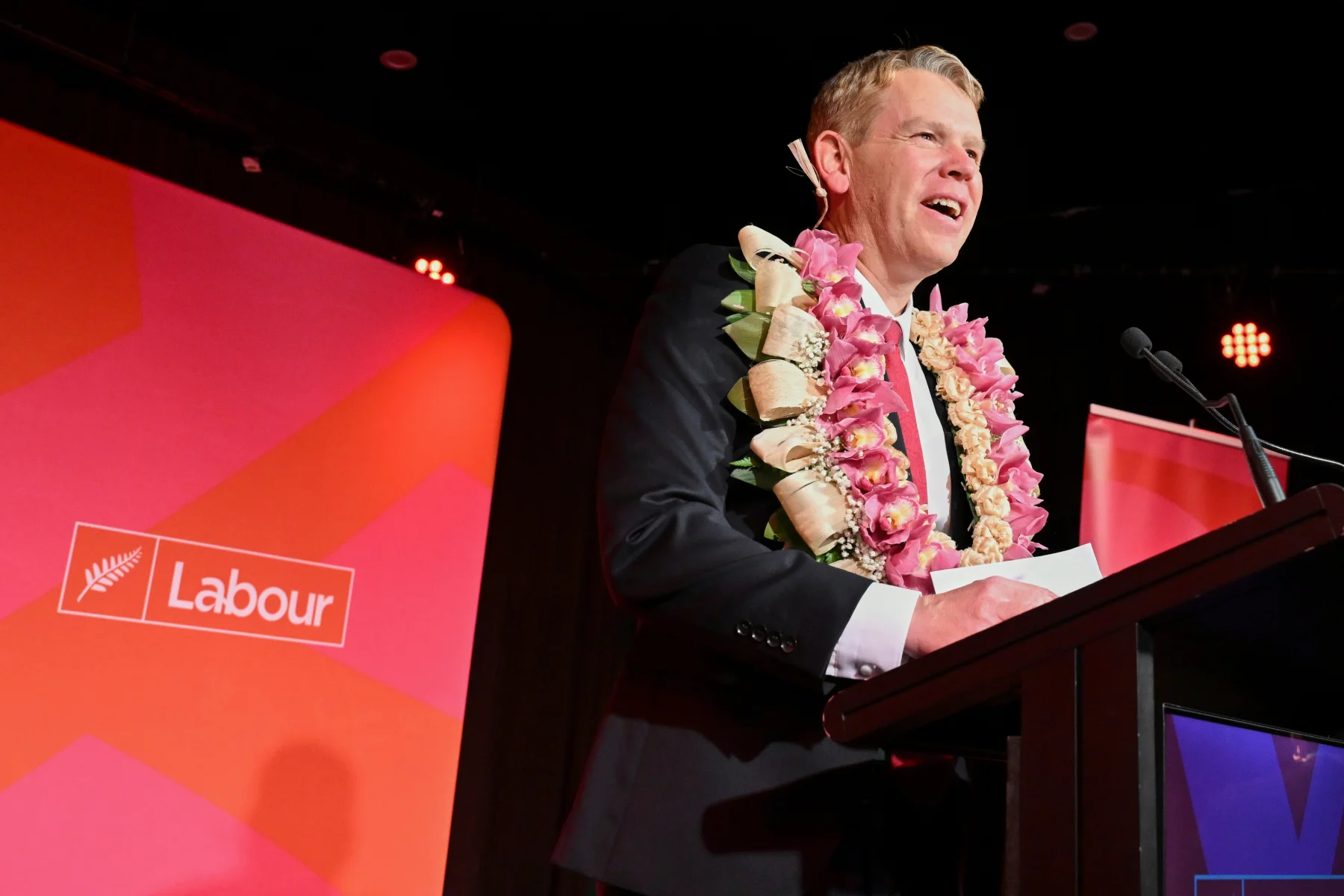
Labor Party leader Chris Hipkins addresses party faithful in Upper Hutt, New Zealand, Saturday November 7, 2026.
Mark Tantrum/AP
hide caption
Mark Tantrum/AP
Outgoing President Luxon calls on people to “calm down” and take a break from politics
“I think everyone has forgotten about politics, so let’s all take a little break for the next three weeks,” Luxon told reporters on Sunday. He will lead an interim government until an outcome is achieved.
Luxon suggested that National had a viable path to power and boasted that it had won more seats in Parliament than any other group. However, Saturday evening was dark for his party.
Several of National’s most senior lawmakers would leave politics based on results so far, including finance and defense ministers, the speaker of parliament and the attorney general. As the ruling party’s traditional partners gain increased support, Luxon faces a list of more strident political demands to gain their support.
The libertarian ACT won 13 seats and the populist New Zealand First won 12. Both are led by seasoned and savvy politicians, and critics of Luxon, a former business executive who entered politics in 2020, said his dealings with them in the three years since he took office had exposed his political inexperience.

Opportunity Party leader Qiulae Wong poses for a portrait outside Parliament in Wellington, New Zealand, Friday October 30, 2026.
Charlotte Graham-McLay/AP
hide caption
Charlotte Graham-McLay/AP
The vote was a slap in the face for both major parties
New Zealanders do not vote for prime ministers. Instead, they voted twice, once for their preferred party and another for the candidate they want for local representative.
The country has only one house of Parliament and no states, so the central government has ultimate power over the direction of New Zealand. Governments in this South Pacific nation of 5.6 million people are elected every three years.
National won just 29.21 per cent of the preferred party vote on Sunday, a collapse from its previous result, and secured its 42 seats entirely by winning local constituency elections. Luxon, who faced two separate confidence votes among his own lawmakers this year, has further lost popularity as a leader as Election Day approaches.
However, Labor also won just 29.36% of the party vote, a result which appears to suggest a second electoral defeat for career politician Hipkins. Despite winning roughly the same percentage of votes as the National Party, Labor has only won 36 seats so far because it has won fewer local elections.
Small left-wing parties saw their support strengthened. The conservationist Greens won 16 seats and indigenous rights group Te Pāti Māori took five.
The total number of seats in the New Zealand Parliament is changing due to quirks in the way seat allocation is calculated. There would currently be 131 elected lawmakers, with 66 seats required for a majority.
Luxon’s conservative bloc currently holds 67, a razor-thin margin likely to disconcert a leader managing a three-way government with two emboldened minor parties. However, the left bloc held only 57 seats before the historically left-wing special votes were counted.
Even if the final tally slightly increased the left bloc’s number of seats, Hipkins would apparently need the support of newcomer Wong to govern.
Before the elections, Luxon had repeatedly ruled out any negotiations with Wong. On Sunday, he evaded questions about whether his tiny lead had made him change his mind.
Gn headline

