Iranian singer Parastoo Ahmadi was flogged 74 times on Monday after being found guilty of the crime of “insulting public morals” for performing without the compulsory head covering for women in the country.
Ahmadi suffered corporal punishment for the outfit she chose during a live-streamed concert in 2024, according to her lawyer, quoted Monday by Iranian reformist newspaper Etemad. But the Iranian women who spoke with CBS News on Tuesday said they were punished not for breaking the rule, but for daring to publicly challenge the country’s repressive regime — a challenge that made her “a symbol of resistance.”
Ahmadi’s lawyer told Etemad that the singer and four members of her production team presented themselves to provincial authorities in the holy city of Qom, as required by their convictions which were upheld in September by a local criminal court.
Parastoo Ahmadi/YouTube 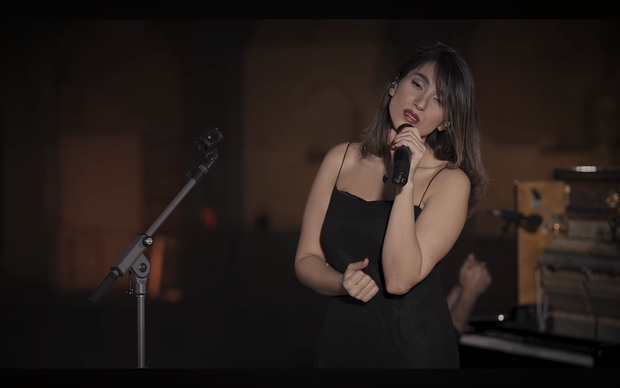
The Qom court upheld the convictions for “insulting public decency”, citing the “immoral” content posted online during Ahmadi’s performance in December 2024, which went viral in Iran.
In addition to the 74 lashes, Ahmadi and eight members of his team were also sentenced to a travel ban outside the country for two years and a ban on all “artistic activity” for two years.
Ahmadi held his concert at the Dayr-Gachin caravanserai, an ancient site along Iran’s Silk Road. It included themes of nationalism and popular uprising, and saw her openly flouting both the Islamic Republic’s dress code and the long-standing ban on women singing in public.
“I feel like I’ve been whipped.”
Ahmadi’s punishment reverberated across the country, as did his performance two years ago.
“When it comes to his flogging, I feel deep pain,” Marjan, a 41-year-old optician from Karaj, a town northwest of Tehran, told CBS News on Tuesday. “I feel like I got whipped for doing what I wanted.”
“It’s something much deeper than just sympathy or solidarity,” she said. “We Iranian women identify with her in a deeper psychological sense.”
Marjan, who declined to give her full name, called Ahmadi a “symbol of resistance.”
“She was an icon when she performed at that concert, and now after receiving these lashes. These are two acts of resistance,” said Marjan, who spoke by phone with CBS News. “The regime is not afraid of women who sing, it is afraid of people who courageously carry out what it prohibits.”
This “is not the punishment of an artist, it is the punishment of a person who made use of his most fundamental rights, namely freedom of expression and creative expression,” admitted Thoraya, 32, from Tehran.
“No state owns the voices of its citizens. Singing is not a crime,” she told CBS News, also in a telephone interview. “No state power can subordinate artistic expression to political obedience. I feel solidarity with Parastoo, but it is above all human solidarity, not political.”
“I’m not taking her place or speaking for her,” she said, “but her right to wear what she wants, to pursue her artistic life, is something that I also consider my right.”
Gn entert