Aging is an inevitable part of life, but some of us are healthier than others in our later years – and scientists want to discover the underlying reasons.
In a new study published in Cellular metabolismChinese researchers found that when stress was placed on the shins of mice for four months, it had a rejuvenating effect on certain aging processes – and was linked to longer lifespans in the animals.
Maximum lifespan was increased by up to 15.4 percent, the data showed, and median lifespan averaged 9.4 percent across the entire group of mice – the equivalent of almost 80 extra days – compared to control mice.
Researchers think this could be one of the mechanisms by which exercise is good for us, and they also took an in-depth look at some of the chemical changes that bone tension might cause in the body to find out why this happens.
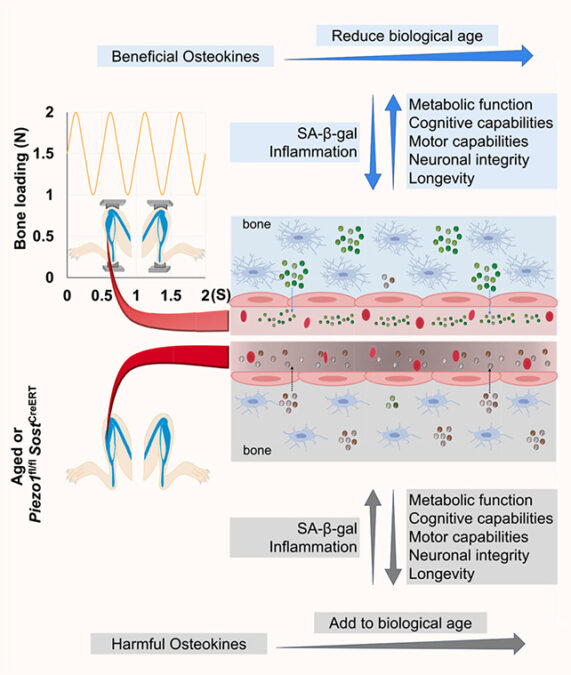
“Our results highlighted the essential role of bone (osteocyte) mechano-sensing in modulating whole-body aging and positioned bone as a key mechano-responsive organ with potential therapeutic implications for human aging,” the researchers write in their published article.
The method the researchers used was dynamic tibial axial loading or DTAL, an established technique for putting mouse bones under moderate, precisely controlled pressure.
This gives researchers a way to specifically isolate this type of bone strain and see its consequences. Pressure was applied in short 3-minute bursts, twice a week, for the four-month study period.
 ))>
“Physical activity (exercise) can, in theory, affect all organs of the body and it is therefore difficult to distinguish direct from indirect effects,” the researchers write.
“However, DTAL provides a controlled setting for mechanical loading only on the tibial bone and therefore the subsequent stress, frequency, number of cycles and insertion of rest between cycles can be precisely defined.”
In addition to increased lifespan, mice subjected to the bone stress procedure showed improvements in memory, immune system performance, and blood sugar regulation. This led to improved metabolism and health far beyond bone strength.
The researchers also tried to genetically modify mice to eliminate the PIEZO1 protein, which bone cells use to detect the application of force. This has led to accelerated aging throughout the body, including cognitive decline and organ inflammation.
Based on chemical analysis of the animals’ blood and data on gene and body tissue activity, it appears that bone tension releases a beneficial protein called pigment epithelium-derived factor (PEDF), which helps maintain healthy cells throughout the body and reduce wear and tear on the immune system.
Additionally, researchers believe that specialized cells in bone, called osteocytes, are not only responsible for maintaining healthy bones, but also contribute to the proper functioning of the immune system, through the bone marrow, where many immune cells are produced.
“Through mechanical transduction, osteocytes play an essential role in controlling bone formation and bone resorption, thereby maintaining skeletal homeostasis,” the researchers write.
“Here, we discovered that osteocytes can also secrete factors that control the development of bone marrow immune cells.”
In short, in mice at least, the kind of strain that exercise puts on bones has been linked to a whole host of biological improvements throughout the body – as well as a longer lifespan. Bones may be more important for healthy aging than we thought.
All this of course remains to be confirmed in humans, but it is already a promising area of research.
In the future, it may be possible to develop drugs that replicate these health improvements, without straining the bones – which could be useful for people who are unable to exercise and struggle to stay physically active.
“This could potentially be manipulated to prevent aging, improve health, and help people who are unable to exercise or have reduced mobility,” the researchers write.
The research was published in Cellular metabolism.
This article was fact-checked by Peter Dockrill and edited by Peter Dockrill. Although we are proud of our process, we are only human. If you spot an error, please let us know.
Gn Health