

GREENVILLE, South Carolina —
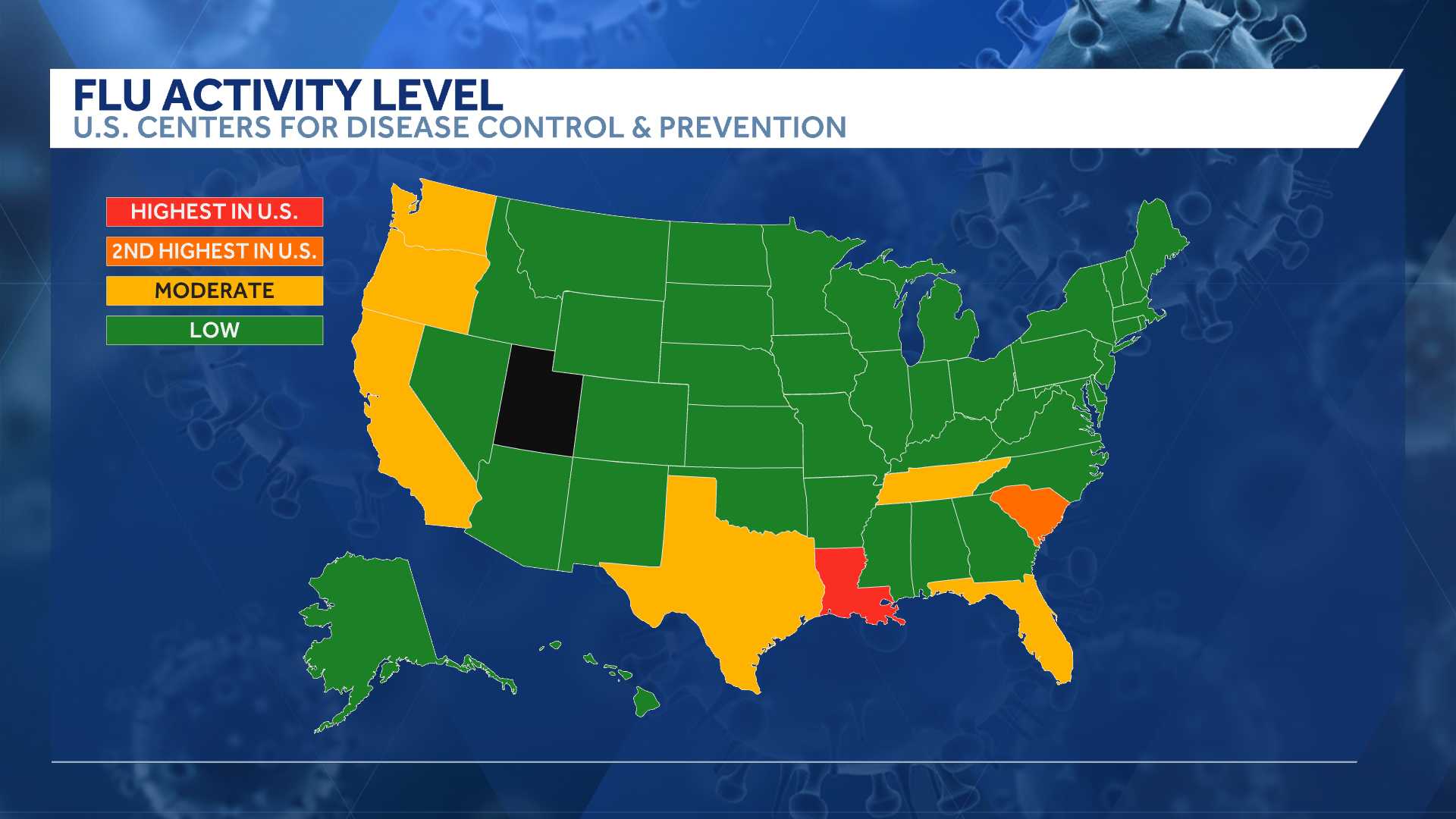
South Carolina is second in the nation according to the latest flu activity report from the Centers for Disease Control.
South Carolina ranks second in flu activity
South Carolina is in the “high” category, with only Louisiana higher.
The latest data is for the week ending October 31, 2026.
Each year, the South Carolina Department of Public Safety monitors the flu and other illnesses. This activity is called disease surveillance.
Flu surveillance allows SCDPS to see what impact the flu has on the health of residents.
Here is the latest data for the week ending October 31:
- South Carolina reported widespread activity this week.
- This week, 1,079 laboratory-confirmed tests were reported. During the current flu season, 2,279 laboratory-confirmed tests have been reported.
- The percentage of patient visits to sentinel providers for influenza-like illness (ILI) was 5.1%, which is above the South Carolina benchmark (3.2%). The level of influenza-like illness activity was high overall.
- This week, 137 flu-associated hospitalizations were reported by 60
hospitals. The cumulative hospitalization rate is 6.9 per 100,000. During the current flu season, there have been 350 flu-associated hospitalizations. - This week, no flu-associated deaths were reported. The cumulative mortality rate is 0.0 per 100,000. During the current flu season, there have been 2 flu-associated deaths.
National distribution of data:
- In week 43 (week ending October 31, 2026), of the 513 influenza viruses reported by public health laboratories, 502 were influenza A viruses and 11 were influenza B viruses. Of the 388 influenza A viruses subtyped in week 43, 379 (97.7%) were influenza viruses A(H1N1)pdm09.7 (1.8%) were influenza A(H3N2) viruses. and 2 (0.5%) were influenza A(H5) cases.
- It is too early to know which viruses might predominate or to say whether there might be implications for the effectiveness of the flu vaccine this season.
- Two pediatric deaths associated with seasonal influenza virus infection and occurring during the 2026-2027 flu season were reported to the CDC this week.
- The CDC estimates there have been at least 1,700,000 illnesses, 25,000 hospitalizations and 1,400 deaths from the flu so far this season.
The CDC explains the purpose of FluView
FluView, a weekly influenza surveillance report, and FluView Interactive, an online application that allows deeper exploration of influenza surveillance data, are updated weekly. The data presented each week is preliminary and may change as new data is received.
The U.S. influenza surveillance system is a collaborative effort between CDC and its many partners in state, local, and territorial health departments, public health and clinical laboratories, vital statistics offices, health care providers, hospitals, clinics, and emergency departments. Information classified into four categories is collected from nine data sources to:
- Find out when and where flu activity occurs;
- Determine which flu viruses are circulating;
- Detect changes in flu viruses; And
- Measure the impact of influenza on illness, hospitalizations and deaths.
It is important to maintain a comprehensive influenza surveillance system for the following reasons:
- Influenza viruses constantly undergo minor changes (commonly called “antigenic drift”), and ongoing data collection and characterization of viruses helps monitor these changes.
- Influenza viruses can also undergo an abrupt, major change (called an “antigenic shift”) that results in a virus that is very different from the influenza viruses currently circulating. The antigenic shift may lead to a pandemic if a new influenza A virus, capable of easily infecting people and spreading from person to person efficiently and sustainably, emerges. Virus surveillance can detect these changes and help inform the public health response.
- Annual influenza vaccination is recommended for individuals aged ≥6 months, and influenza vaccines are regularly updated based on surveillance results.
- Antiviral treatment recommendations for influenza virus infection are based on laboratory monitoring of antiviral resistance.
- Influenza surveillance and targeted research studies are used to monitor the impact of influenza on different segments of the population (e.g., people in certain age groups, people with underlying health conditions) and the impact of influenza prevention measures such as vaccines.
Gn Health

