It’s been a very difficult few days at the SEC.
Lawsuits are flying. Billable hours accumulate. The politicians are screaming. The schools are angry. LSU, single-handedly, raised enough of a ruckus to be in danger of being kicked out of the league as early as next week.
Just give Commissioner Greg Sankey just a handful of extra gray hairs while he sorts it all out.
If there’s a silver lining to all this off-the-field chaos for Sankey, it’s that on Saturday — and it looks like Tuesday — the league is doing more than taking care of itself. Not only is the ongoing tug of war between the SEC and Big Ten being won on the field and in the television ratings, but it is also being won in the College Football Playoff selection committee room.
Definitely. Unquestionably. That’s enough to intrigue everyone outside the imprint, to the point where the Big Ten’s Tony Petitti, for all his power over the company, must be going crazy even though there’s nothing to be done.
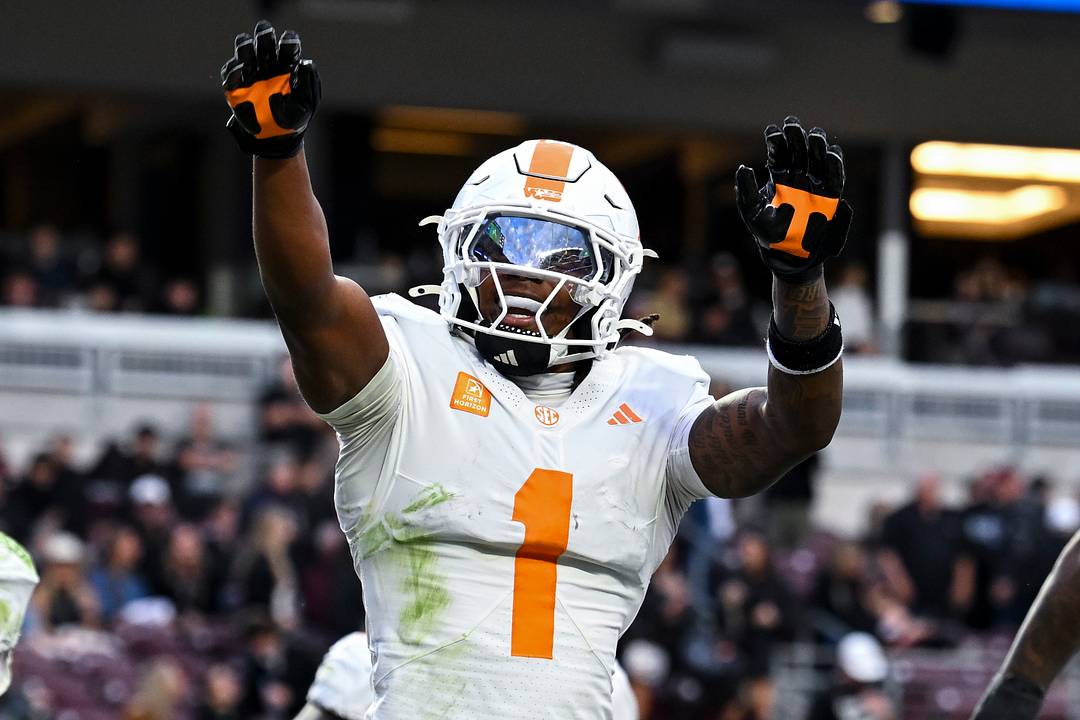
The latest set of rankings practically adds to this ongoing narrative. The SEC has the best team with a loss (Georgia No. 1, ahead of undefeated Utah), first three two-loss teams (No. 3 Texas, No. 5 Tennessee and No. 6 Alabama), as well as the top two four-loss teams (No. 17 Oklahoma and No. 20 Florida).
MORE SI COLLEGE FOOTBALL: Podcasts | Forums | Newsletter | Support Challenge
The highest-ranked Big Ten team in the standings is No. 9 UCLA, whose place in the bracket is precarious. Although committee chairman Hunter Yurachek noted the Bruins were only graded on their triple-overtime loss to Michigan last weekend, it’s unlikely they’ll be close to 100 percent this weekend in the Rose Bowl against No. 15 USC. Quarterback Ty Dieffenbach suffered a hip injury that caused him to be forced out against Michigan. Indiana, the defending national champion, suffered the second-largest drop of any team in the rankings (six spots, down to 14th). No. 21 Ohio State fell seven points after its loss to Nebraska, behind Florida which hasn’t won by more than one score since September and No. 19 Louisville which has no Top 25 victory.
Average ranking of SEC teams in this week’s Top 25: 12th. Average in the Big Ten? Closer to the 17th.
This dichotomy shouldn’t come as much of a surprise after early rankings were an exercise in disbelief that Alabama was ranked so highly while the Hoosiers were given little benefit of the doubt. But as the weeks of the regular season go by, the debate over the Power 2 conferences is going to have a real impact on this year’s playoffs.
As it stands, the Big Ten only has one team in the field and will eat turkey, recognizing that there are at least four more contenders for an at-large bid — even if everyone needs help to make the field and getting two besides the conference champion seems like a stretch.
Meanwhile, the SEC could potentially host three of the four first-round games depending on how things go with the losers of the conference championship game.


To give this committee some credit, it has taken on the task of promoting the strength of the calendar more heavily than any previous edition. It’s no secret that the SEC is boosted by this, not only having teams that look like playoff contenders, but also having a 10-2 mark in the non-conference slate.
“Schedule rigor is one of the tools we have in our toolbox that we use to distinguish teams,” Yurachek noted.
The problem is that, among that 10-2 record, there are few current CFP contenders who can make a meaningful contribution to the discussion beyond a collective narrative supported primarily by overall winning percentage. Tennessee faced Georgia Tech in Atlanta earlier this season, but the Yellow Jackets aren’t going to the bowl and are a double-digit underdog against Georgia, which can only give its rival some rest for the SEC Championship Game. Alabama dominated a Florida State team that has since fired and hired a head coach.
While it’s safe to say we can still consider Texas’ win over Ohio State significant given that the Buckeyes were at full strength in early September, in retrospect that seems about the only significant win (aside from perhaps Mississippi over Louisville, although neither has factored much into their conference races over the past month).
Still, it increased the stock of SEC teams far more than the Big Ten, which has dealt with a staggering number of quarterback injuries to further undermine the league’s reputation. Add it all up and the metrics – which still aren’t transparent, mind you – continue to show one league being above the other.
“There’s a byproduct of that (measuring the opposing team’s average strength in the conference) that you have team strength that we can see,” Yurachek said. “It’s really used to compare conference schedules within an individual conference, not to compare one conference to another.”
Ahh but they are, as they have been since they started meeting. There has always been a consistent preference for these SEC teams on this year’s committee and this has been borne out in all the rankings established.
After three years of parading trophies and talking about closing the gap between the leagues, the Big Ten needs to recognize that this will simply be the case for the rest of 2026 and the only thing left to do is make sure they are represented in Las Vegas in January.
Until then, this constant back and forth between conferences can probably be put aside for this season. On the field and in the committee room, a winner has already been declared.
PODCAST: Listen Sports Illustratedthe college sports podcast, Others receive voteshosted by Pat Forde, on Apple and Spotify. Watch the show on SI’s college YouTube channel or on SI TV.
 Add us as your favorite source on Google
Follow
Gn sports