
Thousands of miles away, a Texan father, hidden in a country he doesn’t know, reminded his son to vacuum the carpet every week.
Moussa Diawara is originally from Mali, but spent nearly half his life in the United States, where he married, had two children who were American citizens, worked and paid taxes. U.S. Immigration and Customs Enforcement deported him to Ghana over the summer. Diawara has no ties to Ghana, but a judge ordered that he cannot be deported to Mali because he would likely face persecution there. Diawara said that a few days after his arrival in Ghana, local authorities forced him to take a flight to Mali.
“I’m still like, ‘This isn’t real,’” Diawara said.
Deportations to third countries are a reality for many, as President Trump’s administration seeks to carry out the largest deportation in U.S. history. When the U.S. government decides that an immigrant cannot remain in the United States and cannot be sent to their home country, it can send them to a third country. A 60 Minutes investigation found that some of the third countries that accept people deported from the United States routinely send them back to the very countries they fled — places where U.S. immigration judges have ruled they would likely be persecuted or tortured.
What happened to Moussa Diawara
Diawara, 57, arrived in the United States on a tourist visa when he was 32. He extended the duration of this visa and then requested asylum, arguing that he would be persecuted if he returned to Mali. Diawara converted to Christianity and Mali is a predominantly Muslim country with an Islamist insurgency. He has no criminal record.
60 minutes 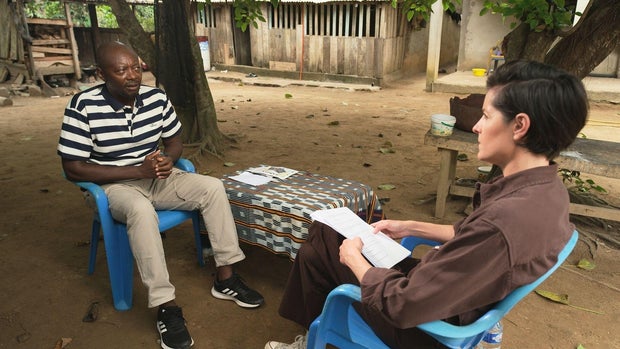
In 2012, a U.S. immigration judge ruled that Diawara could not be deported to Mali, but that the United States could find a safe alternative if it ever wanted to remove him from the country. Thanks to this decision, Diawara was able to obtain a US work permit. He was working as an Uber driver and finishing a night shift on July 11 of this year when he found ICE agents waiting for him at the suburban Houston home where he lived with his wife and children, who are U.S. citizens.
Diawara spent three weeks in detention in Texas, unable to speak to his lawyer or a judge. He was loaded onto a plane and deported to Ghana, a country he has never visited and had no ties to, on July 31. In Ghana, Diawara said he and others were detained in a hotel by armed guards and were not allowed to make phone calls.
“I can’t call my wife, I can’t contact my lawyer. I can’t talk to anyone,” Diawara said. “I tell them, ‘It’s a kidnapping. You kidnapped us.'”
60 Minutes first contacted Diawara in August. At the time, he was homeless and hiding in Mali, fearing for his safety after Ghanaian authorities dropped him off there without money or identification.
He was able to escape to another country with the help of local truckers after several weeks in Mali. Diawara asked that the country not be disclosed out of concern for his security.
Diawara acknowledged that the United States had the right to deport him, but not to Mali. And he thinks the United States knew Ghana would send him there. US authorities gave him a medical document on the flight to Ghana with the destination “SHRC Mali” – SHRC stands for Special High Risk Charter, referring to the type of flight Diawara was on.
“So they know 100% that I’m going to Mali,” Diawara said.
His two bag tags, issued by the Department of Homeland Security (DHS), also indicate that the destination is Mali.
“Well, he wasn’t flown to Mali,” said James Percival, the lead attorney for DHS. “He was flown to Ghana, but I can’t explain why this piece of paper says that.”
A DHS spokesperson later issued a statement saying the baggage tags were “produced by contractors” who are “not part of the process that determines…destination.” The medication formulary, according to the release, was a “clerical error.” The government of Ghana declined to comment.
The DHS says Ghana provided the United States with “diplomatic assurances” about Diawara’s safety. The agency also questioned the credibility of Diawara’s arguments that he feared persecution in Mali.
Democrats, immigration lawyers criticize deportations to third countries
Previous administrations rarely deported people in Diawara’s situation. But as part of the Trump administration’s mass deportation operation, ICE has expelled 25,000 people to dozens of third countries who, in exchange, receive millions of dollars in aid or other benefits from the U.S. government.
A judge’s decision that a person can be deported, but not to their country of origin, is called a “denial of deportation.” Diawara benefited from this protection, as did dozens of other people during his deportation flight, 60 Minutes discovered.
There were 63 people aboard Diawara’s third-country deportation flight, which left Texas on July 30 and stopped in Sierra Leone and the Central African Republic before landing in Ghana. Seventeen of the 19 people interviewed by 60 Minutes who were deported to Ghana said they were then sent, against their will, to countries where U.S. immigration judges had decided they should not be returned, including Niger, Mali, Nigeria, Gambia and Guinea.
Immigration attorney Meredyth Yoon said she thinks it’s impossible that U.S. officials don’t know what Ghana does to people the U.S. deports there. She said the US government was warned about Ghana’s conduct during a trial last year. Despite this, the United States sent 10 additional deportation flights to Ghana. Yoon believes this is a violation of international law.
A 30-page report from the Senate Democratic Committee on Foreign Relations, commissioned by ranking member Sen. Jeanne Shaheen (D-NH), criticized the administration’s third-country expulsion program, calling it costly and saying it harmed U.S. interests.
“Through its third-country deportation agreements, the Trump administration is putting millions of taxpayer dollars in the hands of foreign governments, while turning a blind eye to the human costs and potentially undermining our diplomatic relations,” Shaheen said in a February press release.
Homeland Security lawyer says third-country deportations are widely misunderstood
Percival, the DHS lead attorney, said he was not aware of any cases where Ghana sent people to other countries against their will. He argued that deportations to third countries are widely misunderstood.
60 minutes 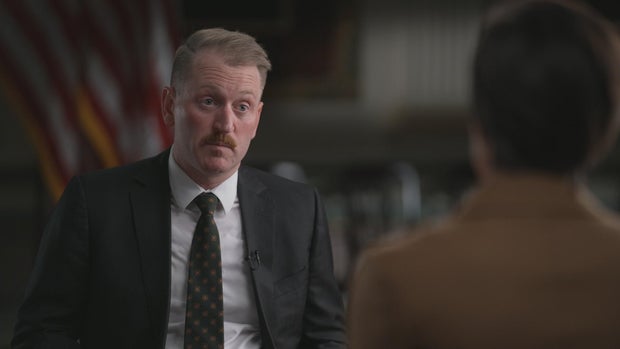
Asked if he thought people sent to third countries would then voluntarily return to the places they fled, Percival said: “Either they would choose to return home, and they might not always tell the truth that they consented, so that’s a possibility.” The other possibility is that the foreign government followed its own procedures and, consistent with international law, determined that it was acceptable to send them home.
Video footage released last year shows Ghanaian officials dragging Rabbiatu Kuyateh, a nurse who has lived in the United States for 30 years, onto a flight back to her native Sierra Leone. Like Diawara, she was subject to a deportation hold order from the United States stipulating that she could not be deported to her home country because she would likely be persecuted there.
Ghana is not the only country accused of sending deportees to countries to which U.S. immigration judges have ruled they should not be deported. When deportees arrive in Sierra Leone, they often receive a flyer saying: “Sierra Leone is serving as a temporary transit point while arrangements are made to return you to your country of origin.”
Percival said there is a public safety threat associated with “this alien population” and added that “every administration before President Trump has absolutely abdicated its responsibility to the American people by letting criminals back on the streets and making no diplomatic effort to get these people out of our country.”
He claims third countries like Eswatini and South Sudan agreed to accept deportees with criminal records for first-degree murder, sexual assault, kidnapping and armed robbery when their home countries refused to take them back.
Percival said he didn’t know what percentage of those arrested and deported were violent offenders.
Of the 63 people on board Diawara’s flight, 19% of passengers had been charged or convicted of crimes, including theft, assault, drug possession or weapons possession. A 60 Minutes review found that the rest deported had either a traffic violation (19%) or no criminal record (62%).
“This administration is following the law passed by Congress. Many people in this population that we’re talking about have committed very serious crimes,” Percival said. “And people should be very happy that President Trump got these serious criminals out of the country.”
Last month, a federal appeals court confirmed a decision in a class-action lawsuit that ruled that the Trump administration’s third-country policy was illegal because it denied deportees due process. But the The Supreme Court authorized these evictions continue until he hears the case in December.
Diawara fights to find his family in the United States
Moussa Diawara’s lawyer, Reuben S. Kerben, asked a federal judge in Washington, D.C., to order his return to the United States.
60 minutes 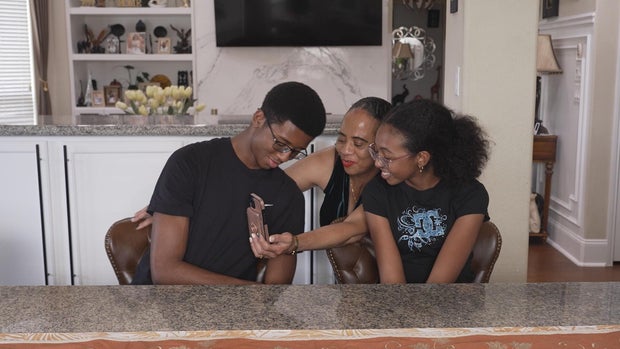
Meanwhile, in Texas, Diawara’s wife, Barbara, a registered nurse, is waiting for him, with their two children. Their son Corey is 16 years old and their daughter Chloe is 12 years old.
“It’s really empty without him,” Corey said.
He’s worried about his mother now.
“I try, you know, not to cry in front of them, to be strong for them,” Barbara said, “because they need me.”
Gn headline

