
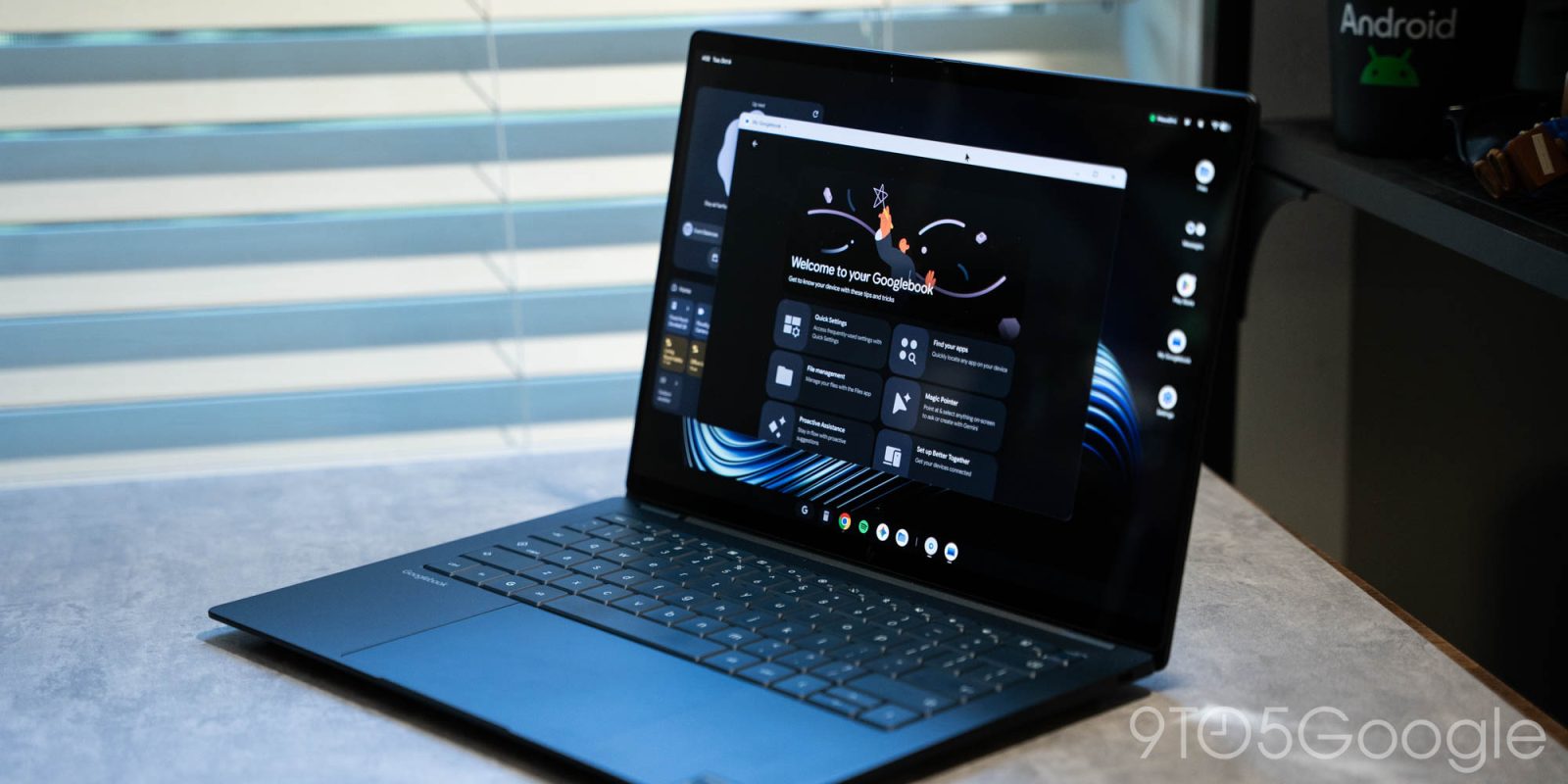
Having used a Google Book for almost a week, I could talk about many headaches, but the biggest problem I’ve encountered so far is the app situation. Frankly, it’s a mess.
Googlebook, like Chromebook, was never going to be a “good” place for apps. The Android-based platform provides a more capable foundation for the future, but without a major effort from Google and its partners, the beginnings would still be difficult.
And yes, it’s a difficult start.
The “main” problem is with desktop applications and programs. Core products like the Adobe suite simply aren’t there and there’s no easy way to replace them. Not to mention the depth of niche apps that have been created on Windows and macOS over the decades. At launch, Googlebook was never going to compete with this, although I would argue that removing ChromeOS Linux support did having doesn’t really help things.
The problem I find much more frustrating is with Googlebook apps can access, and the messy situation surrounding it.
The Google Play Store is your primary way to get apps on Googlebook. Android apps are the preferred method and over time I’m sure it will work better than it does today. But for now, Google’s interim solution to different quality levels for Android apps on desktop was to give five quality labels for a given application.
- Designed for mobile: Not tested for desktop
- Better on the site: The web app/browser version offers full functionality and/or better performance.
- Desktop Compatible: Works with mouse/keyboard controls
- Optimized for the office: “Suitable for a comfortable office experience”
- Designed for the office: “Designed for the office with specialized features and controls”
This is all enforced by Google – developers have no direct control.
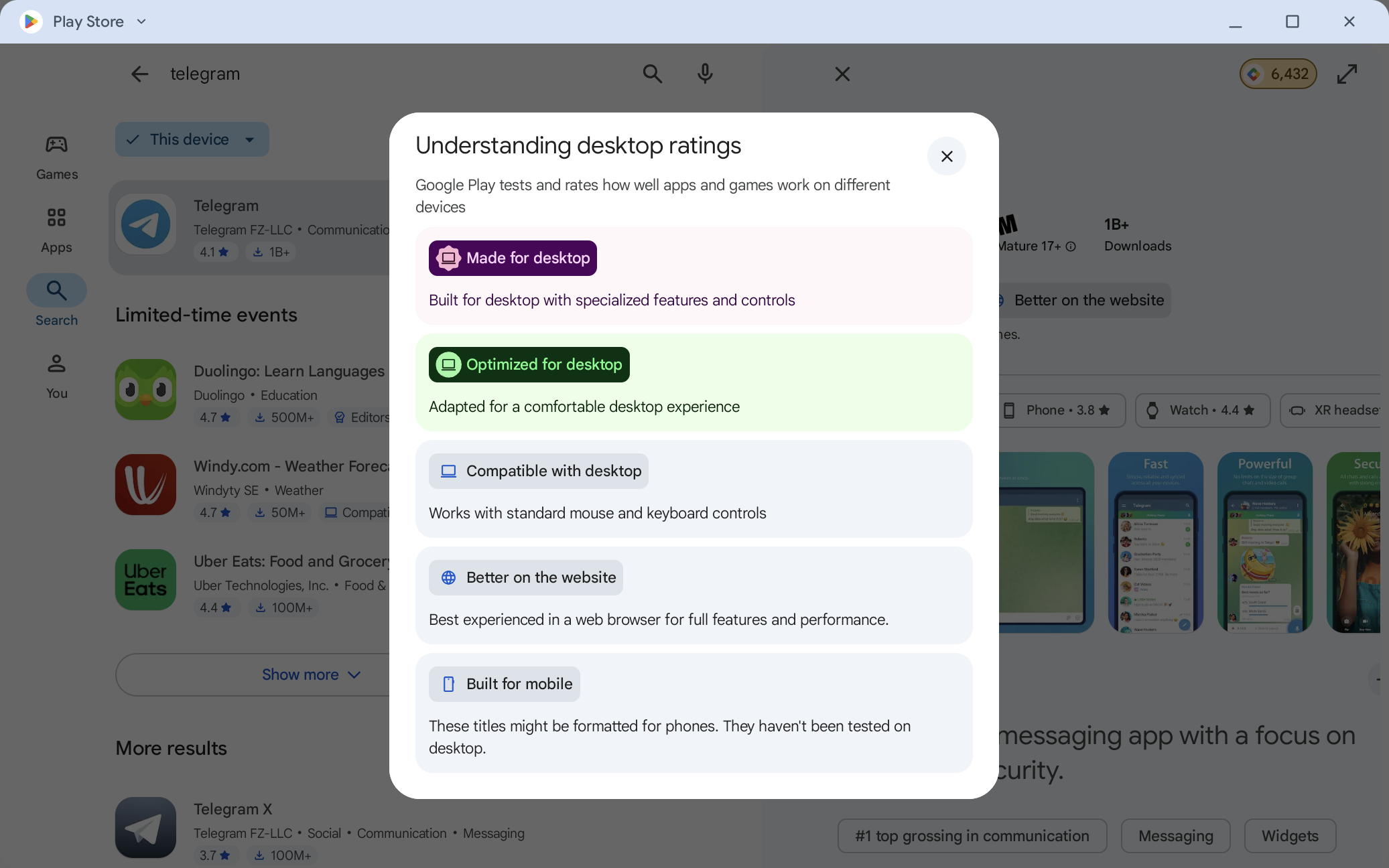
In my book, it’s savagely confusing for the end user, especially since the Play Store doesn’t link to where you can use the web app for the Android apps it tries to steer you away from.
And it is unfortunately should move away from certain applications.
Telegram is a great example of my frustration. The Android app is “better on the website” and that’s incredibly true. The Android app is flawed on Googlebook in many ways, but the most frustrating is that the Enter key doesn’t send a message. But on the other hand, the web application is not that much better, because I often encountered cases where it misbehaves or even crashes.
Slack continues to be a daily source of frustration, with the Android app being a truly terrible experience on anything other than a phone and the web app failing to install. This is not a niche or trivial application, it is something that millions of people rely on for their daily work on their laptops.
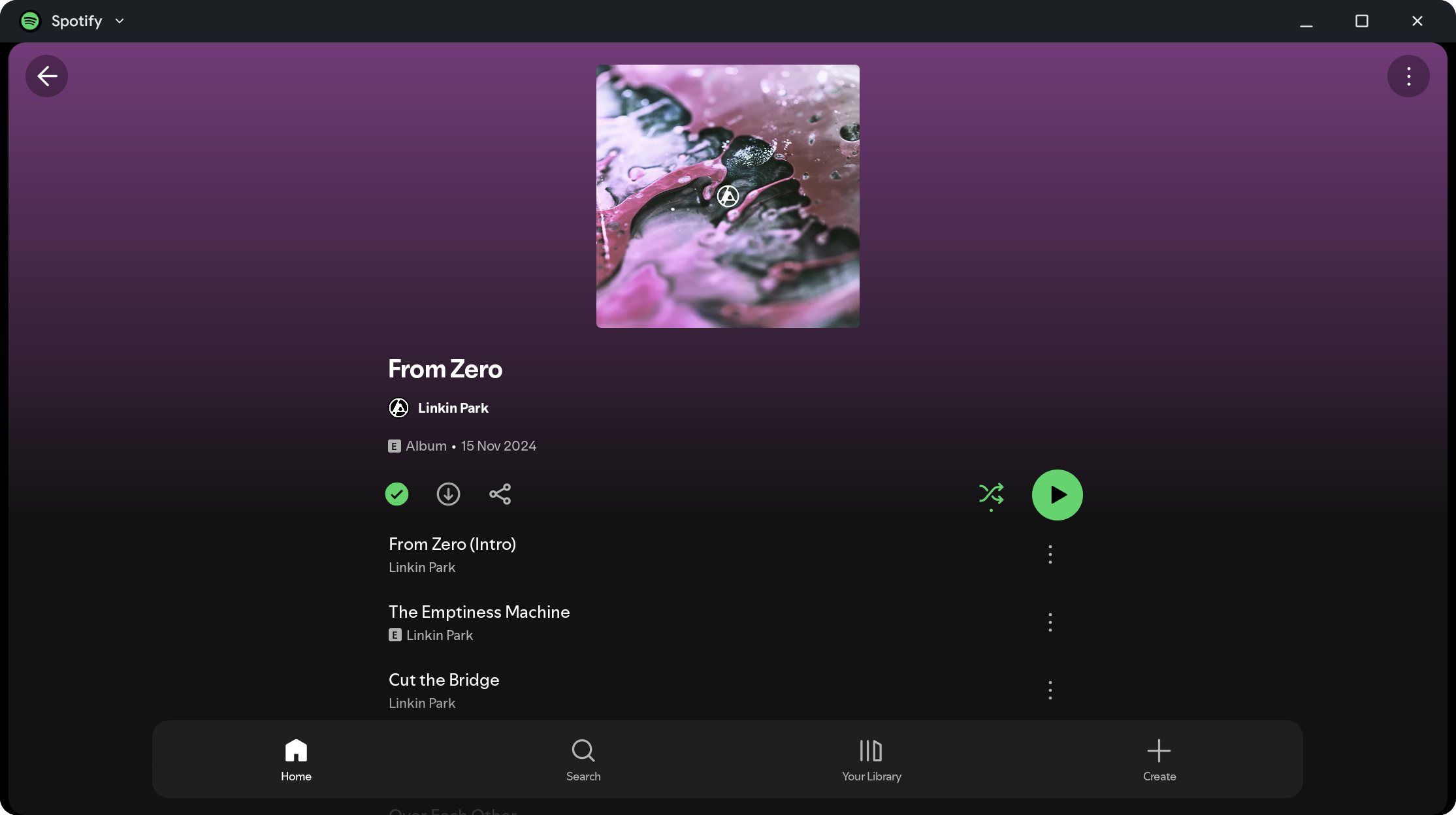
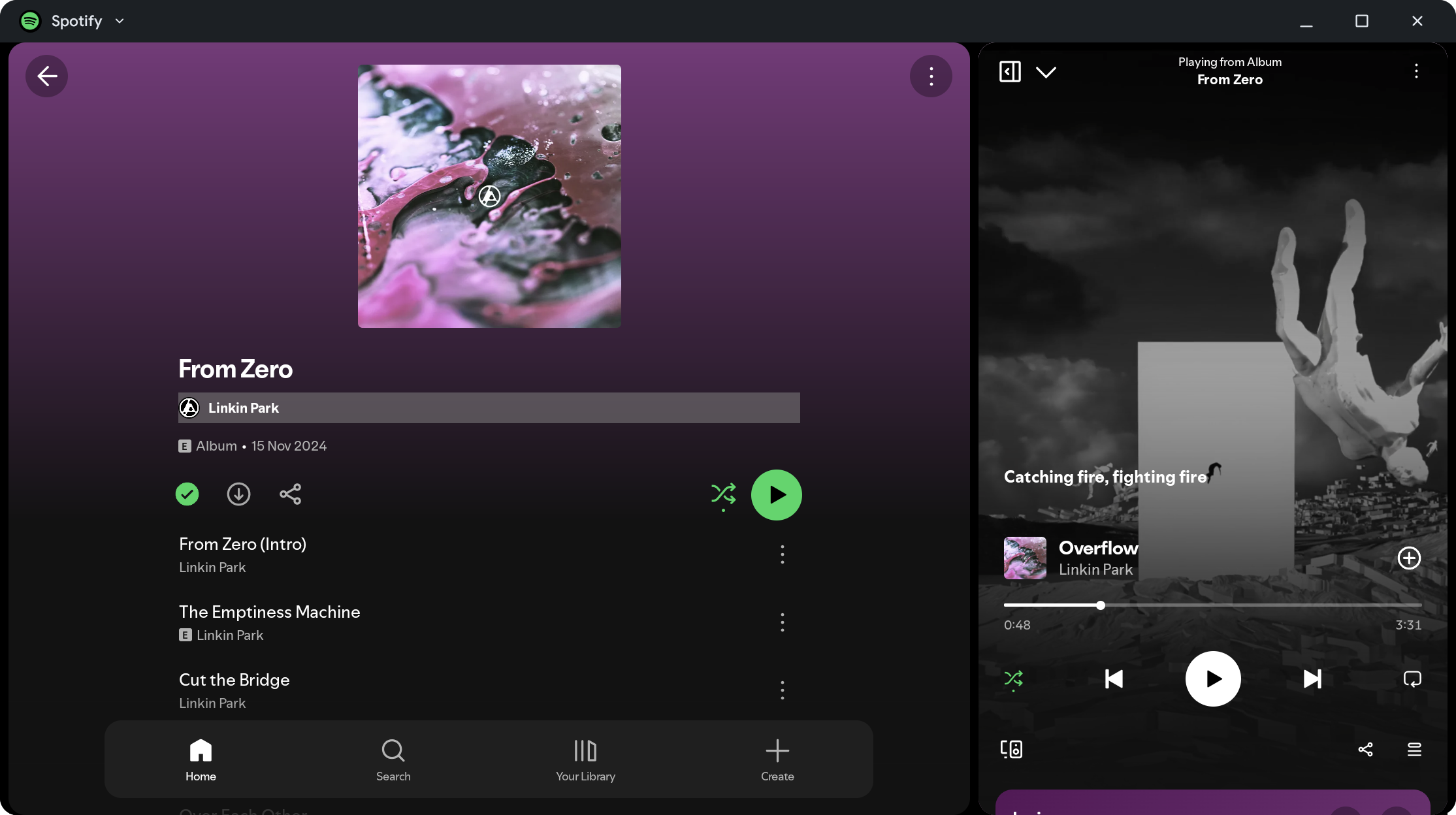
Spotify says it’s “optimized for desktop” and while that’s not bad, the phone’s UI doesn’t even fit as well here as it does on a foldable. This improves when the “Now Playing” panel is expanded, but it’s still not comparable to other desktop platforms. “Optimized” seems to be the wrong word for this label. “Compatible” seems more appropriate for this particular example, but Google’s categories are way too specific for that to work.
There is no easy solution here.
Googlebook is in its early stages, and while the foundation presents a brighter future, the “now” is a huge headache, and I’m having a hard time buying into it because, well, why would you subject yourself to that? Good Windows laptops are easy to find. The MacBook Air is easy to find for $1,099 (cheaper than most Googlebooks!). Good, established platforms that just don’t have these flaws. Why should I give it up for some Android integrations that don’t even work with my phone yet?
Sound off in the comments, I’d love to hear what you think about this issue and how it affects your view of Googlebook.
Learn more about Googlebook:
Follow Ben: Twitter/XDiscussions, Bluesky and Instagram


FTC: We use automatic, revenue-generating affiliate links. More.
Gn tech