
Sometimes the key to building wealth is simply staying put, new data from the Federal Reserve suggests.
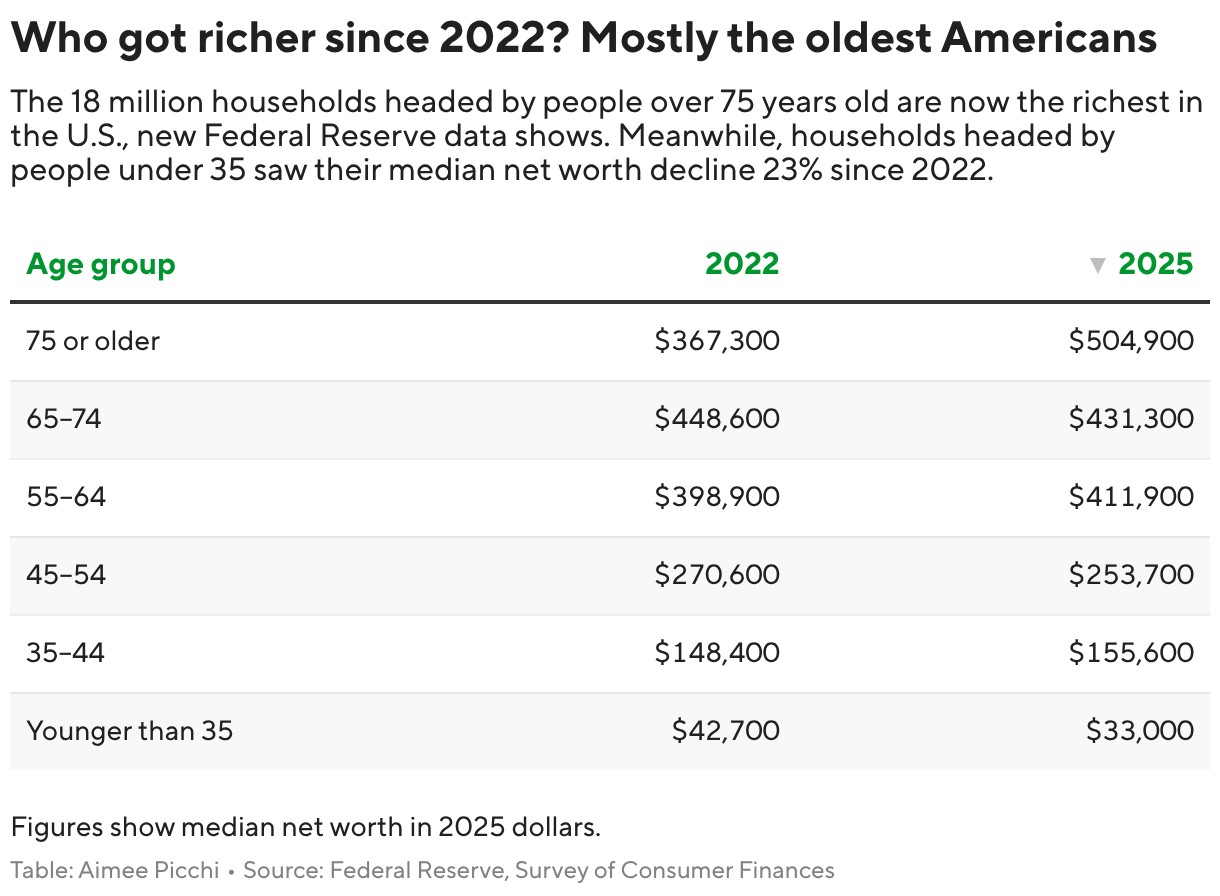
The 18 million U.S. households headed by someone 75 or older have the highest median net worth of any age group, according to the Fed’s triennial Survey of Consumer Finances. Americans in this demographic had a median net worth of $504,000 in 2025, according to the Fed’s Survey of Consumer Finances.
The report assesses the financial health of American families, measuring wealth, income and debts such as credit card debt and student loans. All figures in the report are adjusted for inflation.
Families headed by someone 75 or older saw both the largest increase in median net worth of any age group and the largest increases in income, with their median annual income increasing 24% since 2022 to $67,000. Older Americans likely benefited from the growth in their retirement assets, the Fed said.
Between 2022 and 2025, households headed by people aged 65 to 74 saw their wealth increase by 37%.
The findings underscore how strong stock market gains over the past three years have increased the wealth of many Americans. The S&P 500 gained about 78% between the end of 2022 and 2025, the period measured by the Federal Reserve report.
The number of 401(k) plan accounts managed by Fidelity Investments with at least $1 million surged to a record 769,000 in the second quarter, driven by a bullish stock market and record average employee contribution rates.
Meanwhile, the median net worth of the richest tenth of American families jumped 31% to $3.6 million between 2022 and 2025, according to the Fed survey.
Households headed by someone over 75 make up about 13.4% of families nationwide, making them the smallest age group in the United States. Families headed by people under 35 are the most numerous, representing about one in five households, according to the Fed.
While older and wealthier Americans have enjoyed significant wealth gains, the report also showed that the financial outlook has worsened for millions in recent years. In 2025, about 20% of U.S. households were behind on their debt payments, including home loans, credit cards, payday loans and other types of credit – an increase of 7 percentage points since 2022, the data shows.
The increase could reflect the impact of years of higher-than-normal inflation since the pandemic, although the survey does not reflect this year’s inflation. reacceleration of price increases triggered by soaring energy costs.
“Families were more likely to be behind on their financial obligations than at any time since the 2010 survey,” the Federal Reserve said of the 2025 data.
About one in 12 families spend about 40% or more of their income paying off debt, the highest share in at least 12 years, according to the report.
In 2025, nearly 10% of Americans aged 65 and older lived below the poverty line, up from about 9% a decade ago, according to Census Bureau data.
Typical households headed by someone under 35 saw their median net worth plunge 23% between 2022 and 2025, to $33,000, the Fed found. This drop in wealth among young families was mainly due to a decline in business equity gains over the previous three years.
Gn bussni