The Iranian currency continued its free fall on Sunday under the weight of the American economic blockade, crossing a painful psychological threshold for Tehran as the dollar exceeded 3 million Iranian rials. The exchange rate crossed the 2 million rial mark as recently as August 24, meaning the Iranian currency has lost a third of its value in just three months.
For comparison, after the signing of the nuclear deal in 2015 with the Obama administration, one US dollar was worth 32,000 rials. The currency has steadily deteriorated since President Donald Trump withdrew the United States from the deal in 2018 and reimposed sanctions.
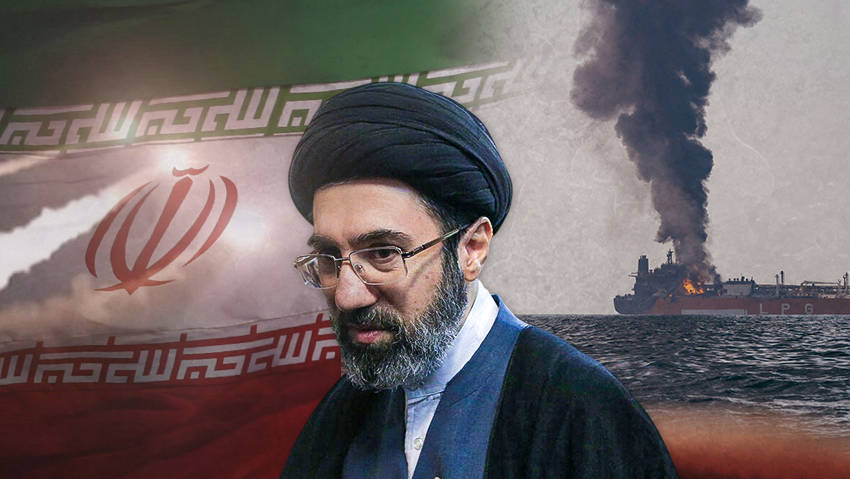
Elusive Iranian leader Mojtaba Khamenei and burning ship following attack in Strait of Hormuz
(Photo: LEWIS PUGH FOUNDATION / AFP, Reuters)
Iran’s economy has suffered for years from inflation, U.S. sanctions, government mismanagement and corruption, while the regime devotes substantial resources to its regional proxies, terrorist activities and missile programs.
The economic situation has deteriorated considerably since the outbreak of war in late February. Trump has maintained a campaign of economic pressure, imposing a blockade that prevents Iran from exporting oil and deprives it of hundreds of millions of dollars in daily revenue.
The blockade was initially imposed in April and lifted in June following the signing of a memorandum of understanding. It was reinstated in July after Iran violated the deal by continuing to attack oil tankers in the Strait of Hormuz.
Since then, the blockade has been strictly enforced. Over the weekend, the U.S. military reported hitting an Iranian ship attempting to cross the barrier.
The Trump administration is now seeking to extend economic pressure beyond Iran’s maritime borders by pressuring neighboring countries to restrict trade with Tehran. Washington’s goal is to force the regime to capitulate or at least make concessions in negotiations to end the war.
However, the Iranian regime, which has increasingly relied on violent suppression of dissent since mass protests erupted earlier this year, has so far proven unwilling to compromise. Attacks on ships in the Strait of Hormuz also continued.
On Sunday morning, Iran’s Islamic Revolutionary Guard Corps (IRGC) claimed two more oil tankers hit naval mines and exploded while sailing along what it described as an unauthorized route crossing the strategic waterway. Tehran has made similar statements following previous incidents, although it is suspected that the ships were directly attacked rather than struck by mines.
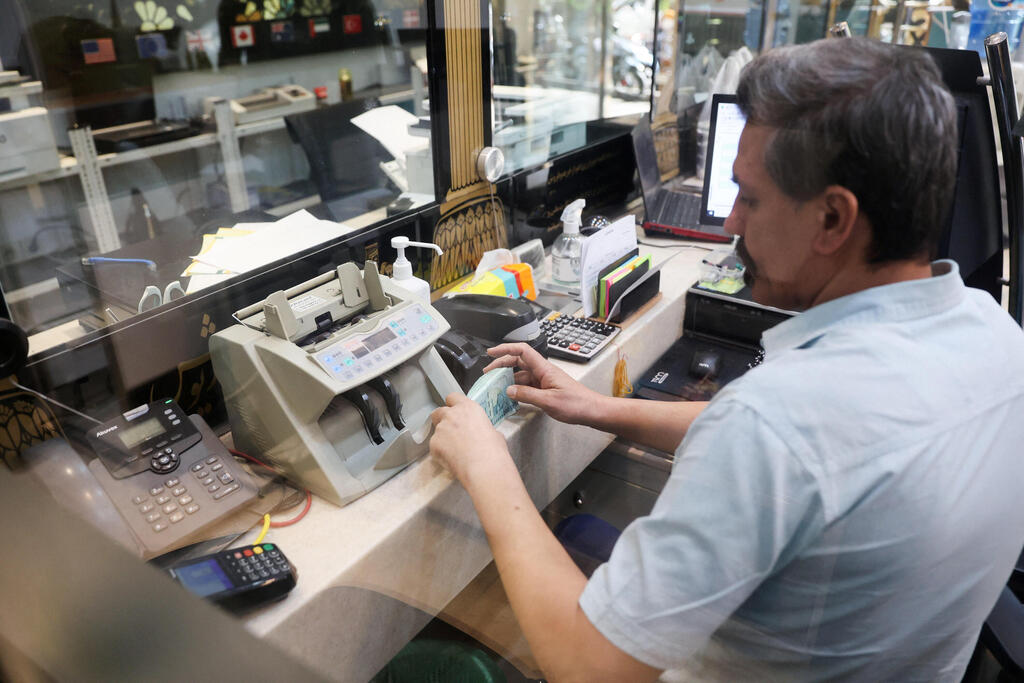
Banknotes counted in an Iranian bank. The rial has lost a third of its value in three months
(Photo: Reuters/Majid Asgaripour/WANA (West Asia News Agency) via REUTERS)
The dramatic fall of the rial reflects the dire state of the Iranian economy, where inflation has reached exceptionally high levels. Consumer prices in October were 88.7% higher than a year earlier, while food and beverage prices soared 112.6%.
Workers are protesting over unpaid wages as the economic crisis deepens, according to reports from Iran. Public frustration has also been fueled by the reduction of subsidized flour and bread allocations in seven of Iran’s 31 provinces.
Flour shortages resulting from budget cuts have already sparked protests from bakers in Zanjan province and elsewhere. However, despite the regime’s harsh repression, no new wave of major protests have been reported so far.
Iranian officials recognize the seriousness of the crisis. President Masoud Pezeshkian, considered relatively moderate but wielding limited influence compared to the hard-line Revolutionary Guard, has spent recent weeks urging Iranians to conserve electricity and energy, particularly as winter approaches.
Last week, he drew the ire of Iranian hard-liners after his office released footage showing him working in the dark to save electricity.
“Pezeshkian put Iran’s dignity up for sale. The image of him working in a dimly lit office while wearing a coat is something one would not see even in the poorest countries of Africa,” an Iranian report said in response to the images.
The images that sparked controversy: Iranian President Masoud Pezeshkian working in the dark
(Video: ribnews)


On Sunday afternoon, Pezeshkian again addressed the economic crisis, writing on X that he had met with union leaders.
“I have observed that we are in an economic war. Nevertheless, the heads of the three branches of government are united and determined,” he wrote.
“We agreed to remove obstacles in your path, bypass previous mechanisms, and adapt to the realities of war conditions. By understanding each other’s circumstances and working together, we will overcome this stage as well.”
Many Iranians seeking to protect their economies against currency depreciation buy U.S. dollars, other hard foreign currencies or gold.
Iran’s Central Bank Governor Abdolnaser Hemmati said Saturday that the country has sufficient foreign currency reserves to finance purchases of essential goods and medicines in the coming months.
However, he recognized that the foreign exchange market was influenced not only by economic fundamentals but also by psychological factors.
“The foreign exchange market is influenced by many factors, including the economy, expectations and politics. We try to stabilize the market as much as possible,” Hemmati told Iranian television.
The US State Department’s Persian-language account of X on Sunday mocked Hemmati’s remarks, saying they contradicted warnings issued by other senior Iranian officials.
The department noted that although Iran’s central bank governor claimed the country had large foreign currency reserves and its economy minister boasted about increasing exports, neither presented figures to back up those claims.
Meanwhile, he said, ordinary Iranians saw essential goods such as meat and chicken, as well as housing, becoming increasingly unaffordable.
The department also highlighted mixed messages within Iran’s leadership, noting that while the central bank praised its own performance, Parliament Speaker Mohammad Bagher Ghalibaf openly warned of severe inflation and soaring prices.
“When an economy is truly booming, the government publishes data and statistics; when it is collapsing, it pays lip service,” the State Department said.
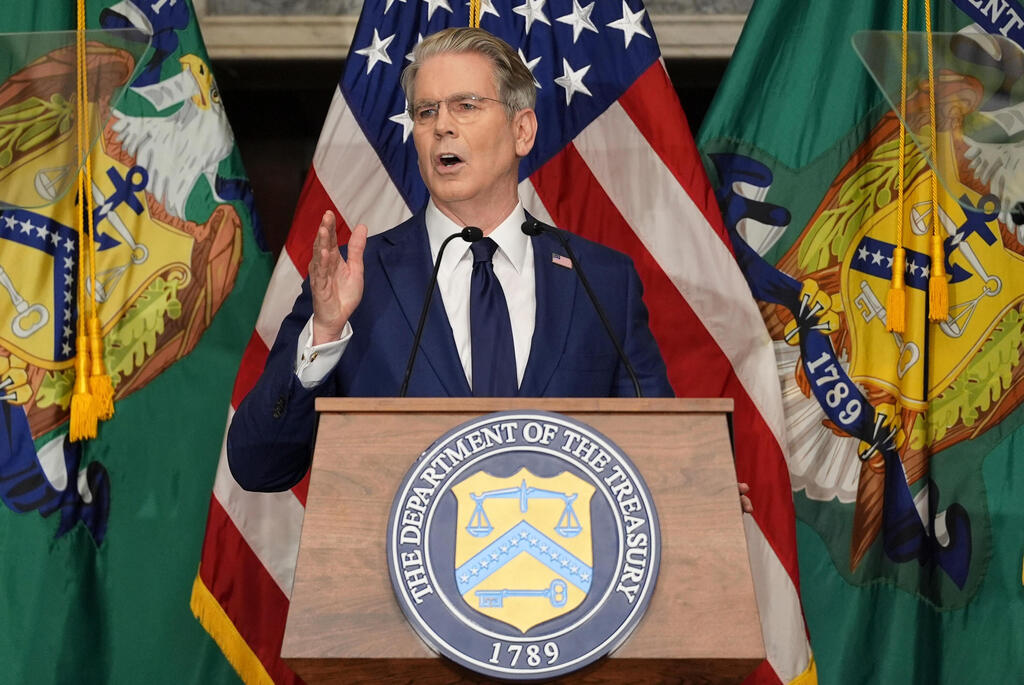
US Treasury Secretary Scott Bessent, who moved to a military installation as the Iranians threatened his life
(Photo: AP Photo/Julia Demaree Nikhinson)
US Treasury Secretary Scott Bessent, who moved to a military installation in the United States amid Iranian threats to his life, also expressed confidence last week in the effectiveness of the blockade.
“The Iranian economy is in free fall and its leaders are panicking,” Bessent said after announcing new sanctions targeting clandestine banking networks used by Tehran.
Gn usa