

President Donald Trump throws a hat into the crowd as he arrives at a campaign rally at the Lubbock Memorial Civic Center, Tuesday, Oct. 27, 2026, in Lubbock, Texas.
Annie Rice/AP
hide caption
Annie Rice/AP
BILLINGS, Mont. — President Donald Trump said Tuesday his administration is “terminating” a Biden-era rule that aimed to reduce global warming methane emissions from oil and gas drilling.
Trump told a campaign rally in Texas that the change would save businesses and consumers billions of dollars and unlock 210 million barrels of oil. This is equivalent to about 10 days of U.S. oil consumption.
The move is aimed at encouraging more domestic drilling as Trump faces criticism over high fuel prices amid the Iran war.
Methane is responsible for about a third of greenhouse gas emissions linked to global warming, scientists estimate.
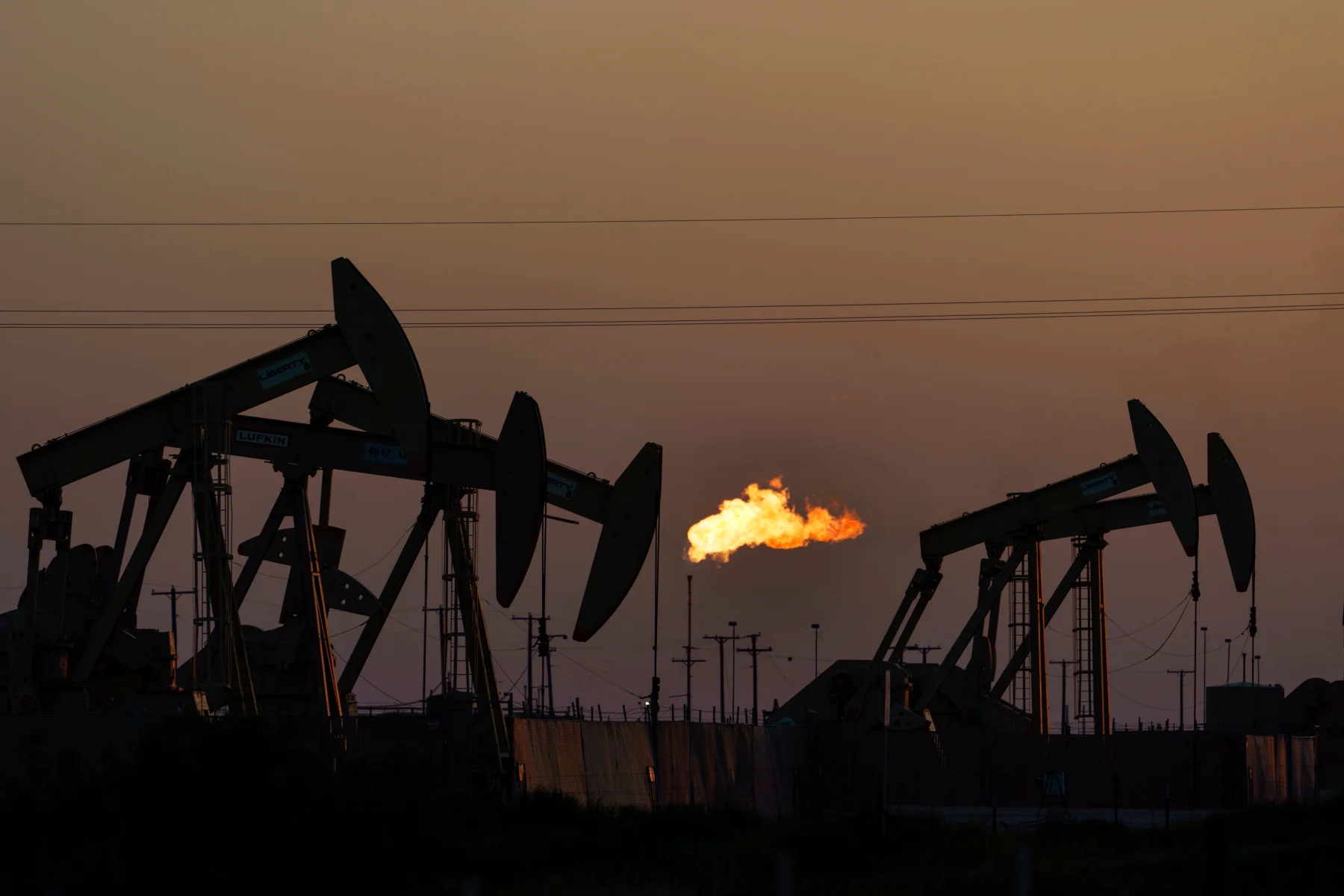
FILE – A flare burns methane and other hydrocarbons as oil pumps operate in the Permian Basin in Midland, Texas, October 12, 2021. (AP Photo/David Goldman, File)
David Goldman/AP
hide caption
David Goldman/AP
Reducing methane emissions has emerged in recent years as a global priority to slow the pace of climate change. Oil and gas operations are the largest industrial source of methane, which is the main component of natural gas and far more potent to the atmosphere than carbon dioxide in the short term.
The invisible gas escapes from equipment and is released into the atmosphere or burned as waste by oil drillers.
Environmental Protection Agency Administrator Lee Zeldin introduced the changes last month, saying they would eliminate the agency’s “Super Emitters Program” that requires companies to investigate and remediate major methane releases from oil and gas facilities. The agency would also set less restrictive standards for small oil and gas wells.
Trump said Tuesday at the Lubbock rally for Texas Republican Senate candidate Ken Paxton that Biden’s plan would “crush small operators” with crippling regulations.
“I am officially ending Biden’s costly and unnecessary methane regulations to save energy consumers and producers $45 billion,” Trump said.
The loosening of the emissions rule comes as Trump and congressional Republicans have methodically dismantled climate policies enacted under former President Joe Biden. That includes the revocation of a scientific finding that was at the heart of U.S. action on greenhouse gas emissions, lower fuel economy standards for vehicles and a move to repeal emissions restrictions for coal and natural gas power plants.
Environmental groups said the latest rollback will allow companies to continue polluting the atmosphere with gas that could be captured and provide energy to millions of homes.
Environmental Defense Fund President Fred Krupp said he was giving corporations a “free pass” at the expense of American consumers.
“The EPA should be fighting this waste, not making it easier,” he said.
Zeldin said the methane rule would have cost $18 billion and would hold back the U.S. energy industry.
The Biden methane rule was announced by officials, including former Vice President Kamala Harris, at a 2023 U.N. climate conference in the United Arab Emirates.
Federal officials under Biden have said it would avoid about 58 million tons (52.6 million metric tons) of methane emissions by 2038 and reduce other pollutants that cause health problems.

By 2034, this rule is expected to bring in $98 billion in benefits. This figure was arrived at by calculating the future “social costs” of greenhouse gas emissions on public health and the environment, an approach rejected by Trump’s EPA.
While previous regulations focused only on new oil and gas wells in the United States, the Biden rule regulated existing wells. Operators also would have had to plug methane leaks from smaller wells that produce just 6 percent of the nation’s oil and gas, while accounting for up to half of all methane emissions from oil and gas fields.
The final rule was published in 2024. Last year, the EPA imposed an 18-month deadline to give companies time to comply with the new inspection requirements and other provisions.
The rule was designed to coordinate with a methane tax, approved in the Climate Act of 2022. The fee program would have imposed a “waste emissions tax” of up to $1,500 per metric ton of methane on energy producers that exceed a certain level of methane emissions.
It was the first time the U.S. government directly imposed a tax, or tax, on greenhouse gas emissions. Congress repealed it within weeks of Trump taking office.
Officials also tried to rein in methane from oil and gas under former President Barack Obama, but that effort was scaled back during Trump’s first term.
Gn headline

