US President Donald Trump said on Tuesday that the war against Iran was “funded” until January, suggesting that any military action would have to take place before then or risk being reined in by the Democratic majority in Congress.
In an interview with the New York Post, Trump predicted that Democrats would “take a total victory and make it a defeat” in Iran.
“But until the end of January, you know, we are pretty much funded,” he added in response to a question about the window for a potential new offensive.
Trump also admitted that Washington’s goals in Iran diverge from those of Israel, saying that while regime change is “probably achievable,” he is only concerned about Tehran’s nuclear program.
“I just don’t want them to have nuclear weapons. I’ve never been for or against regime change, that’s never been a criterion for me,” he told the Post.
The comments followed a report that Trump administration officials were considering targeted assassinations of Iranian leaders, with supporters saying such a move could end the war.
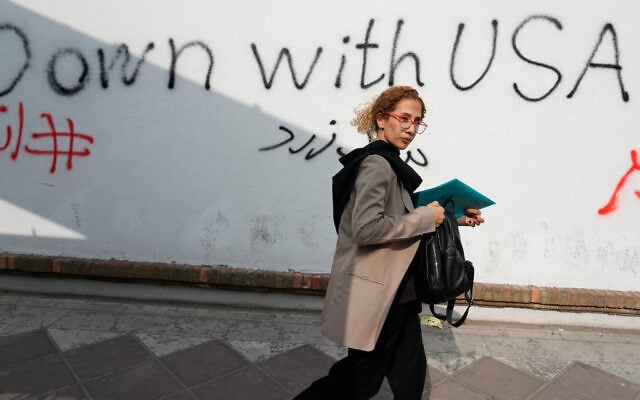
Those who oppose such operations say it would put U.S. officials at greater risk of retaliation from Tehran, encourage surviving Iranian leaders to entrench themselves in their positions and harm the United States’ standing in future diplomatic efforts to end the conflict.
The United States and Israel launched their war against Iran on February 28 to degrade the Iranian regime’s military capabilities, eliminate standoff threats posed by Iran – including its nuclear and ballistic missile programs – and “create the conditions” for the Iranian people to overthrow the regime.
There has been renewed speculation about a new US-Israeli offensive against Iran, with the US president weighing whether to resume major strikes while dealing with the political fallout at home from the nearly nine-month-old conflict.
Asked about Iran’s announcement that it would sue the United States over a deadly airstrike on a school on February 28, Trump told the New York Post: “Well, I want compensation for the people that they killed, which is way more because they killed, first of all, they killed 75,000 protesters in the last seven months. But they’ve been killing our people for years,” referring to the violent crackdown on protests mass anti-regime by Tehran a month before the war. began.
He added: “This war started in 1979,” referring to the Islamic Revolution that overthrew the shah of Iran and brought the anti-Western regime to power.
“I didn’t start it, but I was the only president willing to do it. But this war started in 1979. That’s a long time ago,” he said.
The Strait of Hormuz has become the center of a stalemate conflict, with Iran continuing its efforts to block the waterway and targeting ships that pass through it without its permission. The United States reimposed its naval blockade on Iranian ports in July and announced earlier this month the creation of Task Force Iron Gate to restrict the movement of sanctioned weapons and materials across Iran’s land borders and the Caspian Sea.
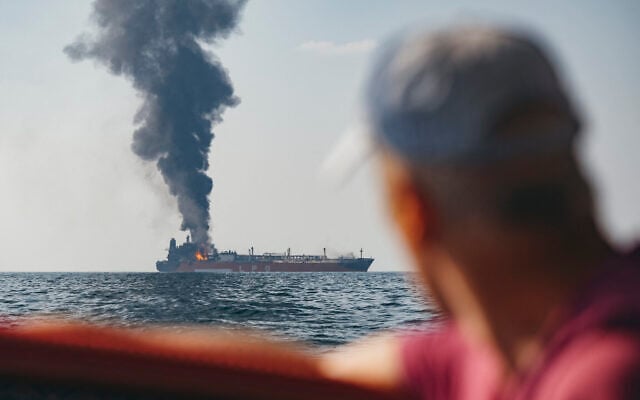
On Wednesday morning, two oil tankers exploded and caught fire after hitting naval mines as they attempted to transit what the Islamic Revolutionary Guard Corps navy described as an unauthorized route through the Strait of Hormuz, the force said in a statement carried by state media.
Tehran, meanwhile, is facing one of its worst surges in war-induced inflation in decades, with food prices rising particularly sharply.
First Vice President Mohammad Reza Aref said Wednesday that Iran is not concerned about the U.S. naval blockade because clearance of goods across its non-southern borders has increased and reserves of strategic goods remain strong, according to the semi-official Tasnim news agency.
“Increased unloading and customs clearance of goods across non-southern borders sends the message that we are not concerned about the enemy’s naval blockade,” Reza Aref said.
Iran has pledged not to negotiate with the United States on lifting the closure of Hormuz until it meets its conditions. Iranian authorities have not publicly stated what those conditions were, but Iranian state media said they included lifting sanctions, ending the U.S. naval blockade of Iranian ports and releasing seized Iranian assets.

Gn usa