Taylor Riggs and Nick Timiraos, WSJ chief economics correspondent, analyze the Federal Reserve’s fight against inflation and interest rate hikes. Additionally, Michigan Governor Gretchen Whitmer is calling on President Donald Trump to remove tariffs on food products.
THE American economy grew at a steady pace in the third quarter, according to the Commerce Department’s first revision of data.
The Bureau of Economic Analysis (BEA) published its second reading of Third quarter GDPwhich showed that the economy grew at an annualized rate of 4.3% over the three-month period comprising July, August and September.
This figure exceeds the estimate of economists surveyed by LSEG, who predicted that the economy would grow 3.5% annually during the quarter.
This comes after the US economy grew 2.1% in the first quarter of 2026 and 2.2% in the second quarter. Adding these GDP numbers together suggests that the US economy grew by around 2.87% during the first three quarters of this year. Last year, the economy grew by around 2.1% for all of 2025.
The Fed’s preferred inflation gauge rose in October ahead of the Fed’s planned rate hike next month
The BEA said the main contributors to the rise in real GDP in the third quarter were increased investment, consumer spending and government spending – which were partly offset by a decline in exports. Imports also increased during the quarter.
The main contributors to the upward revision were higher investment and consumer spending than previously reported. The investment revision was driven by intellectual property products, including software, based on revisions to the Bureau of Labor Statistics’ Producer Price Index.
The change in consumer spending data was driven by an upward revision in goods – notably pharmaceuticals, software and accessories, as well as gasoline and energy products – while it was partly offset by a downward revision in services, mainly health care.

In an aerial view, shipping containers are stacked in the Port of Los Angeles on March 10, 2026, in San Pedro, California. (David McNew/Getty Images)
What the experts say
Ryan Sweet, chief economist at Oxford Economics, said in a note that “the larger-than-expected upward revision to third-quarter GDP highlights the economy’s resilience and, although retrospective, gives the Federal Reserve additional ammunition to raise interest rates in December as inflation remains problematic.”
Sweet added that while “financial market conditions have tightened, we do not believe the Fed’s so-called put, or the moment when the central bank pivots to support markets, is about to be triggered,” and that corporate profit margins “remain wide, which should ease concerns about layoffs.”
David Russell, global head of market strategy at TradeStation, said “strong consumption, GDP and economic growth reinforce the hawkish case” ahead of the next Fed meeting. He added that “these numbers do not preclude multiple rate hikes. This is what an overheated economy looks like.”
Thanksgiving DINNER PRICES are at an all-time high — and one staple is driving the surge
Gregory Daco, chief economist at EY-Parthenon, said the data shows the economy is on track to enter 2027 “with strong momentum, supported by resilient consumer spending, a labor market characterized by historically low layoffs, and continued strength in business investment, particularly around AI.” But the foundations of this resilience deserve to be closely monitored.
“Policymakers might favor a more activist approach, tightening earlier as evidence of persistent inflation accumulates, rather than waiting for these pressures to embed and potentially require a larger adjustment later,” Daco added.
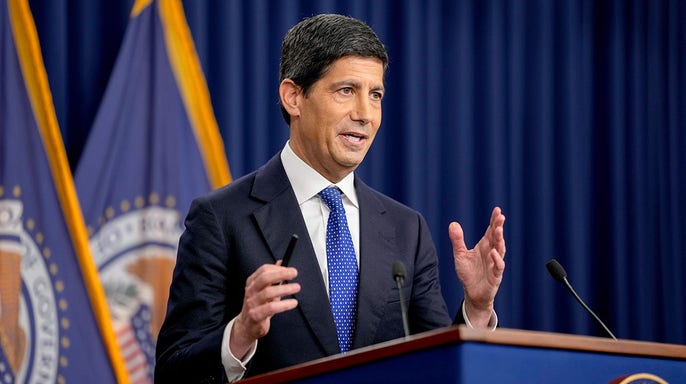
Federal Reserve Chairman Kevin Warsh and central bank policymakers are expected to raise interest rates next month. (Daniel Heuer/Bloomberg via Getty Images)
FEDERAL RESERVE MAKES DECISION ON INTEREST RATES BEFORE MIDTERMS
What does this mean for the Fed and interest rates?
The market continues to expect the Fed to raise interest rates at its next monetary policy meeting on December 8-9.
The CME FedWatch tool shows a 92.4% probability of a 25 basis point hike, which would raise the federal funds rate to a new target range of 4% to 4.25%. This figure is little changed from 93.5% a week ago.
What does this mean for the market?
The benchmark S&P 500 index was down about 2.9% as of late morning Wednesday.
The Dow Jones Industrial Average fell more than 1.2% and the tech-heavy Nasdaq Composite fell more than 3%.
CLICK HERE TO DOWNLOAD THE FOX NEWS APP
Gn headline