
It is a moment engraved in our memories. It was November 4, 2025.
UPS Flight 2976 crashed shortly after takeoff from Louisville Airport. A plume of black smoke filled the sky and a wall of flames stretched for half a mile.
Fifteen people died; dozens of people were injured. Many lives have been changed forever.
As families remember their loved ones, survivors share their memories of that horrific day and pay tribute to those who never returned home.
On the anniversary of the accident, we look back and look forward.
What happened
UPS Flight 2976, an MD-11 cargo plane, departed from Louisville Muhammad Ali International Airport at 5:08 p.m., bound for Honolulu, Hawaii.
The National Transportation Safety Board said the plane was airborne for only 37 seconds before its left engine separated. Flames erupted around the left wing of the plane as it struggled to climb.
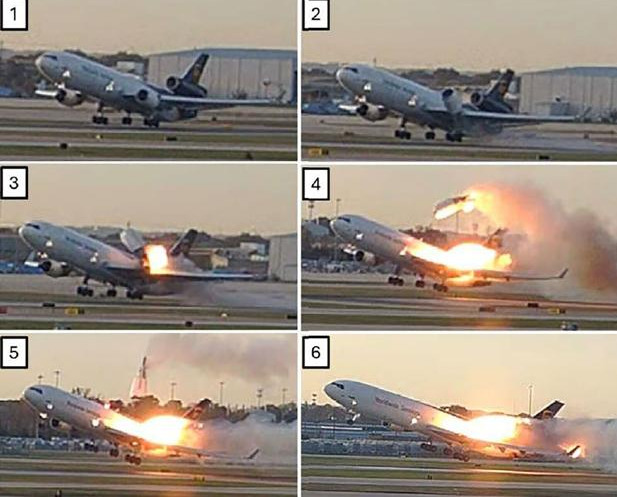
The plane then crashed at 5:14 p.m. in a busy industrial area, sparking a huge fire.
“It shook so hard it knocked us off our feet.”
“The whole building shook like we were in an earthquake, and it shook so hard it knocked us off our feet,” said survivor Ashley Muse.
Panic quickly set in, and MetroSafe received more than 1,000 911 calls as news of the emergency spread.
One caller said: “There are so many people. You have to send everyone. Oh my God, I’m panicking. »
Another caller described the scene: “There’s a huge explosion. Almost half the street is on fire. »
As first responders rushed to the site, a half-mile wall of black smoke and fire blocked streets, leaving many people trapped.
“I’m looking at the fire. Look, I mean, the sky is black. The plane just crashed. Alright, our people are at work. I’m here looking at the black smoke. We’re just laying on one of our buildings,” one person said.
The thick smoke was visible for miles.
Authorities issued a shelter-in-place order for a five-mile radius while crews assessed the danger.
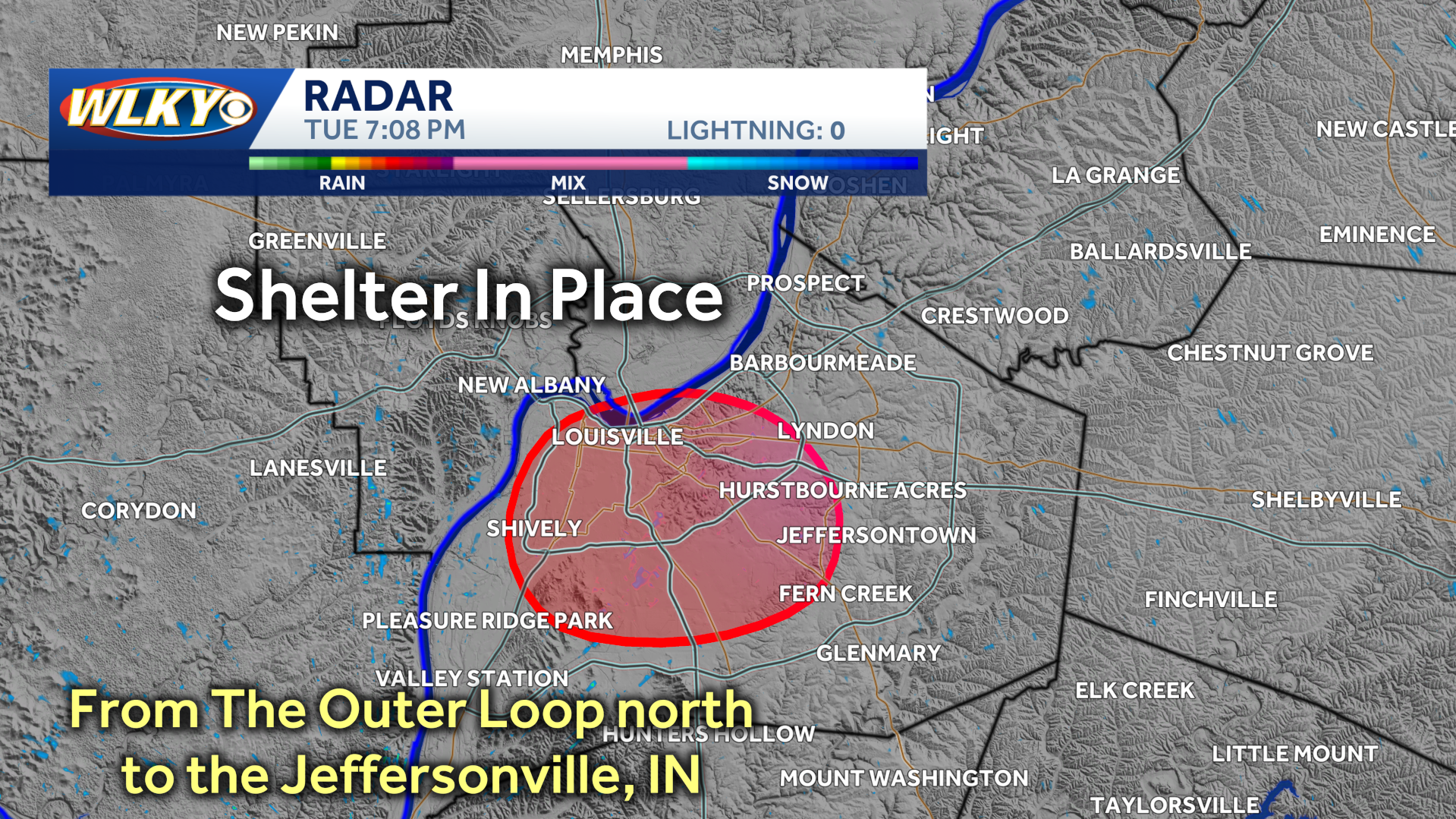
The airport was closed and all flights were suspended as crews worked to secure the scene for investigators.
By sunrise, the full extent of the damage was revealed.
“This is wreckage burned and mutilated beyond anything I’ve ever seen. The smells, the sights. These are things that won’t escape us when we close our eyes tonight,” one witness said.
The victims
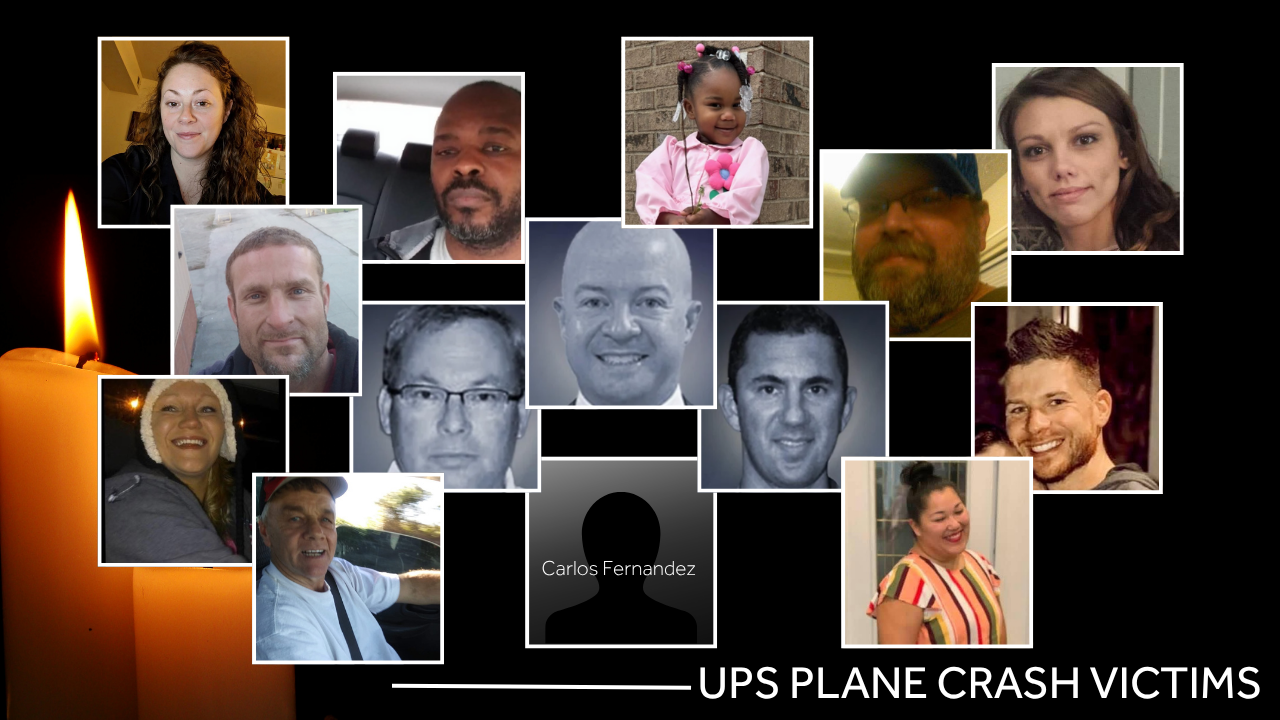
The victims ranged in age from 3 to 65 years old.
Kimberly Asa was the youngest at 3 years old. She was predeceased by her grandfather, Lou Fedon.
The other victims were Angie Anderson, Carlos Fernandez, Trina Chavez, Tony Crain, John Loucks, John Spray, Ella Whorton, Megan Washburn, Alain Rodriguez Colina and Matthew Sweets.
And all three pilots on board are dead. They were Captain Richard Wartenberg, International Rescue Officer Captain Dana Diamond, and First Officer Lee Truitt.
The investigation
So how did something this catastrophic happen?
A preliminary report revealed problems with the engine part that separated from the MD-11 cargo plane.
But problems existed within the fleet before the tragedy.
NTSB experts arrived the day after the accident.
They examined the crash site, recovered critical evidence from the wreckage, including the cockpit voice recorder and flight data recorder, commonly known as the black box, and held daily briefings to keep the public informed of their findings.
Todd Inman, a former member of the NTSB, said: “That information will be coupled with information from the flight data recorder and other information that we receive that will help us prepare a timeline of what exactly happened and then how it progressed, what was known in the cockpit or on the ground. And that’s another important part of the information.”
In the weeks after the crash, the NTSB released a preliminary report and dramatic airport surveillance photos showing the left engine detach from the wing as the plane took off and caught fire.
Investigators found evidence of fatigue cracks and failure due to excessive stress on the left pylon, which serves as the engine’s mounting point.
The 12-page report provides initial facts about the crash, but does not determine a probable cause or issue safety recommendations.
However, investigative hearings held by the NTSB in May 2026 focused on flaws in the editing system, which investigators said were not new.
The two-day hearing in Washington included representatives from Boeing, UPS, the Federal Aviation Administration and unions.
Discussions centered on a ball joint that had cracked on the MD-11 plane and had failed four times previously on other planes.
The FAA temporarily grounded all MD-11s shortly after the accident.
During the hearing, Boeing officials said the company had updated its maintenance manual to address the problem, but did not believe the problem posed a threat to flight safety.
NTSB Chair Jennifer Homendy asked, “UPS, are you confident that another accident would not happen?” » David Springer, UPS senior director of engineering, replied: “No.”
Several wrongful death lawsuits related to the fatal crash have been filed.
Crash survivors question missed warning signs.
The NTSB has chosen not to participate in this story as the investigation is still ongoing.
The agency expects its final report to be completed approximately two years after the date of the accident.
The location of the accident and the companies
This content is imported from infogram. You may be able to find the same content in another format, or you may be able to find more information, at their website.
The area surrounding the crash site remains an active construction zone a year later.
Kentucky Petroleum Recycling and Grade A Auto Parts were hit pretty directly. Dozens of businesses have been seriously affected.
Stooges, a popular neighborhood bar, will not reopen. Quantum Ink never stopped working.
With dust in the air, excavators on the ground and plans in place, work continues to repair the physical impact.
“I’ve been involved in some big incidents in my 34 years, and this was obviously the biggest one,” said Jody Meiman, director of Louisville Metro Emergency Services.
As Director of Louisville Metro Emergency Services, Jody Meiman has led restoration efforts at the scene since day one.
“During the emergency response, cleanup also began almost immediately, from the outside in to make sure nothing came out of the site,” Meiman said.
When UPS Flight 2976 collided with the oil recycling facility, it created what Meiman described as a perfect storm of destruction.
“Hundreds of thousands of gallons of waste oil, 36,000 gallons of fuel and thousands of gallons of water were put on the fire,” Meiman said.
In the year since the crash, Meiman said the area’s natural gas infrastructure has been replaced, electrical components destroyed by the plane have been rebuilt and water systems have been restored.
Although significant progress has been made, there are still areas that require more work.
One of these places is Melco Basin. The pond maintained by MSD, just south of the airport, can hold up to half a billion gallons of water. Immediately after the accident, the basin played a vital role in preventing further environmental damage.
“We estimate there were probably a few hundred thousand gallons of oil that we were able to isolate in that basin. So we were able to protect the natural drainage,” said Tony Parrott, MSD executive director.
Parrott said the basin has been out of commission since the accident because MSD was working with a contractor hired by UPS to dispose of the waste.
“Every time we moved forward, we would get heavy rain and it would fill up again,” Parrott said.
After weather-related delays, the contaminated pond was completely emptied just weeks before the first anniversary. Crews will now focus on cleaning 5 inches of sediment from the ground before the upcoming flood season next spring.
Meanwhile, Meiman said the site remains active, with about 50 to 60 people working there each day.
“There’s still a lot of trucks going around. There’s still a lot going on,” Meiman said.
Grade Lane reopened a few days ago, but other secondary roads remain closed with no timeline for reopening yet.
When asked about future plans for the site, Meiman said the goal is to restore as much normalcy as possible.
“To get things back to normal as much as possible,” Meiman said. “Some buildings are obviously gone. Some have been demolished. But just to make this site as safe and get back to normal as much as possible.”
Although one day the roads may soon reopen, the charred buildings replaced, and new infrastructure installed at the site, that same restoration may never take place in the hearts of those who were there that night.
“For people who drive on this street for the rest of their lives, this will never be normal again,” Meiman said. “Even if it seems as normal as possible, it will never be normal. There will always be those memories that take you back to that night.”
Gn bussni

