Stephen Hubbard, an American citizen who imprisoned in Russia for more than four years after being accused of fighting for Ukraine, has been released, US envoy Steve Witkoff confirmed Wednesday during a meeting with President Vladimir Putin in St. Petersburg.
President Trump said in social media posts that Putin agreed to release Hubbard at his request, with “no exchange” necessary, although he also said the American would not have been released if the White House had not prevented tough new sanctions targeting Russia from taking effect late last week.
Trump administration officials, including Witkoff, were in St. Petersburg on Wednesday for talks with Putin and other senior Russian officials, focused on the war in Ukraine but including other topics. Russian state news agencies, citing Putin, said Hubbard was at St. Petersburg’s Pulkovo airport.
Video of the meeting showed Witkoff thanking Putin for freeing the American.
“I wanted to thank you very much. The president sends you his thanks. Our entire nation sends you our thanks,” Witkoff said. “Thanks to you, he’s going home to his family.”
Press service of the Moscow City Court/Document/Reuters 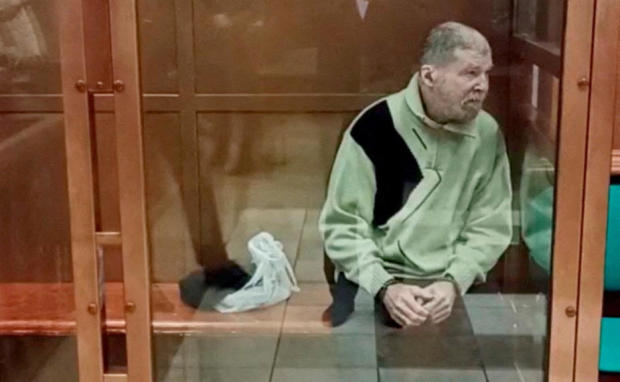
Hubbard, a 74-year-old Michigan native, was the last American in Russia whom the State Department officially declared wrongly detained. No less than 10 other Americans, including dual nationals, are still detained in Russia.
Hubbard, who is in poor health, was to be flown to Texas for treatment at a military hospital.
President Trump hinted Tuesday at a possible breakthrough in the case, telling reporters in the Oval Office that he had personally lobbied Russian President Vladimir Putin for Hubbard’s release.
In a statement posted Wednesday morning on his Truth Social platform, Mr. Trump said Hubbard “was just released from prison, at the request of President Donald J. Trump, made directly to President Vladimir Putin in a telephone conversation last week.”
Mr. Trump said in his message that Russia released Hubbard “out of respect for President Trump” and that the United States “was under no obligation to give anything in return – an unprecedented situation for Russia.” No “exchange” was necessary for this release.
The American’s release came five days after Mr. Trump announced that his administration lift some sanctions against Russia just before they come into force. This decision by the president was welcomed by Putin but severely criticized by members of Congress, including some republicans.
In a subsequent Truth article, Mr. Trump effectively linked Hubbard’s release to the easing of U.S. sanctions on Russia, saying that “many people” who had called for the sanctions to go into effect as previously scheduled had “called to apologize to President Trump because they didn’t know he was negotiating the release of Stephen Hubbard, a really important deal for the United States.” If sanctions had been imposed, these negotiations would certainly have ended. »
A retired teacher who served in the U.S. National Guard and Air Force, Hubbard was captured in Ukraine shortly after Russia launched its full-scale invasion of the country in February 2022. Russian authorities accused him of manning a checkpoint for mercenaries. He was sentenced in 2024 to almost seven years in a penal colony.
Hubbard’s family had little contact with him during his detention and maintained his innocence.
Hubbard’s release follows the return of American Robert Gilman, who was released from Russian detention in August following health problems. deteriorated to a potentially fatal condition. A former Marine who spent more than four years imprisoned in Russia, Gilman was granted a humanitarian pardon following a direct appeal from Mr. Trump to Putin.
Early last year, Russia released American teacher Marc Fogel and, in 2024, journalist Evan Gershkovich and Navy veteran Paul Whelan were among those released by Russia in a complicated prisoner exchange between several countries.
The State Department maintains a Level 4 “Do Not Travel” advisory for Russia, warning U.S. persons against traveling to the country due to the risk of wrongful detention, arbitrary enforcement of local laws, and limited U.S. consular assistance.
The Trump administration last year established a new designation for countries considered “state sponsors of wrongful detention,” as CBS News previously reported. reported. The measure gives the State Department expanded authority to impose sanctions, export controls and travel restrictions on countries that use detained Americans as political leverage.
Despite its long history of imprisoning Americans on dubious charges, Russia has not faced this designation, which has been applied to Iran in February and Afghanistan in March.
Some Americans imprisoned in Russia have not been declared wrongfully detained by the U.S. government, including Alexander Antonov, who was arrested in Russia last year and sentenced to six years in prison.
His family says he was detained because he is a U.S. citizen and has urged the State Department to prioritize his case. CBS News reported earlier this year on an internal debate within the ministry on whether to designate him as unjustly detained.
Gn usa