Tel Aviv — Israel and the United States plan to launch a new assault on Iran in the short term, according to sources close to the matter.
Prime Minister Benjamin Netanyahu’s administration is concerned about how quickly the Iranians are rebuilding their ballistic missile manufacturing capabilities and the pace at which Iran is working to protect its military and nuclear infrastructure from attack by moving it underground, the sources told CBS News.
President Trump also said this week, Iran may be seeking to develop chemical or biological weapons, although it has provided no evidence to support this claim.
Months of indirect negotiations between the United States and Iran have failed to produce a ceasefire agreement to reopen the Strait of Hormuz, and Iran has refused to even discuss its nuclear program unless the United States lifts its naval blockade and agrees to six other key conditions.
The Israeli military is prepared to face a new round of fighting with Iran and is in a maximum defensive posture to respond to any first attack from Iran, the sources told CBS News.
The Netanyahu administration would prefer to launch a new joint operation with the United States, but the sources told CBS News that it was still unclear whether Mr. Trump wanted to order new military action, and if so, what type. The war was a key factor in the Republican defeat in the recent midterm elections and remains deeply unpopular with Americans.
The United States has significant firepower in the region, including tens of thousands of forces and two aircraft carriers with their associated strike groups, representing dozens of warships and aircraft.
For Mr. Trump and Netanyahu, who jointly launched the war against Iran nearly nine months ago with a series of massive strikes against the Islamic Republic, the window for further collaborative action may be closing.
Chris McGrath/Getty 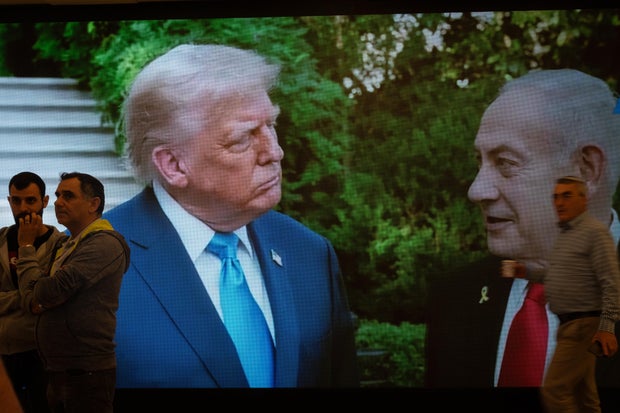
Netanyahu could lose his post as Prime Minister in the coming weeks due to the results of Israel’s national elections late last month. Mr Trump’s Republican Party will lose control of both houses of the US Congress in January, giving his political opponents far greater power over war funding.
Neither Netanyahu’s office nor the Israeli military responded to CBS News’ requests for comment on the planning of new attacks on Iran, which would constitute the third round of major hostilities. The White House and the US military have declined to comment on current thinking within the administration, but US military commanders have long said they are prepared to carry out any orders given by Mr Trump. With the means already in place, a new offensive operation could be mounted within two to four days, if such an order were given.
Mr. Trump has repeatedly said Iran wants a deal to end the war, but Tehran has rejected any ceasefire to reopen the Strait of Hormuz, or any negotiations over its nuclear program, unless the United States agrees to seven key demands, including an end to hostilities on all fronts in the Middle East and an end to the U.S. blockade of Iranian ports and ships.
Along with growing concern over Iran’s growing capacity to produce conventional weapons – which the regime has itself boasted about – President Trump has also raised the possibility that the Islamic Republic could work to obtain biological or chemical weapons.
“They are interested in gas, in organic, because we excluded them from nuclear,” Mr. Trump told a Fox News reporter in China before his speech. meeting with his Russian and Chinese counterparts.
Iran’s Foreign Ministry rejected the allegations Thursday, comparing them to U.S. claims that Iraq was developing weapons of mass destruction before the invasion launched by President George W. Bush in 2003.
“We find ourselves faced with new disturbing allegations and a narrative that appears to follow the same fraudulent script,” Iranian Foreign Ministry spokesperson Esmaeil Baqaei said in a message on X.
President Trump has given no clear sign that he intends to order major new military action against Iran. He told Fox News on Wednesday that he still wants to reach a deal with Iran, but believes it will last, and also renewed his threat to use force.
“I’m going to end it,” Mr. Trump said of the war. “Yeah, soon. I mean, one way or another, we’ll get this over with.”
On Thursday, however, he told Israel’s Channel 12 that he was “not making any hasty decisions,” indicating his willingness, not for the first time, to let the standoff drag on until 2027.
“We will see what happens after the start of the year,” he told the TV channel.
The head of US Central Command, Adm. Brad Cooper, who oversees US forces in the Middle East, met with senior Israeli security officials at the Israeli Defense Ministry on Wednesday for what the Israeli military called a “joint and comprehensive assessment of the situation.”
Israel’s top general, Eyal Zamir, as well as the director of the Mossad intelligence agency, Roman Gofman, were among the senior Israeli officials who met with Cooper.
Israeli authorities confirmed that the Mossad director’s presence at the meeting was unusual, and many in the country interpreted it as a sign that Iran was a key topic of discussion.
Gofman met with U.S. officials in Washington last week, including CIA Director John Ratcliffe, according to people familiar with the matter.
“The head of Mossad, who hardly leaves the country, was only there for a few days. This is a serious issue on the table,” said Erez Winner, president of the Israel Defense and Security Forum, an Israeli think tank with close ties to the Netanyahu administration.
If the decision is made to return Israel to war with Iran, it would come at a politically sensitive time for Netanyahu.
His political rivals, following last month’s elections, have been tasked with forming a government, which could leave him in power for a few more weeks or even less.
Since losing his majority in the Israeli parliament, Netanyahu has argued to his rivals and the Israeli public that a unity government is needed to confront pressing threats to the country’s security. He has long accused Iran of having ambitions to build nuclear weapons, and places this at the top of his threats.
Iran has always denied any desire to build nuclear weapons, even though after President Trump withdrew the United States of a previous international nuclear agreement during his first term, he enriched uranium to a point far beyond the needs civil nuclear programs.
International observers estimate Iran still has a stock of approximately 900 pounds of uranium enriched to 60% purity somewhere beneath the rubble of its heavily damaged nuclear facilities. At this level, the material is only a short technological step away from being enriched to military grade.
Despite these concerns, some of Netanyahu’s political rivals believe he is trying to return the country to war to avoid losing power. In recent days, he has held security briefings with some of those rivals — an unusual move that analysts say could portend the possibility of imminent military action.
President Trump supported Netanyahu ahead of Israel’s elections, and he said he would also prefer to side with Israel’s right-wing leader in any further attacks on Iran.
Speculation about a major new operation comes amid a new exchange of fire between Iran and the United States.
The United States launched a strike on the strategic Iranian island of Qeshm in the Strait of Hormuz on Tuesday, which U.S. officials called self-defense in response to Iranian strikes targeting U.S. assets in Bahrain, which the U.S. military said were intercepted. Iran also launched strikes against Kuwait this week, with officials saying they caused no damage.
Omar Zaghloul/Anadolu/Getty 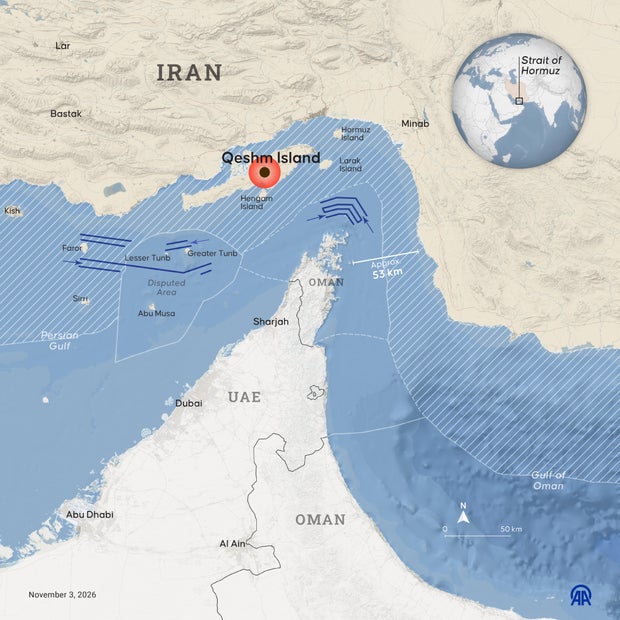
The Iranian regime is publicly preparing for the resumption of hostilities and has warned that its response to any new attacks would go further than its previous actions.
Iranian government and military officials, including senior leaders of the powerful Islamic Revolutionary Guard Corps, have threatened to expand their retaliatory attacks to target not only Israel and U.S. military infrastructure in the Persian Gulf states, but also U.S. bases in Europe and Gulf energy infrastructure. and underwater internet cables.
A recent statement attributed to Iran’s Supreme Leader, Ayatollah Mojtaba Khamenei, said that in the event of a return to open hostilities, “there would be no geographic limits for Iranian missiles.”
Gn world