

A small group of Adélie penguins returns to their colony. A megacolony of these penguins was hit by a large mortality in early 2024.
Ralph Vanstrels
hide caption
Ralph Vanstrels
Sailing to the Danger Islands, Dr. Ralph Vanstreels had a good idea of what he might find: a bunch of dead Adélie penguins.
It was March 2024 and a virus had swept through the region, leaving dead birds in its wake.
Vanstreels committed the crime correctly, but the culprit was wrong. There were dead penguins but it wasn’t a virus that was the cause.
As his ship approached a landing pad on one of the islands, located just off the Antarctic Peninsula, Vanstreels and his fellow researchers immediately noticed bumps in the snow.
“Was each bump a stone or a carcass? We had to do a pretty intensive search (in the snow),” says Vanstreels, based in Argentina and a wildlife veterinarian at the University of California, Davis.
The team ultimately found more than 537 penguin carcasses on the ramp alone, which they said was about the size of an airport landing strip.
There were many more carcasses elsewhere on the Danger Islands, home to two mega penguin colonies. Researchers estimate that there were thousands of Adélie penguins and other bird species that died. But they had to work quickly and couldn’t do a complete count, Vanstreels says.
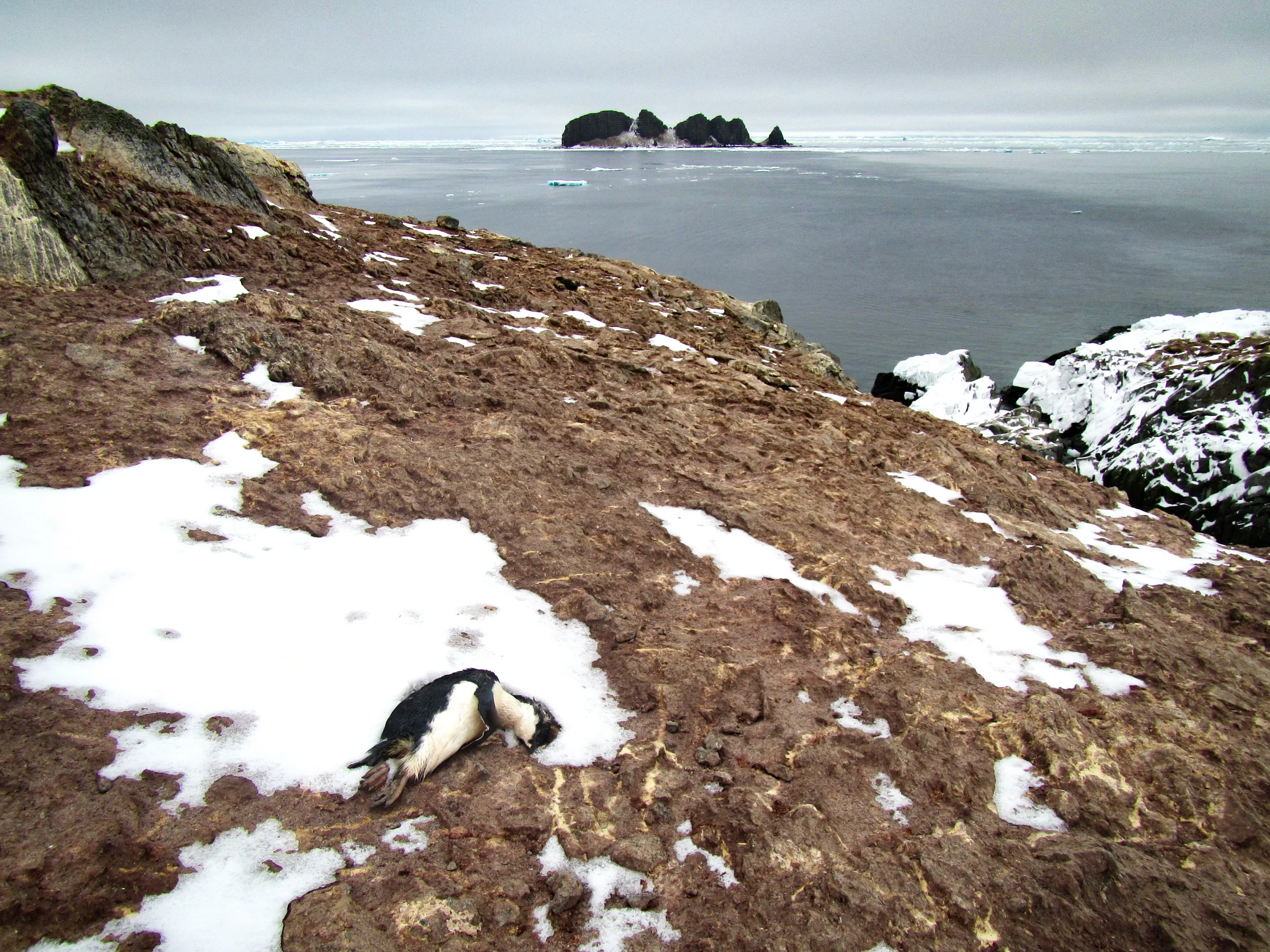
A view of the Adélie penguin colony on Beagle Island, one of the Danger Islands. A few penguin carcasses are scattered on the rocks.
Ralph Vanstrels
hide caption
Ralph Vanstrels
“You can’t stay there very long because you might get stuck with an iceberg blocking your way out,” he says.
According to Vanstreels, as the team pieced together this tragic penguin mystery, the case holds broader lessons for tracking the spread of disease globally.
The only continent to escape the virus – so far
Now let’s move on to Australia a few months ago for another riddle related to bird diseases.
In June, the H5N1 virus – a highly pathogenic avian flu also known as bird flu – arrived in mainland Australia. Until then, Australia was the only continent to escape the virus which traveled the world, leaving a trail of carcasses in its wake.
Since the end of 2021, the virus has caused the death of nearly 300 million poultry. Either the virus killed them or they were put down as a preventative measure to stop the spread of the disease, according to the Global Animal Health Information System. Additionally, bird flu is estimated to have killed millions of wildlife and marine mammals, although an exact figure is difficult to obtain.
Researchers were amazed that Australia could remain free of bird flu for six years. And the virus did not follow the path expected by scientists.
“We have a lot of bird migrations between Australia and Southeast Asia, so for the first few years we say to ourselves: this is where the virus comes from,” he explains. Dr Amandine Gambleassistant professor at Cornell University in the Department of Public and Ecosystem Health.
Bird flu eventually came the other way. It came from Antarctica probably via migratory birds.
“It’s a virus that is not helped by planes” Michelle Willesenior researcher at the University of Melbourne’s Center for Pathogen Genomics, told NPR in 2025. “This is a virus that travels by die-off after die-off after die-off after die-off.”
“The viral load is low”
So when Vanstreels set sail to check on the penguins, he assumed bird flu would be the cause.
Avian flu arrived in Antarctica in late 2023 and early 2024. Vanstreels and his colleagues quickly organized a trip to try to understand exactly what was happening.
“The expedition was initially set up entirely to look for avian flu because there was panic,” he explains, adding that the lingering fear of a lingering global panzootic – or pandemic among animals – is justified.
Dressed in several layers of warm clothing covered in protective gear – double gloves, coveralls, goggles and masks – Vanstreels and the team began taking samples from the penguin corpses they found.
“We looked a little stiff walking – like a penguin almost walking – because of all the equipment,” he says. “We had very strict biosecurity standards.”
They took samples of the deceased penguins back to a mini-laboratory on their boat. In the evening they had early results. But not the expected results.
“There is bird flu here, but the viral load is low,” he recalls. “It was a little confusing.”
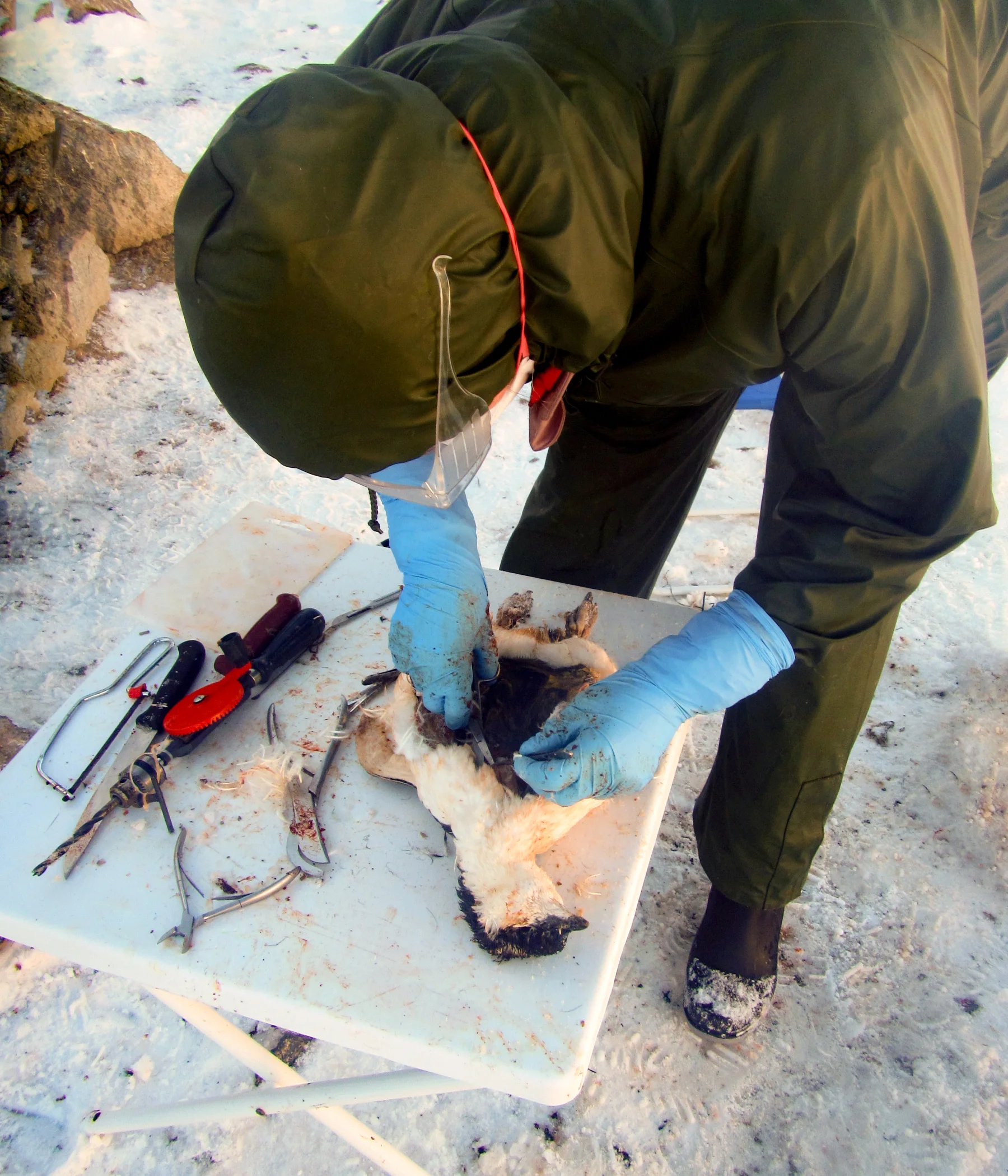
A scientist performs a necropsy on an Adélie penguin chick collected from Heroina Island, one of the dangerous islands where the disease has struck.
Ralph Vanstrels
hide caption
Ralph Vanstrels
The carcasses weren’t very old, so Vanstreels would have expected to find a lot more bird flu virus if that had killed the birds. Maybe something else was the main driver? “We weren’t sure what was happening,” he recalls.
What the microscope revealed
So what killed the more than 500 penguins on the landing pad and the many other penguins on the island?
Back on land several months after the trip, in the Netherlands, Vanstreels’ colleagues deepened their investigation. “Under the microscope you can see there are bacteria in the tissue,” he says, not viruses.
They discovered a different disease, a bacterial disease that causes avian cholera (different from human cholera).
The findings of Vanstreels and his team were published in October in the journal the Proceedings of the Royal Society B.
So how worried are they about avian cholera?
The disease is not considered a major threat to humans since the specialized strain in birds is distinct from the specialized strain in mammals. “The risk of human infection is not really that high when you see an outbreak in birds,” says Vanstreels. But it kills birds around the world, especially in cold environments where the bacteria thrives.
Although there isn’t enough research to know exactly how common avian cholera is, the disease has been on scientists’ radar for decades. However, this is not really a priority. The last time researchers looked for it on the Antarctic Peninsula was 25 years ago.
“You might wrongly think: Well, this is a one-off thing that happened in 2001, and nothing has happened since,” Vanstreels says. Instead, it is possible that deaths from avian cholera occur regularly, but scientists have not verified.
One of his big lessons from this avian flu event that turned out to be avian cholera?
“Yes, there is a big problem with bird flu. But we still want to continue monitoring other diseases because they could mix in the mix,” says Vanstreels.
Antarctica is not as far away as it seems
Like any good mystery, the case of the penguins struck by cholera leads scientists to ask: Whodunit?
According to Vanstreels, there is a theory that avian cholera could have been introduced to Antarctica several decades ago by researchers who imported poultry from the United States.
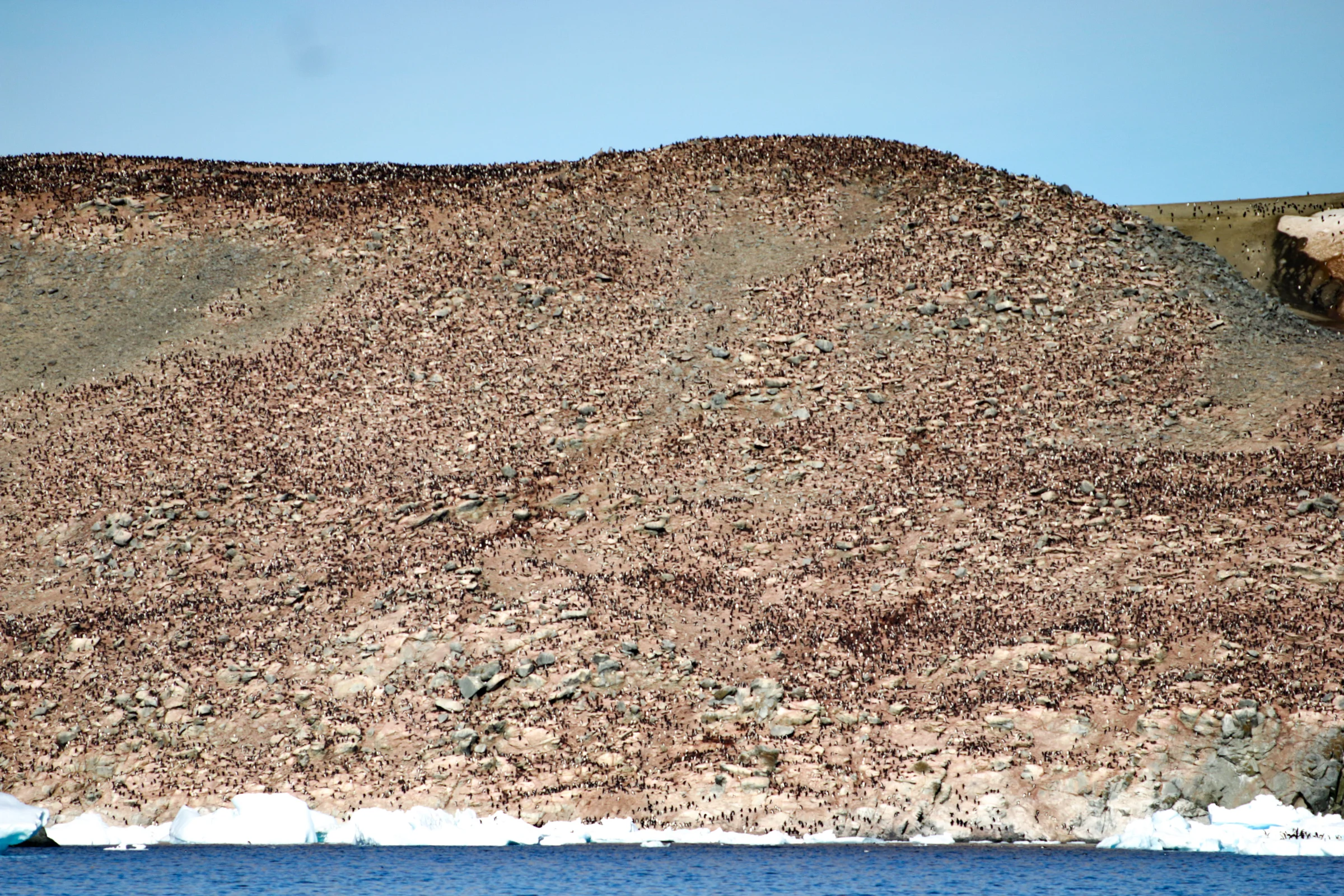
The Adélie penguin megacolony on Heroina Island at the height of the breeding season. The photo was taken in January 2025, a year after the epidemic.
hide caption
Gamble, of Cornell University, adds that the strain of avian cholera found in Antarctic penguins is “very close” to the strain found 5,000 miles away on Amsterdam Island in the southern Indian Ocean.
“Antarctica is much more connected to the rest of the world than we think,” she says.
Tracking diseases in Antarctica is difficult, but, she says, it’s proving to be an important piece of the global pathogen puzzle.
The task of keeping tabs on what’s happening has been assigned to a number of different countries, as Antarctica is not governed by any government. It was designated a continent of peace and science in the mid-20th century. Antarctic Treatywhich now has 58 parties, including the United States, France, Japan and Russia. Many countries have research stations and partner on scientific projects, including tracking pathogens – whether avian flu or avian cholera – that travel great distances and do not respect borders.
“This outbreak of avian cholera just shows that this is not a one-off event,” Gamble says. “We really need international collaboration.”
For stories about life in our changing world, Subscribe to NPR’s Global Health…
Gn Health

