
Audiences have a complex relationship with documentaries. It’s a powerful medium, in large part because it’s supposed to show us the truth. “This is what really happened,” most documentaries say. But that’s not the case. Not entirely. This is what the filmmakers show us. That’s what they tell us. This is what they edited together to convey a narrative they chose, while making a point they decided to make. That’s not to say that documentaries can’t be trusted, but they have to earn our trust if they want us to believe them. We shouldn’t take documentaries literally, even if their images are grainy and candid.
Nathan Fielder and Lance Oppenheim’s “You Can See Everything” is a documentary that never earns our trust, and that’s great, because it’s a film about uncertainty. How do you document a person’s life when it’s impossible to believe them about anything, making “truth” an elusive prospect?
Apparently, Fielder and Oppenheim are trying to uncover the mysteries of Theranos founder Elizabeth Holmes, who is currently serving a federal prison sentence of more than 11 years for fraud. They quickly come to the conclusion that they can’t reach any conclusions and get so caught up in his world that they lose their objectivity and end up scrambling to turn what they didn’t see – and couldn’t even film – into an avant-garde work of art.
This is a documentary about documentarians, as we learn far more about the complexities and flaws of the medium than we do about Holmes. We glean a few things. Apparently. We witness her bizarre family life, hear her countless apologies for misleading her investors, and see what it’s like to watch the Emmy-winning Hulu miniseries “The Dropout” — a biopic about Holmes herself — with the real-life woman Amanda Seyfried played. As you can imagine, this feels really weird to him. We also watch Holmes’ husband, Billy Evans, passive-aggressively snatch a bowl of eggs out of her hands because she was whisking them badly. We even see him naked in the shower, probably just to prove the title is accurate.
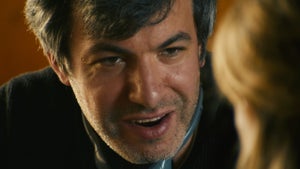
All these weird little moments, all these supposedly frank conversations, seem intimate. We want to believe them, but Nathan Fielder – who starred in the ambitious reality-manipulating prank shows “Nathan for You” and “The Rehearsal” – is on screen all the time. Anyone unfamiliar with Fielder’s scheme will probably find it strange, even selfish, that he would focus on a documentary about someone he doesn’t even know. Of course, anyone who knows him will probably think he’s up to something, since he’s a master manipulator himself.
“You can see everything” never silences the little voice in your head that says Fielder can’t be trusted. The film presents him as the most qualified person, perhaps in the world, to recognize a scam when he sees one. Like Harry Houdini, the legendary stage magician who devoted his free time to debunking fake spirit mediums who dealt with unsuspecting problems, film artist Fielder is here to expose a phony woman who is deceiving people for real. If even the great Nathan Fielder can’t tell whether Elizabeth Holmes is lying in her head, whether she herself is being manipulated, or whether she is incapable of understanding the fundamental concept of truth, her failure is not only fascinating. For Fielder, this is a real existential crisis.
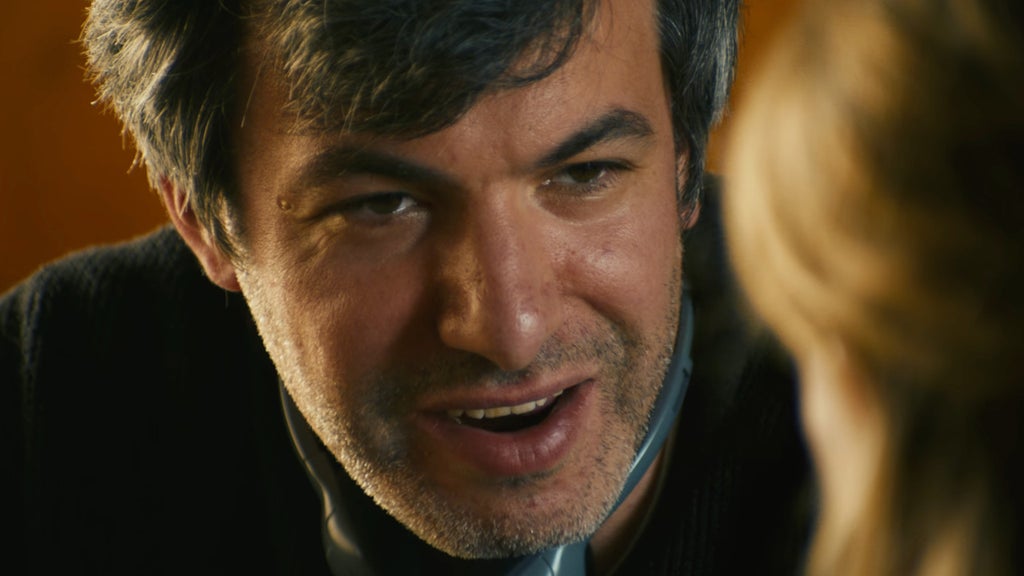
“You Can See Everything” is nearly three hours long. You would never know. Fielder and Oppenheim pass the time, turning details into important clues and withholding vital information until the last possible moment before it becomes cinematic malpractice. They turn their obstacles into a self-aware cinematic underdog story. The “Lord of the Rings” movies weren’t as compelling as “You Can See Everything.” You might check your watch when “The Return of the King” ends for the sixth time, but you’ll forget that time exists when Fielder buys a bag of jerky from a prison vending machine.
And yet, even though “You Can See Everything” captures our attention, what have we received in return? We learned a lot about Elizabeth Holmes without getting the answers we wanted. We learned a lot about documentarians who can’t decipher their own documentary and how to resort to glamorous tricks to bring to life images that don’t exist. By the time Nathan Fielder is (information redacted) with (information redacted) and questions the very nature of honesty – arguing that perhaps only fiction can make reality real and only reality can make fiction seem justified – we have entered a paradoxical vortex from which a sane person can never escape and in which Fielder apparently lives.

Co-director Lance Oppenheim recently released his fictionalized biopic “Primetime,” about Chris Hansen and his morally filthy hit series “To Catch a Predator.” In this film, Oppenheim attempts to get into the head of the type of person who turns real-life tragedy into entertainment and ultimately declares the entire concept inexcusably vile. One wonders, since “You Can See Everything” was filmed years before, whether the making of this film solidified Oppenheim’s thesis. Maybe Elizabeth Holmes is beyond redemption. Maybe she’s not guilty. Maybe we are beyond redemption to get into her house. Maybe we are naturally curious. Perhaps making a film about a person and a situation with so much baggage is a mission that reveals more about the fools who undertake this mission than about their supposed subjects.
“You Can See Everything” is incredibly engaging, first as a documentary, then as an interrogation of form. Fielder and Oppenheim shed light on previously unseen details in the contract between documentarians and their audiences, and highlight the doublespeak so that we never read it the same way again. “You Can See Everything” transcends the documentary form while burning down the entire enterprise. This is perhaps the finest autopsy of deception, and the finest indictment of truth, since Orson Welles’ “F for Fake” pulled the rug out from under us 53 years ago. It’s easy to imagine Welles, a magician of film and stage himself, applauding the film’s creative sincerity and heartfelt lies, and praising the filmmakers for pulling it off.
“You Can See It All” is in select theaters starting October 16, 2026.

Gn headline

