
Breathing is something we do every moment of our lives, usually without thinking.
Although it’s easy to take breathing for granted, changing the way we breathe can actually have profound effects on our health, changing the way we feel and perhaps even the way we think.
These effects overlap with the practice of breathwork – a range of breathing exercises intended to influence your mental and emotional state, sometimes even helping to bring about psychedelic-like brain changes.
A particular breathing technique, called high-ventilation breathing, involves deliberately intensified rapid and/or deep breathing and is increasingly used in therapeutic settings.
In addition to helping people with stress and mental health, high-ventilation breathing is also said to induce altered states of consciousness.
This can include experiences that people normally associate with psychedelic drugs, such as alterations in perception, emotional release, ego dissolution, and a sense of oneness.
So what exactly does intensive breathing do inside the brain to trigger such surreal sensations?
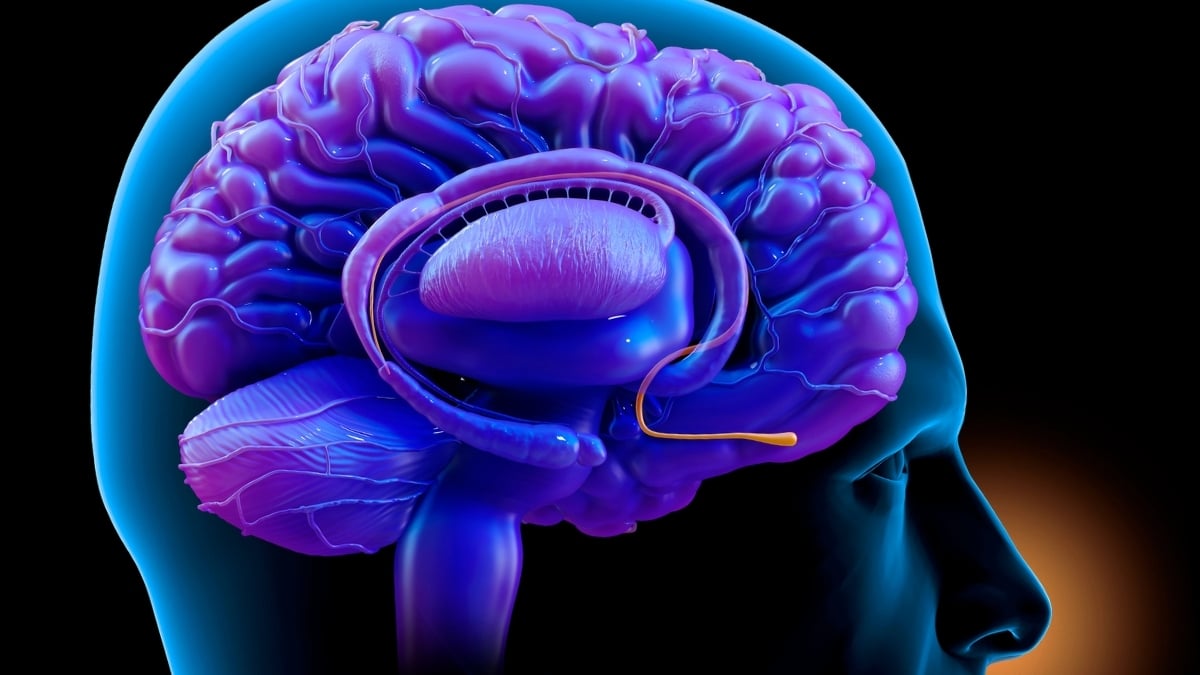
In a new study published in Advances in neuropsychopharmacology and biological psychiatryResearchers have found evidence that could explain how these mysterious side effects appear.
“Many people practicing intensive breathing report profound changes in their self-perception and experience, but the underlying brain mechanisms remain poorly understood,” says neuroscientist Christian Schmitz of Germany’s Central Institute of Mental Health.
“Our study suggests that these experiences are linked not only to marked changes in cerebral blood flow, but also to alterations in the way major brain networks communicate.”
In the study, Schmitz and his fellow researchers recruited 30 healthy adults who had previously experienced intensive breathing, with an average age of 45 years.
During the experiment, participants performed a self-guided intensive breathing technique called circular breathing – continuous, uninterrupted breathing, without a regular pause between exhalation and inspiration – while undergoing a brain MRI.
The results showed that high-ventilation breathing triggered a “profound reduction” in blood flow in the gray matter of the brain at peak intensity, corresponding to a 45.5% drop from baseline, while also increasing heart and respiratory rate.
“The approximately 45.5 percent reduction in gray matter cerebral blood flow represents a substantial hemodynamic disturbance produced by a voluntary, non-pharmacological intervention,” the researchers write.
“Although this reduction remains below the critical flow limit of 50 to 60 percent at which insufficient cerebral oxygenation has been reported, it approaches this threshold and significantly exceeds the reductions typically observed in clinical hyperventilation paradigms.”
At the group level, the researchers found no significant overall changes in the functional connectivity of the brain’s default mode network (DMN), which is disrupted by psychedelic drugs such as LSD and psilocybin.
But individuals who reported experiencing more intense altered states after the experience showed signs of greater changes in the DMN, although the effect was subject to how the data were processed, and should therefore only be treated as a preliminary result for now, which could be examined in future research.
Interestingly, the reductions in cerebral blood flow produced by the experiment were not associated with individuals’ DMN changes, nor with participants’ subjective ratings of the altered states induced by respiration.
Overall, participants rated the intensity of what they felt as high during the breathing exercise (3.47 on average, on a 4-point scale). In a post-session questionnaire, participants’ responses varied, but the group reported feelings of unity, changes in perception, and reduced self-esteem.
The researchers caution that the study only included 30 experienced breathwork practitioners, with no control group, and that further research is needed to confirm the findings.
Despite the striking drop in cerebral blood flow, researchers do not believe it alone is responsible for the altered states people experience during heavy breathing.
Rather, it is possible that reduced blood flow in the brain (hypoperfusion) during intensive breathing may create the physiological conditions for altered consciousness, while changes in the way different parts of the brain communicate may play a more direct role in determining the intensity of these experiences.
“These findings position respiration-induced hypoperfusion as a permissive physiological condition for altered consciousness, with network-level reorganization serving as the most proximal neural correlate of experiential depth,” the team writes.
“The findings have implications for understanding the neurobiology of non-pharmacological altered states and for the potential development of breath-based therapeutic interventions.”
The results are reported in Advances in neuropsychopharmacology and biological psychiatry.
This article was fact-checked by Fiona MacDonald and edited by Fiona MacDonald. Although we are proud of our process, we are only human. If you spot an error, please let us know.
Gn Health

