
Federal agents in southern Arizona arrested protesters Tuesday who were trying to protect a towering grove of cottonwood trees along the U.S.-Mexico border.
The last tree fell Monday to make way for a 30-foot wall.
Federal agents, some masked, arrived early Monday morning and demanded the dispersal of the protest camp in the San Rafael Valley, activist Kate Scott said.
Protesters shouted as workers ripped the towering poplar tree from the ground.
“It was a scene of explosive, horrific cruelty,” Scott said.
Scott and others have been camping on private property near the base of the tree since June to protect four large cottonwood trees that were in the path of the new border wall.
Scott called them “granny” trees. Three more were snatched in July.
The canopy of trees stretches above grasslands along a strip of border east of Nogales, Arizona.
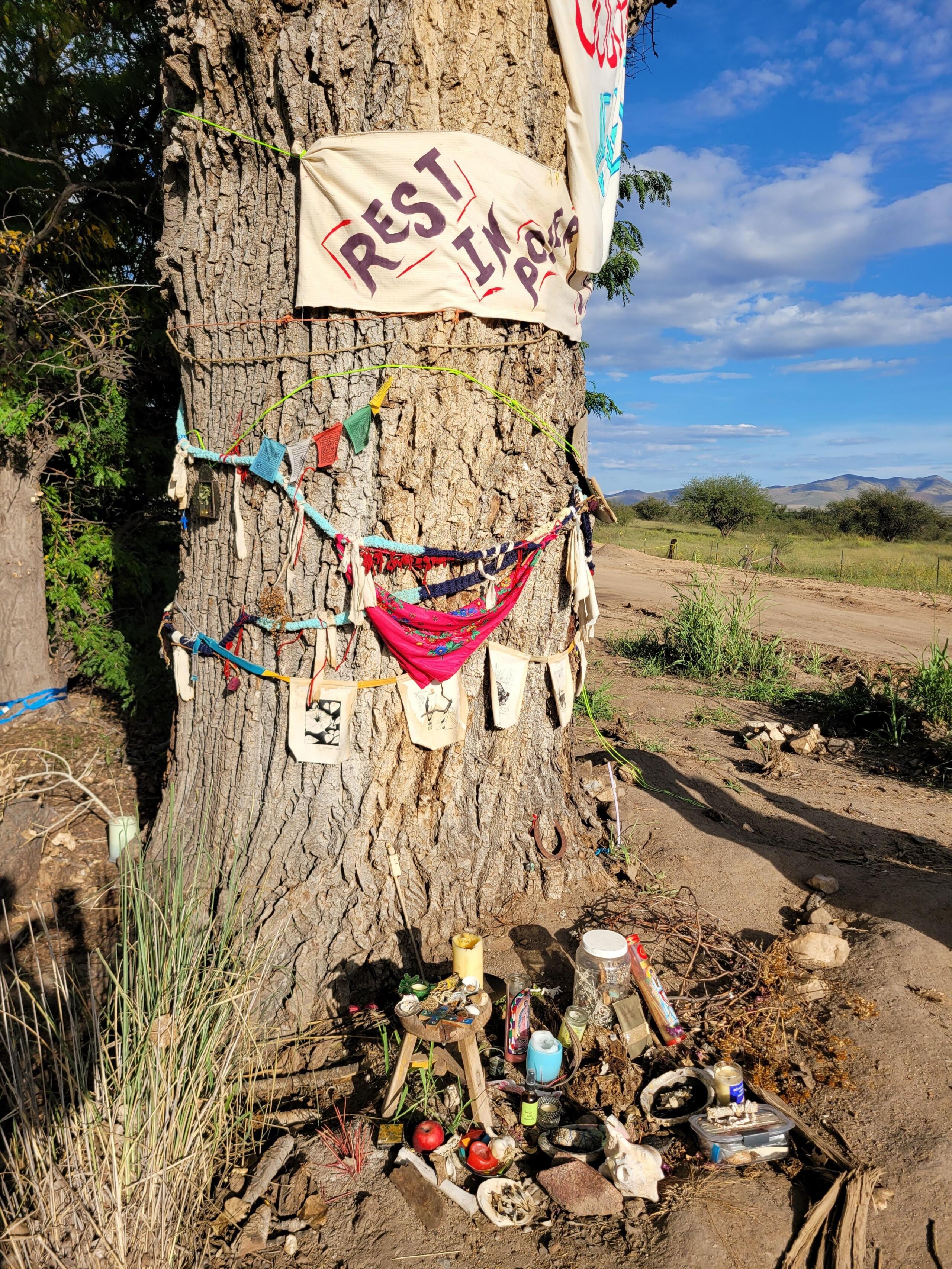
“They were over 150 years old and they are each a universe unto themselves,” Scott said.
Congress approved $47 billion to build hundreds of miles of new wall during President Trump’s second term. In some locations, a second 30-foot steel barrier is erected alongside an existing wall.
U.S. Customs and Border Protection recognizes the importance of protecting the environment, wildlife and cultural resources during construction, an agency spokesperson said. A pre-construction survey showed no signs of migratory bird nests in the trees, according to the federal government’s release.
Local border communities have complained that the federal government is rushing to build the wall and thus damaging the environment. This summer, New Mexico officials said federal contractors illegally depleted the aquifer by drilling unauthorized wells for border construction.
Kate Scott said federal agents arrested at least 10 people Monday at the protest camp and several were injured during the confrontation. An activist at the site said today that two other protesters were arrested when work resumed in the morning.
The CBP spokesperson did not comment on the arrests, but said illegal immigration itself creates environmental risks.
“High volumes of unauthorized crossings often result in substantial amounts of waste, pollution, and damage to natural resources, including sensitive habitats and agriculture,” the agency statement said.
That’s no consolation to Scott, who said activists protesting border wall construction were re-energized by the tree deaths.
“If they think they have crushed us, they have done the opposite,” she said. “They also electrified the country which followed and supported us. »
This segment aired on October 6, 2026.
Gn usa