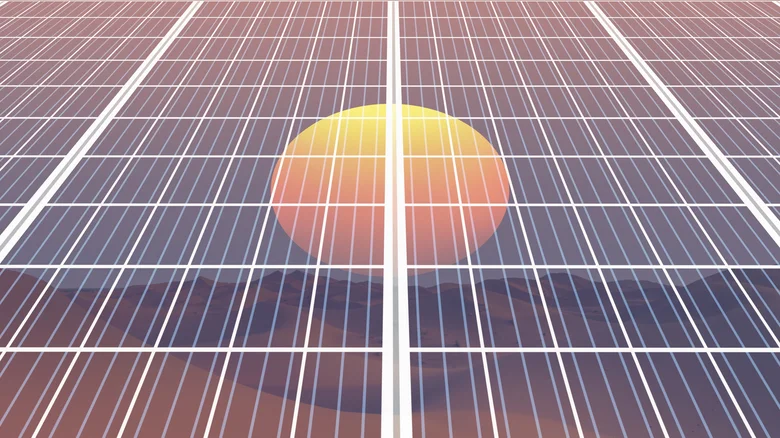
When imagining the Sahara Desert, in addition to the endless sand, you will also imagine a blue sky and a blazing sun. Although this seems like the ideal location for a large solar farm, climate scientists have discovered that building such large-scale installations could have significant consequences not only for the Sahara, but also for the climate thousands of miles away.
A 2020 study explored what could happen if huge solar farms, like those in Tibet, were built across the Sahara. Solar panels are darker than the pale sand of the Sahara, so they would absorb more sunlight and affect how heat is exchanged between the earth and the atmosphere. In the researchers’ model, surface warming could change air circulation, leading to more precipitation. Increased vegetation, as has also been observed around solar farms in China, could then reinforce warming and humidity conditions. While this may seem like a welcome scenario for a part of the world known for its dry climate, the effects could extend well beyond the desert, with the model suggesting that changes in atmospheric circulation could make some parts of the world wetter and others drier.
In fact, the model’s simulations suggest possible droughts and forest degradation as far away as the Amazon, as well as increased global surface temperatures and a warming Arctic that could contribute to further sea ice losses. It should be noted, however, that these are modeled results, not certainties, and that the study looked at very large hypothetical solar installations (20% coverage of the Sahara). Although solar energy is an important tool for reducing greenhouse gas emissions, the research highlights the possibility that modifying a huge area of land to produce clean energy could create unexpected pressures on Earth’s climate.
Could a green Sahara change distant climates?
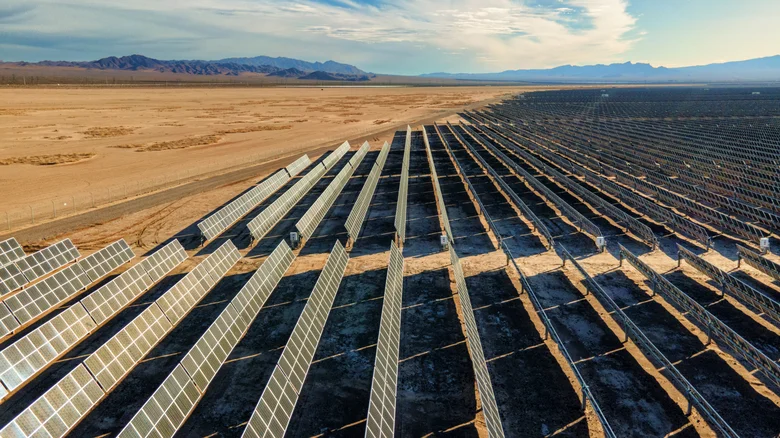
A lush green Sahara may seem far-fetched, but during the African Humid Period around 6,000 years ago, much of the region was actually much wetter and supported much more vegetation than today, a transformation linked to changes in rainfall patterns and ecosystems. Researchers from the 2020 Sahara Solar Farm Study suggest that similar large-scale changes to the region’s surface could have significant effects on the broader climate.
In the researchers’ simulations, the Intertropical Convergence Zone, a band of rising air near the equator that influences tropical precipitation, is moving north. This could bring rain to some areas while leaving others drier, contributing to the risk of drought and forest degradation in the Amazon. The model also predicts a northward expansion of deciduous forests in the Northern Hemisphere, weaker fluctuations in the Pacific and Atlantic climate patterns known as the El Niño Southern Oscillation and Atlantic Niño, and increased tropical cyclone activity. These changes reflect the complex interactions between the atmosphere, oceans, sea ice and ecosystems.
Regarding the idea of building huge solar panel installations in the Sahara, the researchers emphasize the need for careful site selection and more efficient panels to limit possible negative effects. Their simulations suggest that the scale of deployment affects the extent of the impact on remote climates. The results highlight the importance of assessing the broader environmental consequences of clean energy projects. For the hypothetical Sahara solar project and other similar projects, extensive research is needed to determine whether and to what extent the climate could be affected.
Gn tech