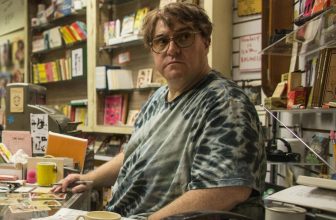
TThe Saturday Night Live sketch, titled Sister, quickly went viral this week for its satire of the burden women and girls face caring for aging family members. In the parody ad, comedian John Mulaney touts the benefits of “Sister,” which he describes as “a 24/7, completely free in-home senior care provider, and also your sister.”
“Now I don’t have to worry about Dad getting the care and attention he needs because my sister will, and I can get back to my life and the things I love to do,” Mulaney says, as the sister, played by actress Jane Wickline, gives him their father’s medication.
The skit, which has garnered more than seven million views on YouTube in less than a week since it aired, received thousands of responses and comments about its accuracy.
“This is one of the nastiest, most spotty sketches ever written on SNL,” one commenter wrote on YouTube. Another posted: “As a hospice nurse, this definitely follows. I deal with adult daughters 90% of the time, and if there’s no daughter, it’s the daughter-in-law.”
“This is so real it almost gave me a fit of rage,” another viewer added.
The parody even caught the attention of top US leaders, including Melinda French Gates and US Senator Kirsten Gillibrand.
“I don’t know of any (SNL) sketch that has made its way into as many group chats as quickly as the commercial (‘Sister’),” French Gates wrote in an Instagram post about the sketch. “I’m so glad we’re talking about it and laughing about it. We need more honesty about what caring for our loved ones actually does and why so much of that work falls on women.”
Gillibrand used parody advertising to tout his own legislation, the Supporting Our Direct Care Workforce and Family Caregivers Act., which she introduced in June 2026. The bill would provide federal funding to states to help train and retain health care workers, as well as family caregivers.
Currently, the United States has no federal support for family caregivers. Medicare largely covers short-term medical needs, and while Medicaid can cover long-term care, it is only available if a person meets medical and financial criteria.
“If you’ve seen — or experienced — the SNL sketch ‘Sister,’ you know how quickly life changes when an aging parent needs care,” Gillibrand wrote on X. “Congress should come together to pass my bill that would give family caregivers the resources and support they need.”
Stacey Barnes was sitting on the couch next to her parents, both asleep, when she saw the skit being broadcast live. The 45-year-old web developer has lived with her parents in Minnesota since her mother was first diagnosed with Parkinson’s disease a year and a half ago, and she is currently her primary caregiver.
Barnes was stunned by the accuracy of the sketch. “It just happened on TV, and I was like, ‘Whoa, oh my god!'” she says.
“I immediately went on YouTube the next day and sent it to people,” she told the Guardian. “I’ve never felt seen like that before. I’ve never identified with a lot of pop culture. This is the first time kind of pop culture — maybe since Daria — where I was like, ‘Yeah, that’s relevant.’
Shauna Sweeney received at least a dozen messages regarding the skit. The 41-year-old took on caregiving responsibilities when her father was diagnosed with early-onset Alzheimer’s disease in 2014. Her own experience led her to launch tendercare, a free senior care and care platform that helps families organize care plans, prepare for emergencies and connect with local providers.
“My friends all know I’ve been deep in this space for a while,” Sweeney said. “But it’s also something that many of us considered sisters have recognized for some time in private circles.”
More than 51 million Americans — nearly one in five adults — provide care to someone age 50 and older, according to a study by AARP and the National Alliance for Caregiving. Three out of five caregivers are women.
“When my father was diagnosed, I don’t even think there was a lot of division or conscious discussion about who would be responsible for what,” Sweeney said. “It’s just assumed that there is a responsible person in the family (who) is going to do what is necessary.”
Sweeney said the SNL skit highlights a growing problem women face across the country, particularly as the population ages and average life expectancy increases: “I didn’t have language for it. I didn’t even know what a caregiver was for the first five years I did this job.”
Although this is not always the case, studies have shown that this caregiving burden falls disproportionately on women, as the Sister sketch shows. One group of researchers even wrote that “the best long-term care insurance in our country is a conscientious daughter” in a 2017 Journal of American Medicine (JAMA) commentary on dementia care.
“A lot of socialization comes with unspoken rules that encourage (and) sometimes even reward girls for being helpful and accommodating,” said Dr. Sarah Oreck, a reproductive psychiatrist and founder of Mavida Health, a virtual mental health provider for women.
The SNL sketch also addresses this issue, as a doctor explains to the audience: “Years of internalized sexism have tricked Sister’s brain into thinking that taking care of him is her responsibility and, somehow, not yours.” »
Dr. Oreck expanded on the sketch, emphasizing that girls learn from a young age to care for others: “Girls play with dolls and pretend to feed and change the baby. »
The sketch’s virality landed it in the group chats and inboxes of “Brothers” and “Sisters” across the world, but its long-term impact remains to be seen. Yet caregivers and experts agree that it does what good comedy should do: spark conversations.
“Part of what makes (the sketch) funny is also that it’s so tragic,” Sweeney said. “As you can see, it’s almost impossible to do all of this (providing care) without there being a real impact. Whether it’s on your mental health or your financial health, the consequences are real.”
Gn entert