
Residents of Villa Vie Odyssée — which remains stuck in Cambodia — were informed that the cruise ship was now under the control of its lender, according to a message sent to residents and obtained by CBS News.
The ship will soon be moved from Cambodia to Singapore, where it could potentially be sold at auction, according to several sources familiar with the matter. Company executives, however, expressed optimism that they would be able to salvage the ship, if they found an operating partner.
“It’s a 30- to 90-day process, and during that process we have time to do some restructuring,” Mike Petterson, the company’s founder and executive chairman, told CBS News.
Passengers only had the weekend to remove all their belongings from the ship before it became inaccessible to them, with the lender covering the costs of operating the ship.
“They now have the responsibility to pay for the crew, the fuel, the operations of the ship and its guard,” Petterson said, noting that they are exploring options to keep the ship operating. “They would be willing to work with a funded plan – they’re not out of negotiations – it’s not like you get your car back and you can’t get it back.”
Some passengers expressed frustration with the company’s optimistic tone and feared it would give some residents a sense of “false hope.”
Suy Se /AFP via Getty Images 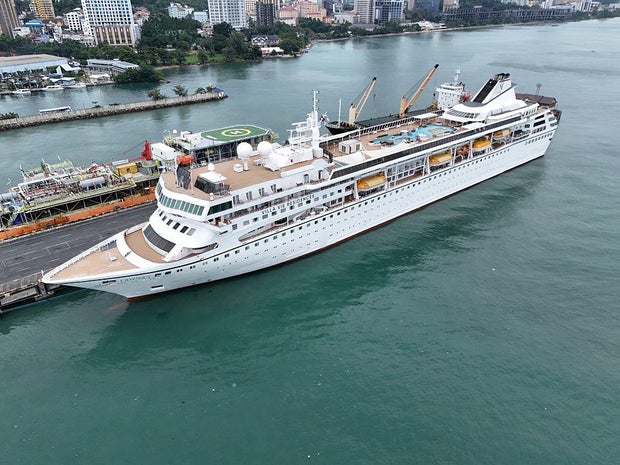
“The lender has taken possession of the vessel, but that does not mean the Odyssey’s future has been decided,” the message to residents read in part. “No sale is planned. We believe it is time to present a viable plan and we are working towards that end.”
Efforts by a group of residents to purchase the ship from the company also failed, after a lender denied them financing, according to sources interviewed by CBS News. This effort received commitment from 169 residents willing to invest more money in the project.
Internal communications reviewed by CBS News showed the ship was in financial trouble for at least three months before Cambodia. Now, additional documents show the company felt the urgency to get more residents to come up with even more funds.
At a meeting in early August, the company wrote in an internal PowerPoint presentation: “An important new avenue of research is the need to distinguish actual inability to contribute from reluctance to contribute more. »
Joel Greiff of Naples, Fla., spent $350,000 for a cabin on board, but he spent only 26 days on the ship after moving there in October. Greiff told CBS News he paid an initial deposit in August 2025 and paid the remainder in May 2026.
In late July, Greiff said he received a message from the company about its financial difficulties. At the time, the company was asking residents for more money to keep the ship afloat.
“I’m selling my RV on August 3rd and I’m like – oh,” Grief said. “It’s going to fail. All the signs are there.”
Since being kicked off the ship, he has found accommodation in Kompat, Cambodia.
“I went looking for a place to live for $200 a month. A beautiful place,” he said. “It’s right on the river. It’s what I wanted and what I needed.”
Greiff said he has accepted the fact that he may never see the money he invested in the ship again.
“I don’t feel any ill will, I just feel like they have no idea how to run a business,” he said. “They might consider never running a business again.”
It’s still unclear what will happen next to the Odyssey, but before getting stranded in Cambodia, Residential Cruise Holdings, Villa Vie’s parent company, was in the process of acquiring at least one additional cruise ship and working on two residential cruise projects.
“I don’t have any updates on that,” Petterson said. “We are 100% focused on the Odyssey. Villa Vie has been fully capitalized by the residents themselves. There are no stakeholders other than the residents.”
A Chapter 11 bankruptcy for Villa Vie would cost the ship about $3 million for the first 60 days of the process, according to the message sent to residents.
“The plan we are pursuing is to support these operations through DIP funding and resident maintenance collections,” the message read. “The debt and legal issues are serious, but they do not erase the value of the vessel, the resident community, or the opportunity to build a stronger operating model. A structured transition with new capital and experienced operators can address the challenges and create a path forward.”
Petterson said the company is 100% employee and resident owned, “so when there is a financial need, residents are by definition shareholders of the company and are naturally invited to contribute as shareholders.”
Gn bussni

