Niko Pitinii, a communications student at the University of Pittsburgh, was excited to celebrate his 21st birthday with family in Las Vegas. But when the trip finally came, all he could do was sleep.
It was the first sign that something was wrong. In the weeks that followed, Pitinii struggled with severe fatigue. He lost weight quickly. One day he passed out in the shower. When he went to the emergency room, blood tests showed nothing alarming and he attributed the episode to steam and hot water.
He tried to focus on daily life: juggling classes and working as a student equipment manager for the Pittsburgh Panthers, his school’s football team.
Then, during a Panthers practice, he passed out again. His boss told him to see a doctor immediately. Pitinii went to his primary care provider, who referred him to the emergency room. A doctor ordered a CT scan of his head, stomach and lungs.
“I think they thought it was my heart,” Pitinii said. “Then the scan results came back, and they said, ‘Yes, you have a big brain tumor in your head.'”
Cleveland Clinic 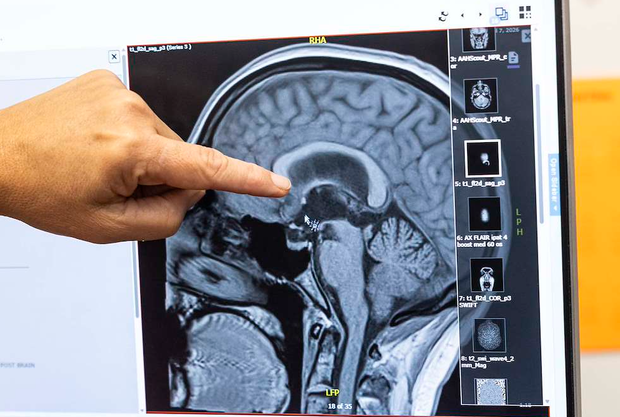
“There is no way”
Pitinii was transferred to the Cleveland Clinic the next day. There, doctors discovered that the tumor was so large that it was blocking one of the ventricles in his brain, causing a buildup of spinal fluid. This buildup of fluid, called hydrocephalus, was causing some of his symptoms, said Dr. Pranay Soni, a skull base surgeon who operated on Pitinii.
A tube was placed in Pitinii’s head to drain the fluid. But it was only a stopgap: In a few days, Soni would have to undergo another operation to repair the blockage more permanently. During this procedure, the tumor was biopsied. Doctors thought the golf ball-sized mass was benign, but needed to test it to be sure.
But hours before the procedure began, Pitinii received unexpected news from Dr. Amy Smith, who would become his oncologist.
“This doctor that I had never seen before comes in…and she starts talking about cancer, and we’re like, ‘What are you talking about? What do you mean, cancer?'” he recalls. “She said, ‘Yes, you have cancer.’ I’m like, “How do you know you haven’t even done the biopsy yet?” They had done my blood tests again and I was pregnant!”
Niko Pitinii 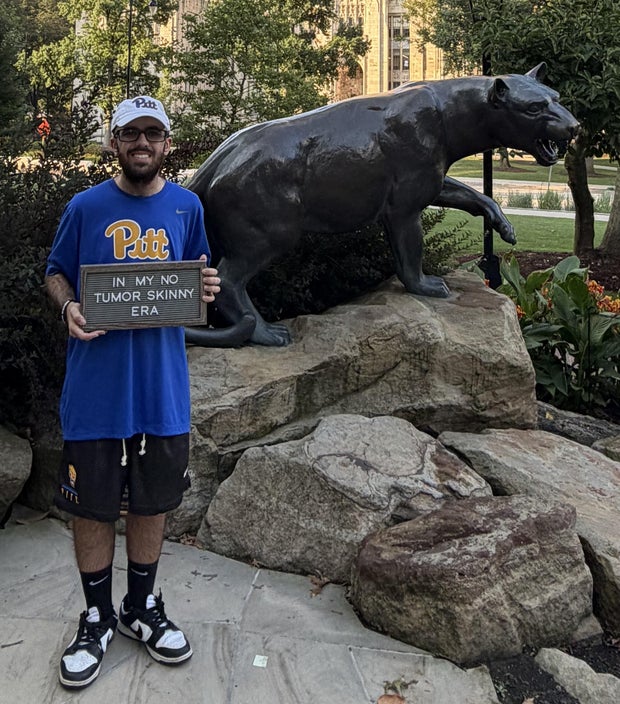
Pitinii was not actually pregnant, but he had elevated levels of beta-hCG, a hormone most commonly seen in pregnant patients. Smith, a pediatric oncologist at the Cleveland Clinic, said the hormone is secreted by certain tumors, including a rare type of brain tumor called a germinoma. Seeing it in Pitinii’s blood tests gave her care team an idea of what was going on.
Brain germinomas are rare, Smith said. They represent approximately 1% of brain cancers. Pitinii was told the cancer was very treatable – with a 90-95% cure rate – but the news was still upsetting.
“It just freaked me out. I’m going to have brain surgery, and then they tell me I also have cancer on top of all this? It was just bad timing. There was a lot of information to process,” Pitinii said. “I remember thinking, ‘No, this isn’t real. There’s no way.'”
Undergo intensive treatment
Pitinii’s operation went well. He was released from the hospital 24 hours later and was able to celebrate Christmas with his family. After the New Year, he began treatment for cancer.
The biopsy confirmed that his tumor was a germinoma. Pitinii’s care team recommended she start with four cycles of chemotherapy, followed by a month of radiation therapy.
The months that followed were exhausting. Pitinii decided to take a semester off from school so she wouldn’t have to juggle classes and cancer treatment. He underwent chemotherapy once a month from January to April. He then underwent 24 targeted proton radiation sessions, which ended on June 2. Throughout the process, he relied on the clinic’s social workers and other psychological staff to provide emotional support.
Pitinii underwent an MRI on July 7. The next day he was told he was cancer free. On July 9, he rang the hospital’s “Bravery Bell” to commemorate the end of his cancer treatment. A social worker on her care team surprised her with a small gift: a 3D printed model of her tumor, which Pitinii says she still has.
Cleveland Clinic 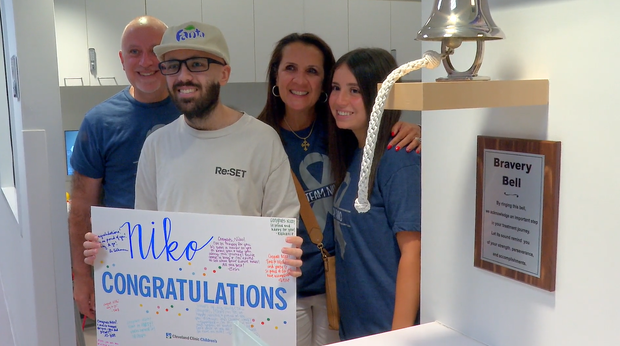
“I’m just trying to get there.”
Pitinii returned to the University of Pittsburgh for the fall semester. In September, the Panthers nominated him for the Courage Award, a national honor that celebrates a person who overcomes adversity. The winner will be declared at the Capital One Orange Bowl in January.
Pitinii continues to see Smith regularly, and a recent MRI and a series of blood tests confirmed he remains cancer-free. He will have regular check-ins with Smith, including scans, over the next 10 years. Pitinii cancer only has a “7 to 10 percent risk of recurrence,” Smith estimated. Even after no longer seeing Smith regularly, Pitinii will continue to follow up with the Cleveland Clinic survivorship team to stay informed of any side effects caused by his treatment.
For now, Pitinii is focusing on school again. Getting back into rhythm was not without difficulty. Pitinii lost about 60 pounds during his medical journey, and an appetite stimulant intended to help him regain weight made it difficult to sleep. Concentration is sometimes difficult, he says.
Cleveland Clinic 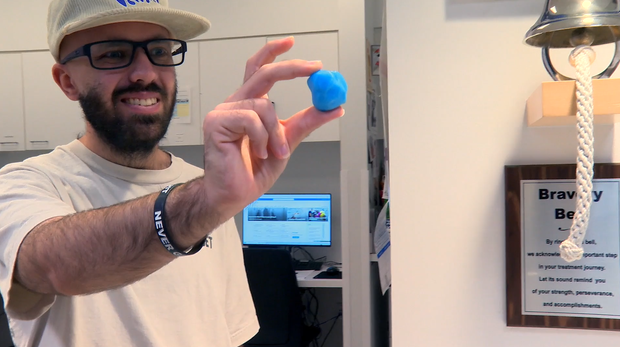
“In cancer school, they don’t talk to you about these things,” he joked.
Pitinii is expected to graduate next year. He plans to get a master’s degree in social work so he can help other young cancer patients. But for now, most of his energy is focused on recovery.
“There’s an adage that for every day of treatment, it takes three days to recover. So I know it’s going to take time, and I know it’s not going to happen as quickly as I’d like. But I’m just trying to get there.”
Gn Health