
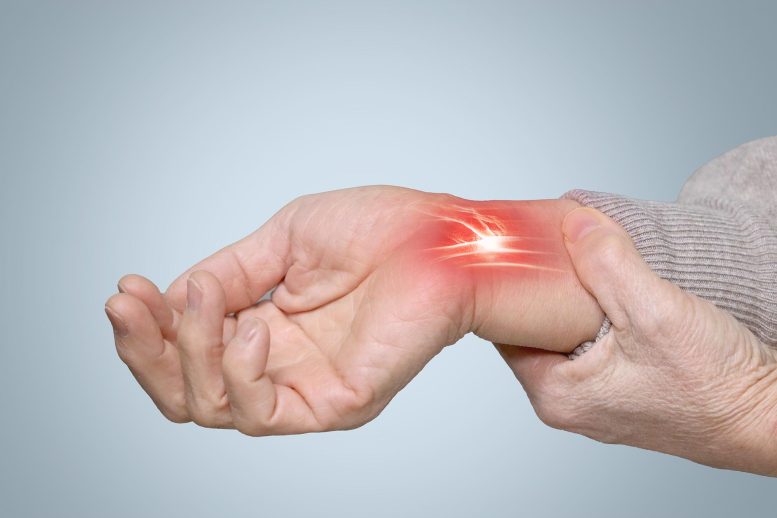
A brief procedure using saline could offer lasting relief from stubborn carpal tunnel symptoms without steroids, a small clinical trial suggests.
The numbness, tingling, weakness and pain of carpal tunnel syndrome occur when the median nerve, a major nerve running from the forearm, is compressed in a narrow passageway in the wrist. Corticosteroid injections can reduce swelling and ease this pressure, but relief may be temporary. Associated with repetitive movements of the hands and wrists, this pathology affects approximately 5 to 10% of people over the course of their lives, and its incidence is increasing.
A randomized trial involving 63 patients now suggests that injecting saline around the nerve under ultrasound guidance can provide relief that lasts for up to six months of follow-up. Adding steroids to the procedure did not significantly improve its long-term benefits. The study was published in Radiologya journal of the Radiological Society of North America (RSNA).
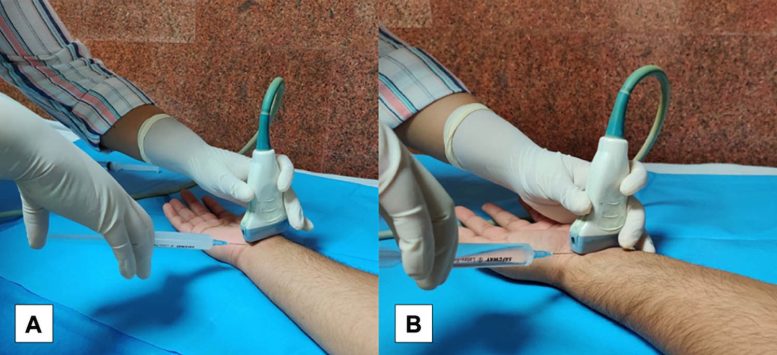
Using saline to release the nerve
The procedure, called nerve hydrodissection, uses carefully injected fluid to free the nerve from surrounding adhesions, tissue attachments that can restrict its movement. Ultrasound allows clinicians to guide the injection around the affected nerve. Hydrodissection is usually combined with steroid treatment, so its effectiveness without steroids has remained uncertain.
The study’s lead author, Anindita Bose, MD, assistant professor in the department of radiology at Mahatma Gandhi Medical College and Hospital in Jaipur, India, and colleagues studied patients with confirmed carpal tunnel syndrome who had not responded to conventional treatment.
“Most of our patients had been suffering from carpal tunnel syndrome for months or even years and were not getting much relief despite trying various treatments such as painkillers, splints, lifestyle modification, and corticosteroids,” said study co-author Anupama Tandon, MD, professor in the department of radiodiagnostics and imaging at Delhi’s University College of Medical Sciences and Guru Teg Bahadur Hospital, in Delhi. India. “It was a pleasant surprise to find that a simple ultrasound-guided median nerve dissection procedure with normal saline gave them long-term relief. »
To compare the treatments, the researchers randomly divided the participants into three equal groups. One of them received hydrodissection with normal saline, salt water solution. Another received hydrodissection with saline and corticosteroid, while the third received an injection of corticosteroid alone. All three treatments were guided by ultrasound.
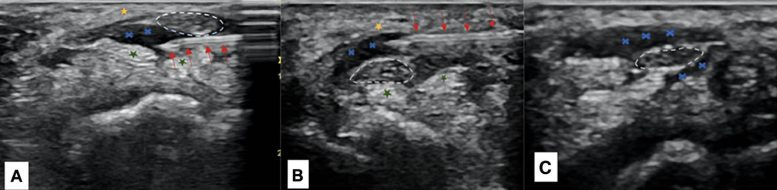
The team tracked symptoms, function and pain using standardized clinical scores. Ultrasound measurements of the cross-sectional area of the median nerve allowed researchers to assess changes in swelling. Follow-up assessments took place four, 12 and 24 weeks after treatment.
Less nerve swelling, longer lasting relief
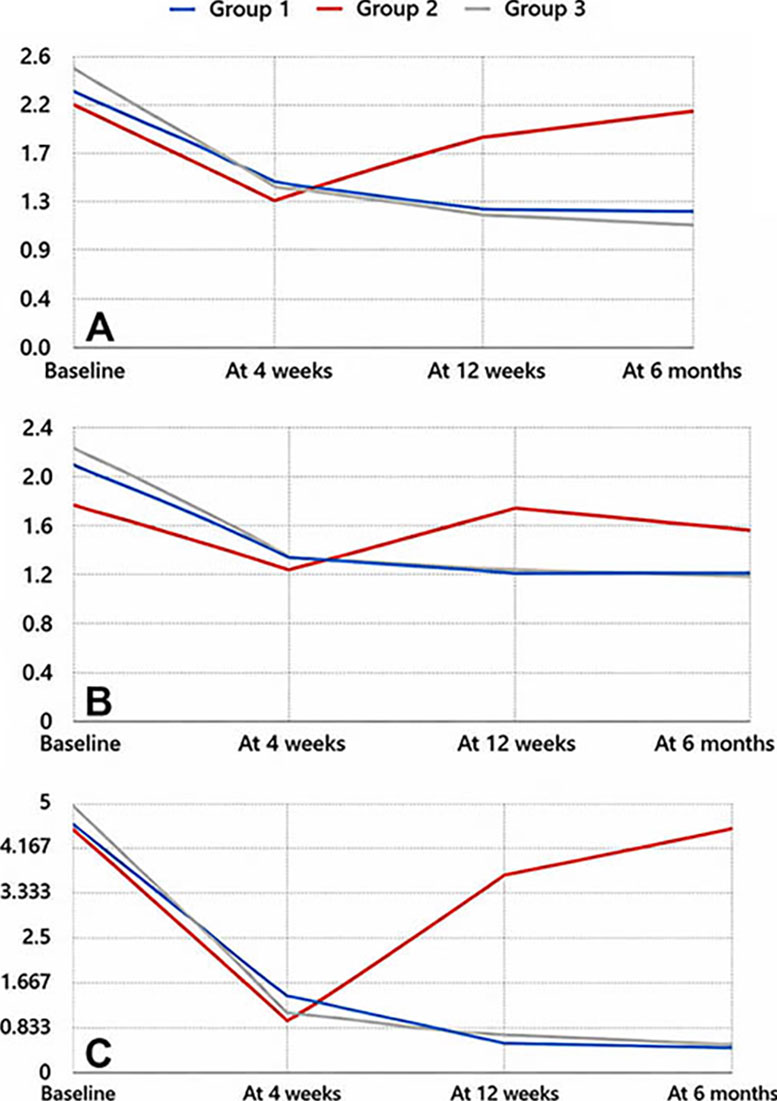
All three groups improved significantly after four weeks, but their results diverged as follow-up continued.
“At 12 weeks and 6 months, both hydrodissection groups demonstrated further improvement in clinical symptoms and function, whereas patients who received a corticosteroid injection alone experienced a recurrence of symptoms, suggesting that the initial benefit was short-lived,” Dr. Tandon said.
Ultrasound measurements confirmed the symptom and function findings. Median nerve cross-sectional area decreased by approximately 43% to 45% after hydrodissection compared to approximately 15% after steroid injection alone, indicating greater reduction in nerve swelling.
The lack of significant additional long-term benefit from steroids in the hydrodissection groups is important because these medications carry risks beyond the possibility of symptom recurrence.
“The traditional steroid injection for carpal tunnel syndrome often provides only temporary relief, thus requiring repeats of the procedure,” said Dr. Tandon. “Additionally, steroids carry a risk of localized skin changes, fat thinning, and tendon weakening.”
A 15-minute intervention without hospitalization
The hydrodissection lasted an average of 15 minutes and the patients tolerated it well, with no significant immediate or delayed complications observed. Responses to the questionnaire indicated high satisfaction with the procedure. It was inexpensive, required no anesthesia or hospitalization, and allowed patients to return to work within an hour.
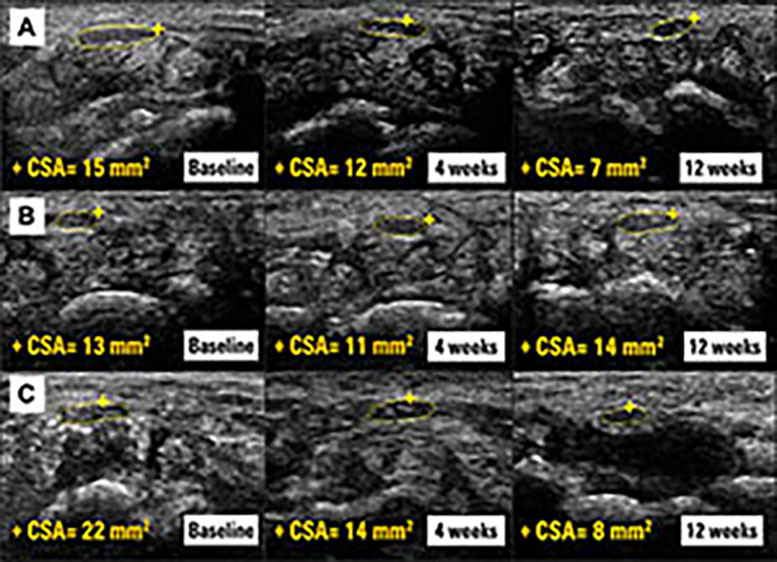
“Overall, the study suggests that ultrasound-guided saline hydrodissection is a safe, minimally invasive treatment that can provide sustained clinical and morphologic improvement in patients with refractory carpal tunnel syndrome,” said Dr. Tandon. “Thus, hydrodissection merits being a minimally invasive option for mild to moderate carpal tunnel syndrome and may defer and even alleviate the need for surgical intervention.”
The researchers said larger studies in multiple centers, with longer follow-up, are needed. They have already launched a study comparing the long-term effectiveness of different fluids used for hydrodissection in carpal tunnel syndrome, including dextrose versus saline.
“This trial has an extended follow-up period to track patients’ long-term outcomes and establish the true durability of the treatment,” Dr. Tandon said.
Reference: “Effectiveness of US-guided hydrodissection for carpal tunnel syndrome: a prospective randomized controlled trial” by Anindita Bose, Anupama Tandon, Gopesh Mehrotra, Siddharth Maheshwari and Ayush Khandelwal, October 6, 2026, Radiology.
DOI: 10.1148/radiol.260185
Never miss a major breakthrough: join the SciTechDaily newsletter.
Follow us on Google and Google News.
Gn Health

