
A state of good neighborliness and common sense, Maine is a unique place, full of practicality, robustness and inner warmth.
Two days ago, I watched an incredible scene from its exact geographic center: a fire of fall leaves above the Pleasant River at Brownville Junction. Our small team spent days traveling and covering the U.S. Senate race. This is one of the most exhausting campaigns, for both candidates and voters, that I can remember.
I can honestly tell you, I don’t know which way this race is going. But in that quiet moment by the river, I began to imagine this guide to this high-stakes race.
Here’s what I learned.
The candidates
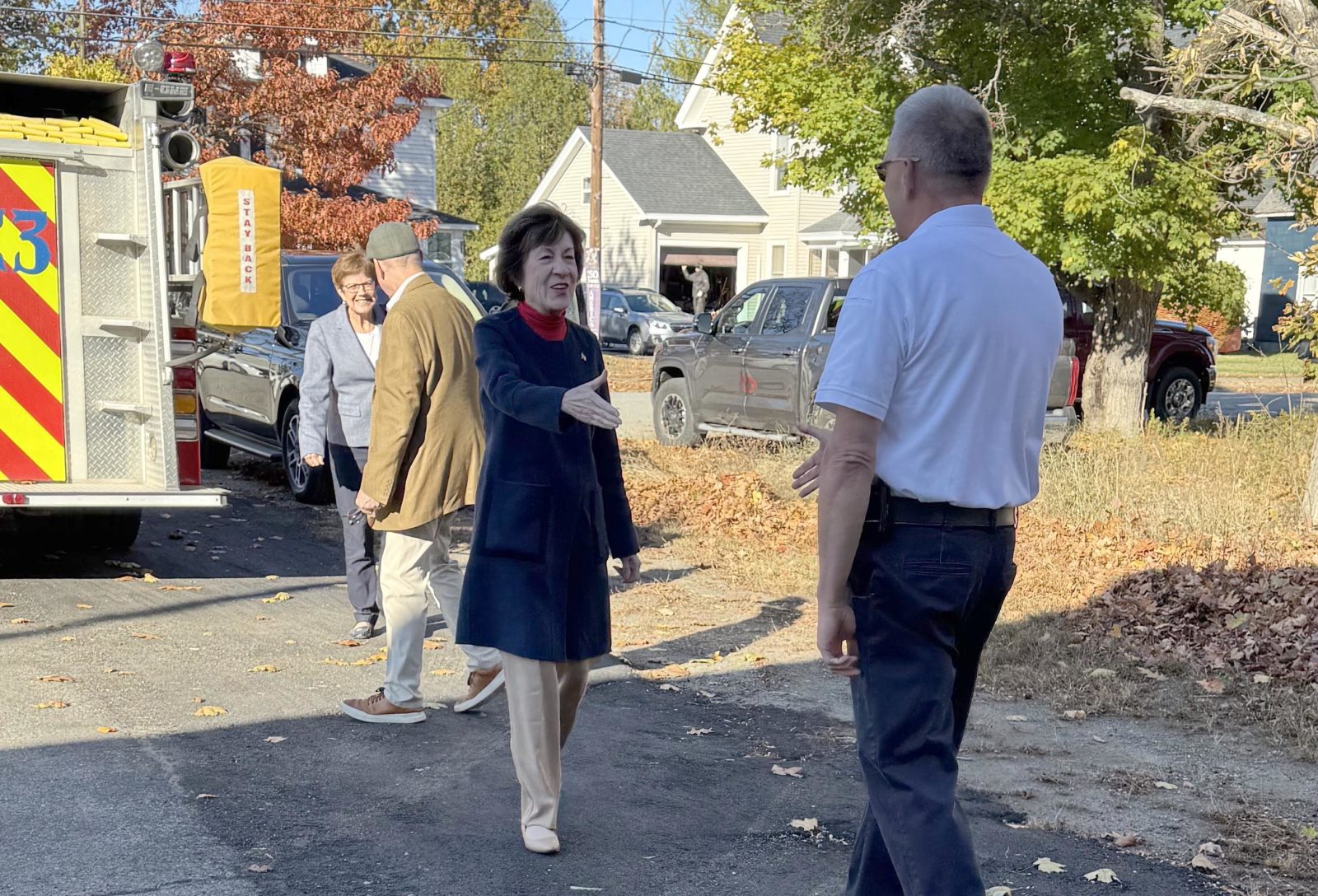
Republican Sen. Susan Collins reaches out to shake the hand of Brownville Fire Chief Shawn Mitchell. Photo by Lisa Desjardins/PBS News
Senator Susan Collins
Our time with Senator Susan Collins was unusual because it wasn’t unusual.
At the Brownville Fire Department’s annual dinner, we saw the Republican senator walk in, smiling and at ease.
In the midst of an intense, high-stakes campaign, this was remarkably not a campaign event. It was a small community gathering of a few dozen people. The fire chief politely asked us not to record anything except the senator’s remarks.
For about an hour, Collins sat to the side and back, greeting those near her without inserting herself into the crowd. If she was anxious, it didn’t show.
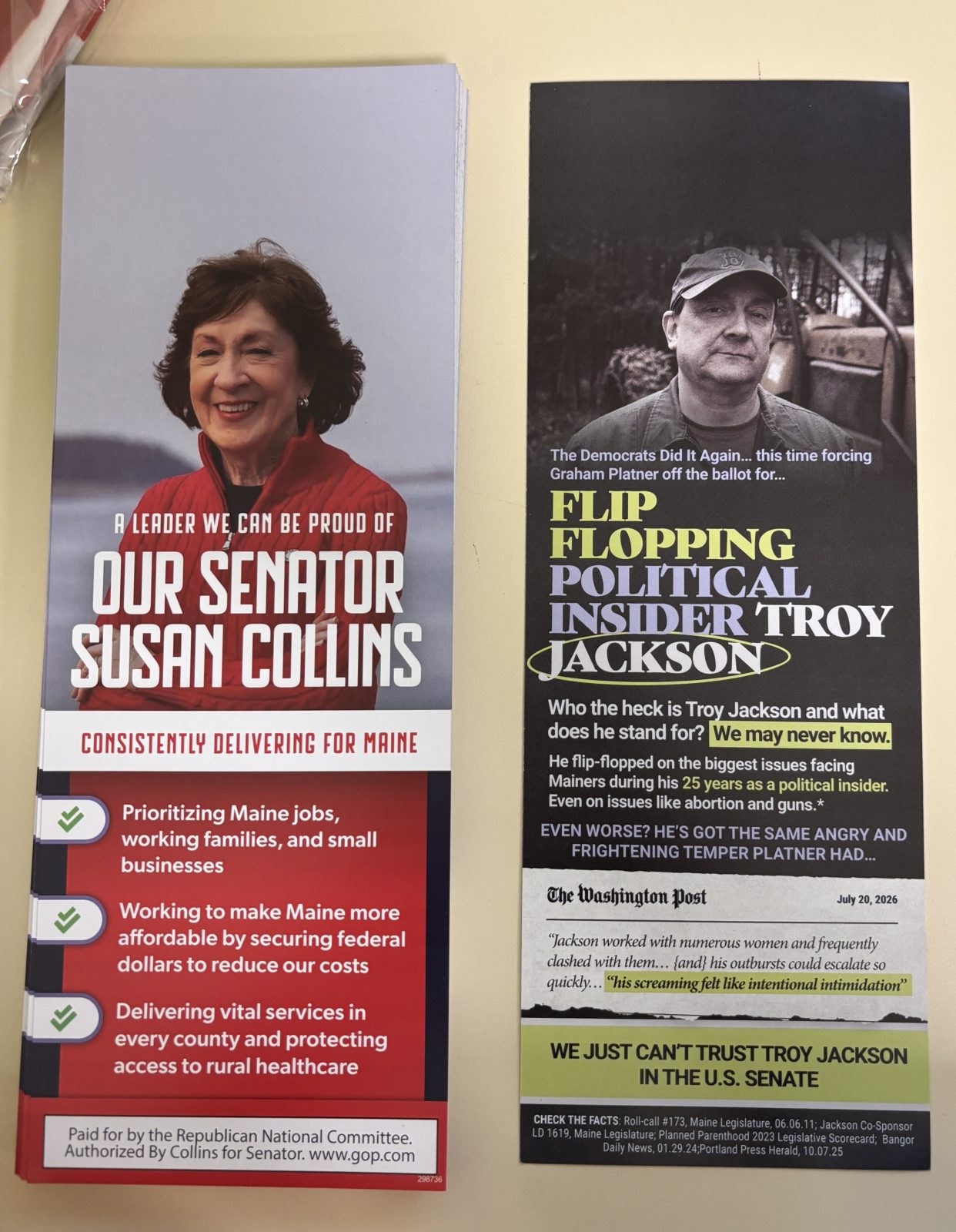
Fliers supporting Sen. Susan Collins in the Senate race. She is seeking a sixth term. Photo by Sam Weber/PBS News
After recognizing several firefighters, the chief presented him with an award for helping bring $2.8 million in federal funding to this community, including to replace this aging fire station.
I watched how the hard-to-read firefighters interacted with Collins. Inside, they didn’t seem interested in his presence. But then, outside, they kissed her. Older veterans, moms, groups of younger men, they all asked for photos.
This area is MAGA red, having voted for Trump three times, and I wondered if its residents still felt any loyalty to Collins, who openly did not vote for Trump. They do it.
Troy Jackson
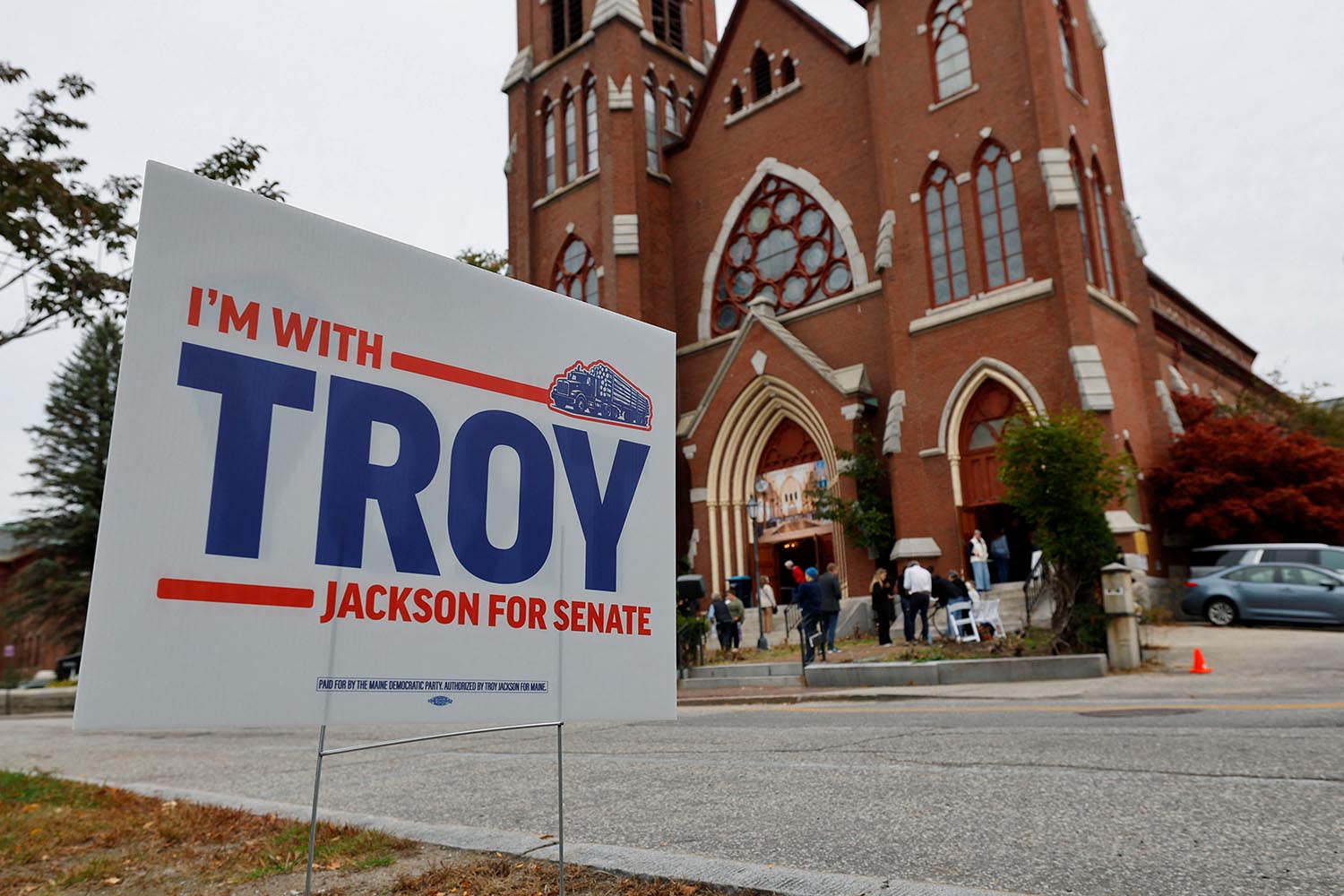
Supporters enter the Agora Palace Event Center before the start of an Oct. 11 rally for Democratic U.S. Senate candidate Troy Jackson and Sen. Bernie Sanders, I-Vt., in Lewiston, Maine. Photo by CJ Gunther/Reuters
The rally in Portland, Maine, 150 miles south of Brownville, had two headliners: Collins’ Democratic opponent, Troy Jackson, and progressive Massachusetts Sen. Elizabeth Warren.
Before that, almost every Jackson supporter I met had something to say about the logger-turned-state senator’s composure — that “he’s becoming a better speaker” or “he’s not so polite.” (Jackson replaced Graham Platner as the Democratic nominee just three months ago.)
But at that rally, many people in the crowd told me something else. “He’s better,” one said. Several people told me “this was his best event yet”. In debates and in a recent interview with CNN, Jackson sometimes displays a defensive or impatient stance, including crossed arms. He also made headlines by telling Collins to “shut up.”
But as he rallied with his supporters this weekend, I saw Jackson finding a better mix of his “I’m not polite and that’s a good thing” message as well as clearly sharp messages about affordability and President Donald Trump. And be human.
After the event, Jackson and his security team quickly made their way to his campaign car in front of the assembled press. (He spoke to them at a previous event.) We stayed nearby and were the only crew to later see him leave the black SUV to say hello to a little girl who drew him a picture. It was his most personal moment.
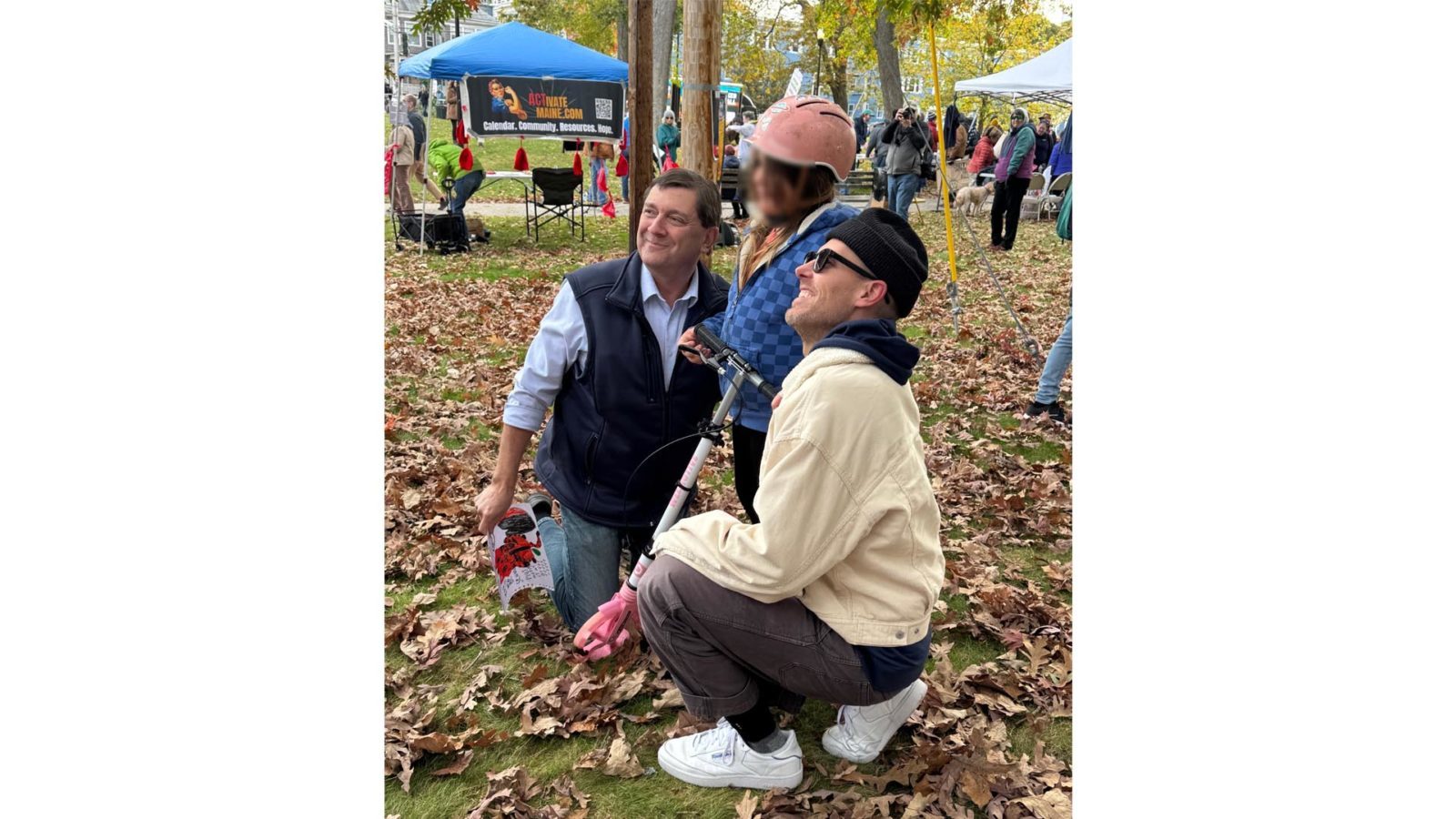
Democratic U.S. Senate candidate Troy Jackson poses for a photo at an event in Portland, Maine, with a supporter whose child drew a picture of the politician. Photo by Lisa Desjardins
Hours later, during a town hall with Warren, the Kennebunk High School auditorium was filled with about 300 supporters. Again, some people told me that Jackson was not their first choice. Warren answered more questions than Jackson, but as I observed closely, the crowd stood up for him at the end.
Another difference I noticed: Jackson had a professional camera crew recording him at the rally. This is not surprising. It was a gathering, perhaps one of the last of the season, and the ads continue to flood Maine. But it was noticeably different from the private event we saw with Collins.
What Maine voters are saying
The state is both excited by this high-stakes race and exhausted by its avalanche of publicity.
Some Jackson voters are still mourning Platner’s total collapse. They love that Jackson is a lifelong Mainer, but they don’t seem to be in love with him yet. He presents himself as a progressive, but, as this CNN interview shows, he hasn’t detailed how he plans to keep all his promises and bring money to Maine.
When we asked him about it, he highlighted his experience in the Maine Statehouse.
We also asked him how he plans to reform America’s health care system in a chamber where it takes 60 votes to pass a bill. Jackson said, “Obviously in two years there will be a new president. And a simple majority could do that. Get rid of the filibuster so we don’t have 60 anymore.”
What Jackson Supporters Share is a strong opposition to Collins.
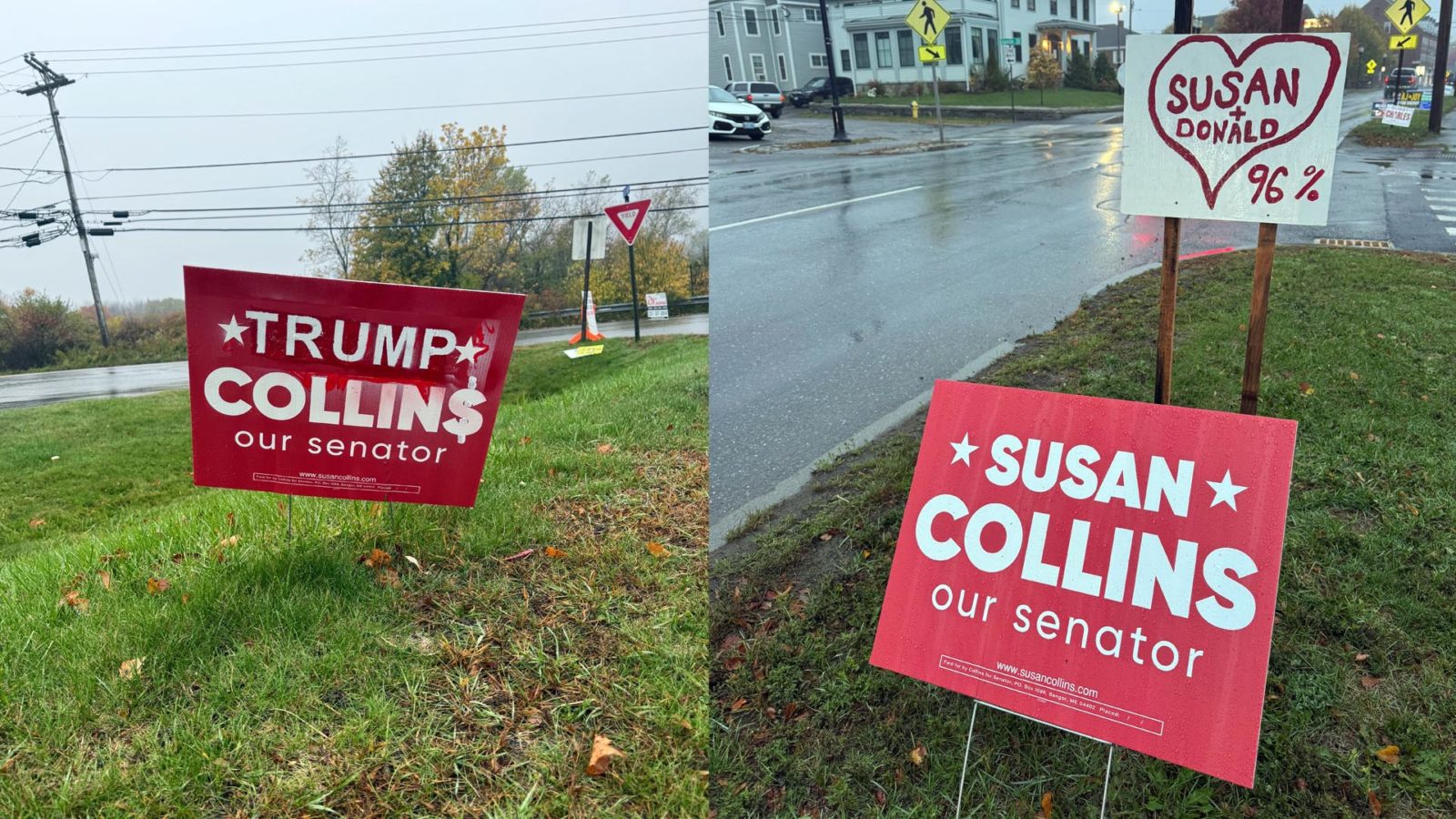
Campaign signs, some handmade, spotted in southern Maine ahead of the November vote. Photos by Lisa Desjardins/PBS News
We noticed some southern Maine towns dotted with DIY signs against Collins. In Knox County, while we were taking photos, we passed someone who was changing the “Susan Collins” signs to replace the name “Susan” with “Trump Collin$.”
What about Collins voters? They are divided, but in what proportion it is not clear. Many, like Linda Post at Owl’s Head, have personal stories of Collins’ help. In his case, Collins and his office returned his father’s vital heating assistance money.
“If we have anyone but her there,” Post told us, “Maine won’t get anything.”
Some Collins supporters support Trump. But it is vulnerable in large part because the state, as a whole, is not. (The state voted against him three times.)
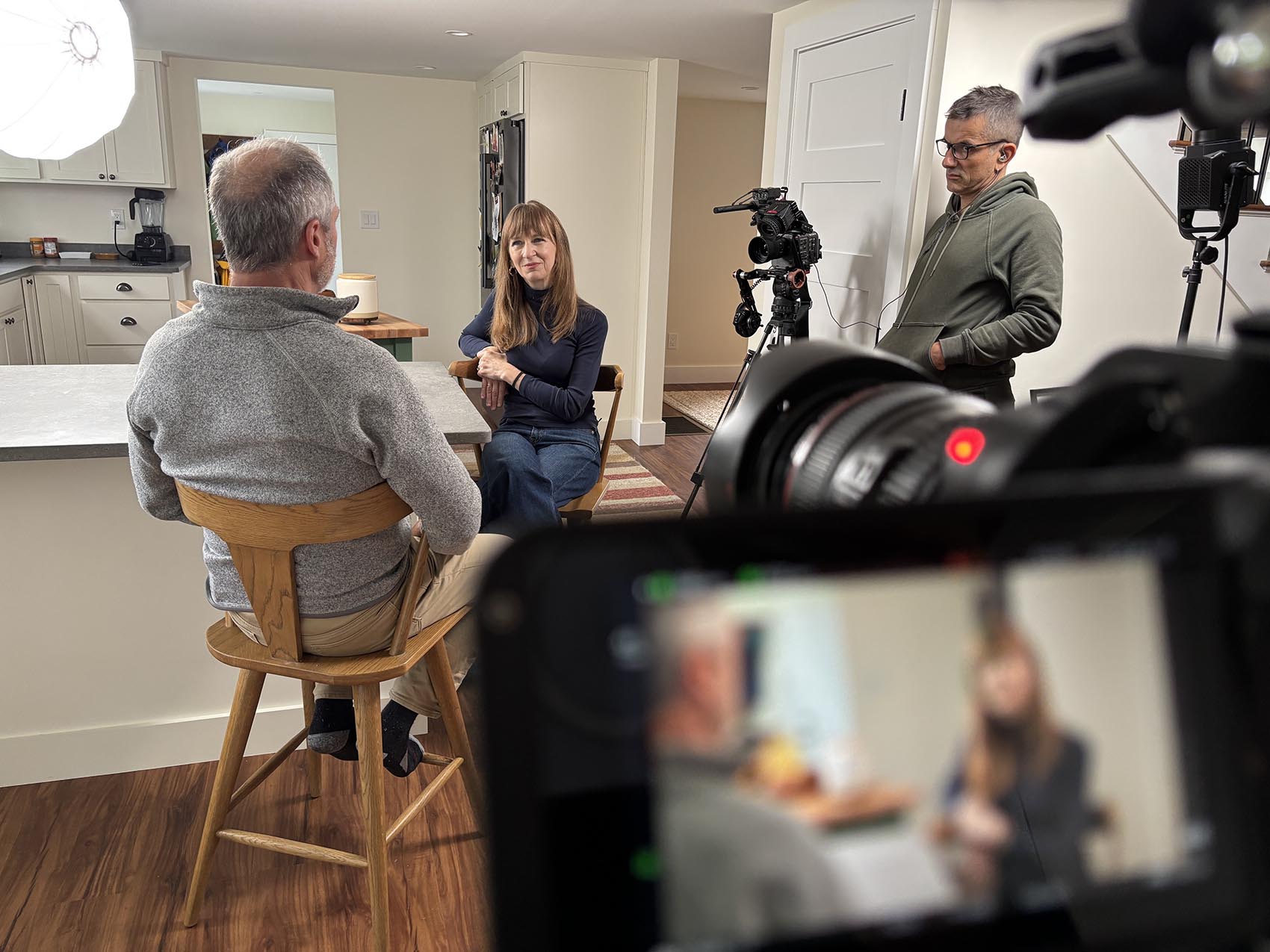
Discussion with Nick Papin, who voted for Collins and Biden in 2020 but is now voting for Collins’ opponent. He also talked about how he sees Maine. Photo by Sam Weber/PBS News
Nick Papin of Kittery split his ticket six years ago, voting for Collins and Biden. He now thinks she didn’t stand up to Trump enough.
“We live in different times,” he said. “Apparently you have to kick to succeed.” Papin votes for Jackson.
To this, Collins told us: “What I think some people want, and which I don’t think is effective, is for me to rant and rave. » She is focused on her unique position – leading the Appropriations Committee – to get things done for her small state.
We found undecided voters like Kennebunk’s Bill Amabile struggling. He likes what Collins has done for the state (and for Ukraine) and doesn’t think Jackson can achieve the same success. But he, too, isn’t sure Collins was tough enough against Trump. He questioned his judgment.
He asks: Is this a vote on what’s best for Maine or is it about the country and Trump?
“I don’t like voting against certain candidates just to vote against them,” Amabile told us. “But I fear, like many other people, that we have reached a point where we may have to change.”
“It’s a really tough decision for me,” he said, shaking his head. “I’m not completely decided on this.”
A free press is the cornerstone of a healthy democracy.
Support trusted journalism and civil dialogue.
Gn usa

