
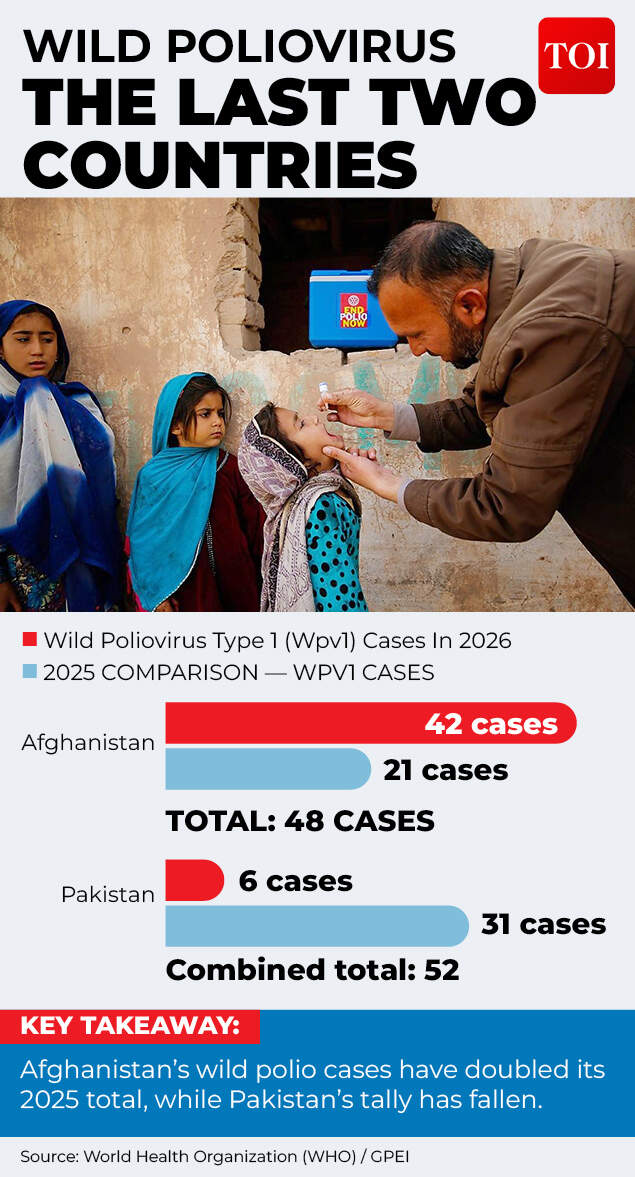
As countries mark World Polio Day, the disease remains entrenched in Pakistan and Afghanistan, even though it has been eliminated in almost every other part of the world. The Global Polio Eradication Initiative (GPEI) marks this day with a clear message: political commitment matters more than ever.Afghanistan has become the biggest concern this year, with 42 cases of wild poliovirus type 1 reported in 2026, double the 21 recorded in all of 2025. Pakistan, meanwhile, reported six cases, down sharply from 31 last year. The two countries have together reported 48 cases so far this year, compared to 52 for all of 2025.This resurgence follows a dramatic reversal of progress.In 2023, the two countries have reported only 12 cases between them, or six each. This total rose to 99 in 2024, highlighting how fragile gains against the virus remain.
The threat extends beyond reported cases of paralysis. Wild poliovirus continues to be detected in environmental samples, indicating that the virus is circulating even in places where no cases of paralysis have been identified.
Why does polio survive today?
Polio is a highly contagious viral disease that mainly affects children under the age of five.It is spread primarily by the fecal-oral route, often in environments with inadequate sanitation and hygiene.
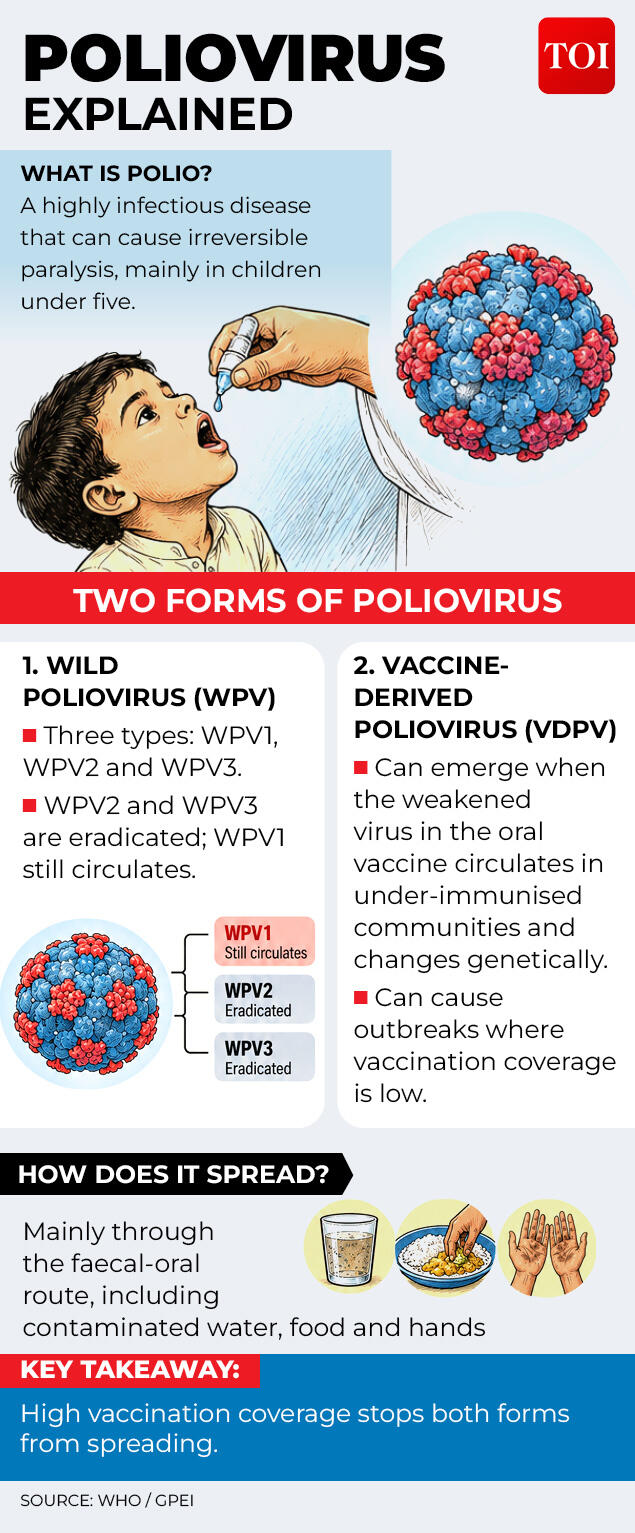
Most infections do not produce any obvious symptoms. However, in a small proportion of cases, the virus attacks the nervous system and causes irreversible paralysis. There is no cure for the paralysis caused by polio, making vaccination the main means of prevention.Eradication requires reaching every child, including those who do not benefit from routine immunizations or vaccination campaigns. In Pakistan and Afghanistan, insecurity, access restrictions, mistrust and population movements have left gaps that allow the virus to continue to circulate.Dr Sunil Sareen, a pediatrician at Delhi’s Apollo Spectra Hospital, told TOI that political instability and uneven vaccination coverage had made it harder to reach children in high-risk areas. “Even a few unvaccinated children can help spread the disease,” he said.The consequences of failure would extend far beyond the region.The WHO has warned that if eradication efforts fail, polio could cause up to 200,000 new cases per year worldwide within a decade.
The virus has already demonstrated its ability to travel: in October 2025, wild poliovirus was detected in a routine sewage sample in Hamburg, Germany.
A chase almost 40 years old
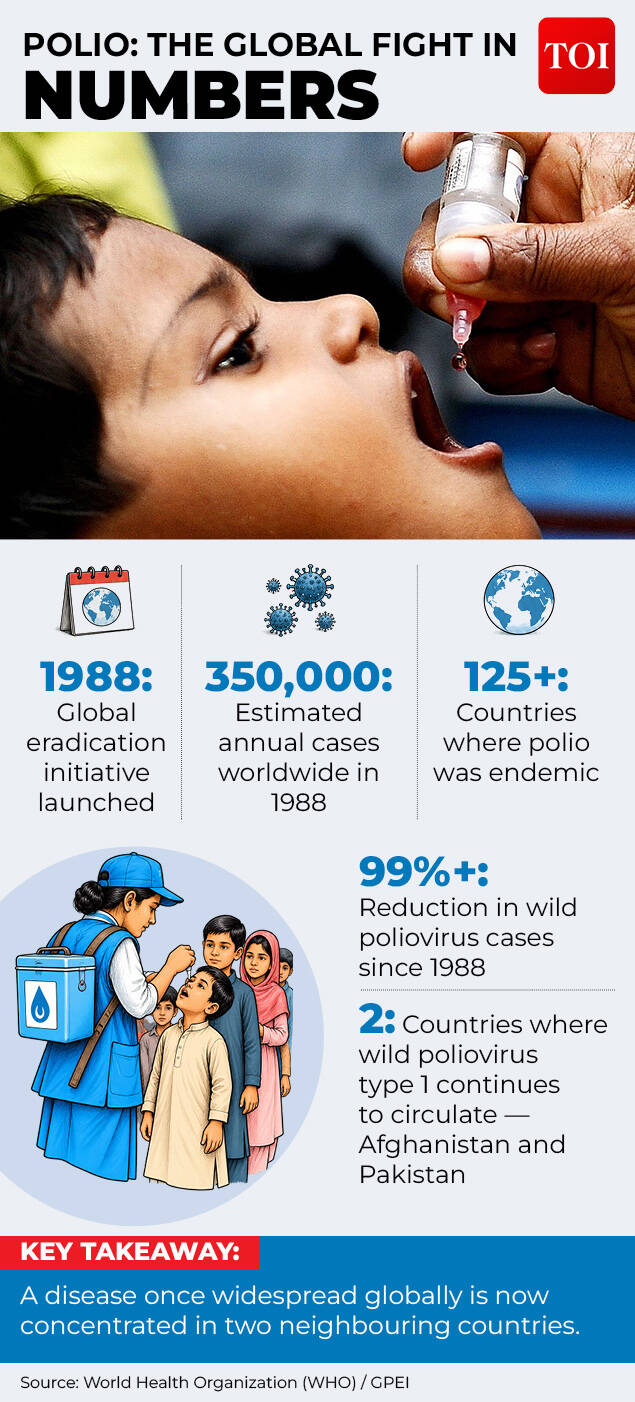
The global eradication effort began in 1988, when the World Health Assembly adopted a resolution to eliminate polio worldwide. The resulting Global Polio Eradication Initiative brought together governments, the World Health Organization (WHO), UNICEF, Rotary International and other partners to coordinate vaccination, surveillance and outbreak response.The progress has been extraordinary. According to the WHO, the number of cases of wild poliovirus has declined by more than 99% since 1988, when approximately 350,000 cases occurred each year in more than 125 endemic countries. Wild poliovirus types 2 and 3 have been declared eradicated. Type 1 is the only wild strain that continues to circulate.But eradication is more than just reducing cases. A country can go years without reporting a crippling infection and still have undetected transmission. To eradicate the virus globally, transmission must be interrupted everywhere, including in hard-to-reach communities or where vaccination coverage remains patchy.So the finish line continues to move forward. The original target was the year 2000. The GPEI now aims to certify the eradication of wild poliovirus by the end of 2027.In the last decade alone, more than $3 billion has been spent in Afghanistan and Pakistan.
India beat him in the toughest place
Indian history shows that this is possible. When the Pulse Polio program began in 1995, the country recorded around 50,000 to 150,000 cases per year. As recently as 2009, it still represented around 60% of cases worldwide.The risks were greatest in Uttar Pradesh and Bihar. Together they were home to around 300 million people, with around 5,000,000 births per month and heavy inbound and outbound migration. The CDC says that if polio could be eradicated there, it could be eradicated in the world’s most challenging settings.The method was relentless. India added home vaccination to detect children who were not brought to fixed sites. During national immunization days since 2000, more than 2.3 million vaccinators have visited approximately 209 million households to reach more than 170 million children under the age of five. Transit teams at bus stops, train stations and on trains vaccinated nearly 10 million children during each campaign.Trust mattered as much as logistics. The teams included at least one woman and one member of the local community, to facilitate entry into the houses. Religious and community leaders were brought in where families were reluctant. The fingers of vaccinated children were marked, as were the houses visited. Each house was numbered in detailed microplans and independent monitors measured coverage after each round.Sareen said Pakistan and Afghanistan could learn from India’s combination of door-to-door vaccination and community engagement. Local health professionals, religious figures and community leaders can help combat misinformation, while monitoring and outreach to migrant populations can help reach children who forget to get vaccinated.
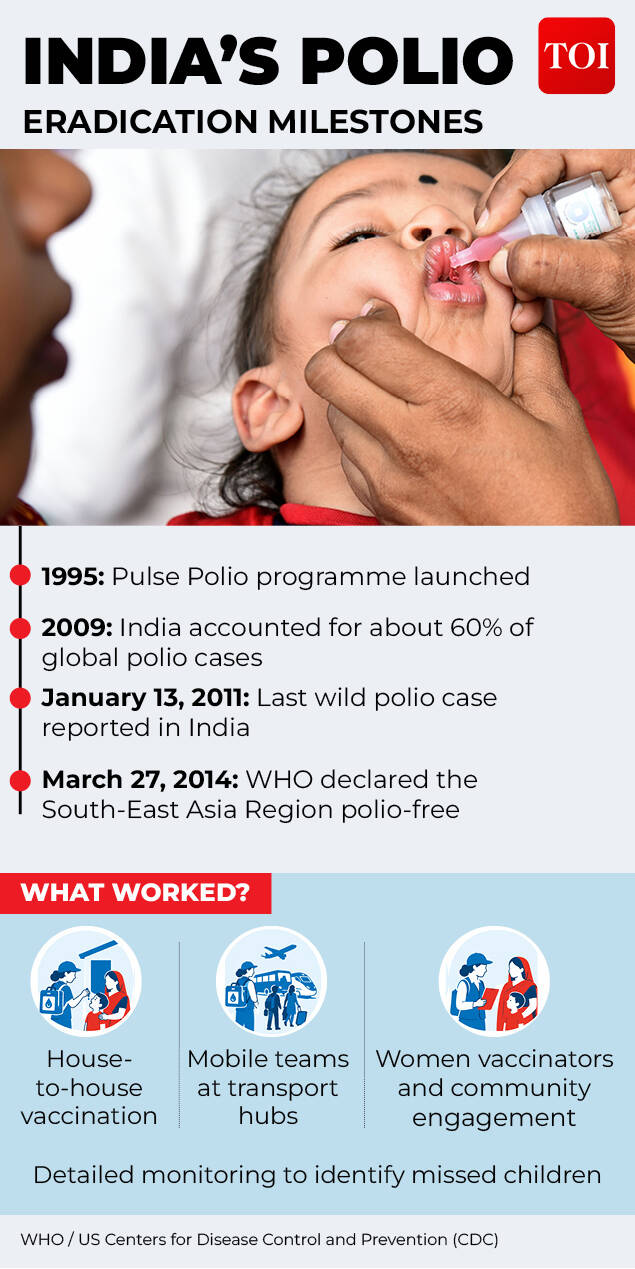
Science also helped. India switched to more effective vaccines, monovalent in 2005 and bivalent in 2010. The last case of wild polio was reported in Howrah, West Bengal on January 13, 2011. On March 27, 2014, WHO declared all 11 countries in the South East Asian region polio-free.India did not stop. It still organizes one national and two subnational immunization days every year and has added injectable polio vaccine to routine immunization.Many of the tools that worked in India are exactly the ones that are now restricted or threatened across the border.
Afghanistan: we don’t knock on doors
Afghanistan’s rise is due to the way vaccines are delivered. Taliban authorities restricted home vaccination in September 2024, after briefly allowing it in most of the country earlier this year. The WHO says no campaigns have taken place since October 2024. Campaigns now rely largely on mosques and other fixed sites.It had worked. By June 2024, door-to-door vaccination reached 95% of target children, marking the first use of this method in the southern region in over five years, although Kandahar remained on the site-based model.Today, the WHO committee says that on-site campaigns “often fail to reach all children, especially young ones.” It also highlights the limited role of female health workers, the same people India puts on every team. The most affected area is the south, where, according to the committee, intense transmission continues. This week’s six new cases came from Kandahar, Nangarhar and Kabul.Kamal Shah, former UNICEF communications manager, was quoted by VOA as saying that one of the main problems is “gaps in vaccination campaigns.”
Pakistan: Bullets, rumors and refusals
Pakistan does not ban door-to-door vaccination. His problem is security. On May 18, the first day of a campaign to vaccinate more than 19 million children in 79 high-risk districts, gunmen killed two police officers guarding vaccination teams in Bajaur.In April, a police officer was killed in Balochistan and another injured in Hangu. Authorities say more than 200 polio workers and police escorts have died since the 1990s.Activists often claim these campaigns are a foreign plot to sterilize children, and rumors in rural areas include the claim that the vaccine is a CIA plot. Nature adds that some families refuse vaccines or question them when needs like clean water and sanitation are not met.The WHO committee praised Pakistan’s strong political support and generally high media coverage. But the quality of the campaigns varies between districts, particularly in southern Khyber Pakhtunkhwa and Balochistan. Transmission also persists in Karachi.Pakistan’s progress is real. The number of cases is down 99.8% from an estimated 20,000 per year in the early 1990s. During a visit this year, WHO regional director Hanan Balkhy said Pakistan “has a real opportunity to interrupt poliovirus transmission.”
What the sewers show
Paralysis cases reveal only part of the epidemic. The poliovirus can circulate in the gut without causing obvious symptoms, allowing infected people to spread it before a case is identified.Health authorities therefore test wastewater and other environmental samples for the presence of the virus. A positive sample may indicate transmission even if there have been no reports of nearby paralysis.As of mid-August, 176 wastewater samples in the two countries had tested positive for wild poliovirus this year: 118 in Pakistan and 58 in Afghanistan.Pakistan had only reported three cases at the time. In 2025, the two countries recorded 745 positive samples.The WHO committee said transmission persisted even during the last low season, from October 2025 to April 2026, and was continuing in both countries.
A virus, a border
The remaining epidemic follows a geography that transcends national borders. Pakistan and Afghanistan share a long border, and the movement of people between them creates opportunities for the virus to travel between communities.In its August assessment, the WHO emergency committee identified three critical areas of continued transmission: southern Afghanistan, southern Khyber Pakhtunkhwa in Pakistan, and Karachi.
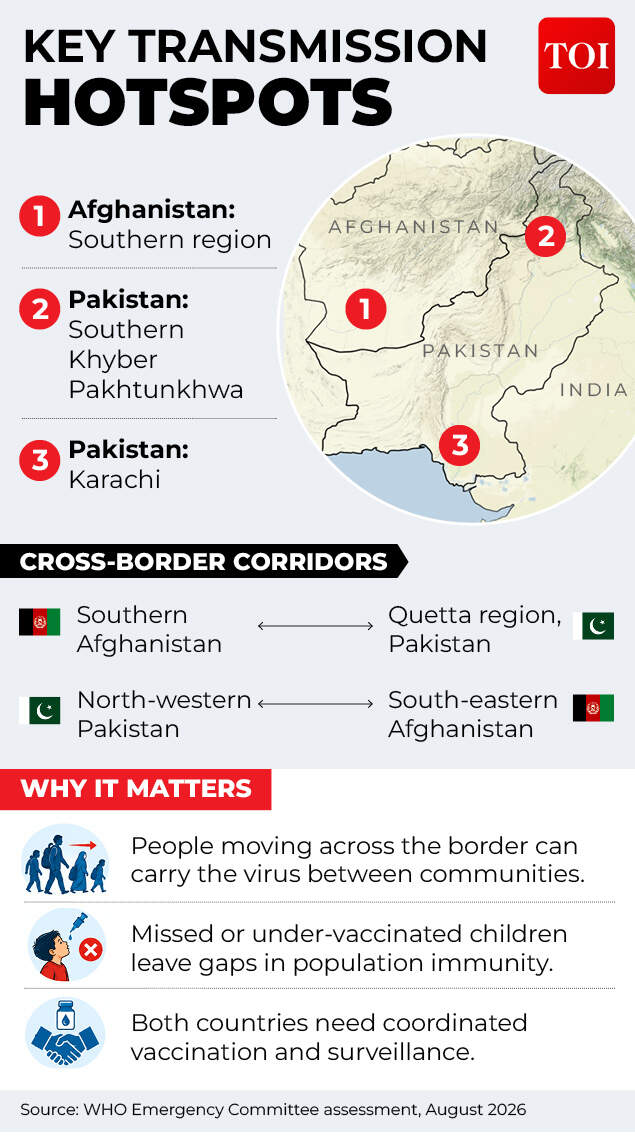
It also highlighted two cross-border corridors: southern Afghanistan and Pakistan’s Quetta region, as well as northwest Pakistan and southeast Afghanistan.Hotspots and corridors show how transmission connects communities across the border, particularly where children have not been vaccinated.Population movements have added to the challenge. In 2024, the committee recorded more than…
Gn Health

